

Field notes on compliance, cloud, and the work of staying ahead.
Practical writing for MLROs, compliance teams, and IT leaders — organised by the product it supports, drawn from real deployments across East Africa.

Expense Management Software RFP Checklist for Kenya (Free Template)
A 50-point expense management software RFP checklist for Kenyan organisations: vendor questions on approvals, M-Pesa, ERP posting, eTIMS and audit trail, evidence requests and a free Excel scoring template.

Document Management Systems for Banks in Kenya: What to Look For
What Kenyan banks should require from an electronic document management system: records and retention, audit trails, access control, evidence for examiners and auditors, and integration with Microsoft 365.

EDMS for Law Firms in Kenya: Matter Files, Retention and Audit on SharePoint
What an electronic document management system (EDMS) must do for a Kenyan law firm: matter-centric filing, version control, access control and ethical walls, retention, client confidentiality and the Data Protection Act, 2019, and how a SharePoint-based EDMS covers them.

KRA eTIMS and Expense Claims: What Finance Teams Must Keep (2026)
What KRA's eTIMS rules mean for expense claims and supplier payments in Kenya: why expenses need eTIMS invoices to be deductible, what to capture with each claim, how exemptions work, and how an approval workflow enforces 'no invoice, no approval'.

Best Expense Management Software in Kenya for Enterprises (2026)
An honest comparison of the four kinds of expense management software available to Kenyan organisations in 2026, which kind fits a bank, NGO, law firm, multi-entity enterprise or SME, and how to shortlist.

Payment Approval Workflows in Kenyan Banks: Maker-Checker and Delegated Authority
How Kenyan banks can run maker-checker approval for internal expenses and supplier payments: delegated authority matrices, segregation of duties, SLA escalation, audit evidence and what payment approval software should do.
Expense Management for NGOs in Kenya: Donor-Ready Audit Trails
How NGOs in Kenya can pay field teams on M-Pesa and still pass donor audits: documentation linked to every transaction, approval evidence, audit sampling, multi-programme coding and what expense management software should do.

M-Pesa Disbursements to Business Central: How to Reconcile Without Re-keying
How Kenyan finance teams can link M-Pesa B2C and B2B disbursements to Microsoft Dynamics 365 Business Central: result callbacks, payment references, OData posting, failed and reversed payments, and month-end reconciliation.
Loan Origination Software in Tanzania: A Buyer's Guide for Banks, SACCOS and Microfinance Lenders (2026)
How to choose loan origination software in Tanzania: who needs one under BoT, evaluation criteria, provider types, cost drivers and red flags.
Petty Cash Management in Kenya: Controls, M-Pesa and Audit (2026)
How to run petty cash in Kenya with proper controls: float and imprest basics, limits, receipts, segregation of duties, M-Pesa B2C reimbursements, reconciliation and what petty cash management software should do.

Expense Management Software in Kenya: A Buyer's Guide for Banks, NGOs and Enterprises (2026)
How to choose expense management software in Kenya: what an expense management system does, who needs one, M-Pesa, eTIMS and ERP requirements, provider types, demo questions, cost drivers and red flags.

Loan Origination Software in Uganda: A Buyer's Guide for Banks, SACCOs and MFIs (2026)
How to choose loan origination software in Uganda: who needs one under BoU and UMRA, evaluation criteria, provider types, cost drivers and red flags.

Loan Origination Software for SACCOs in Kenya: Guarantors, Appraisal and SASRA Expectations
How SACCO loan processing works in Kenya, who regulates which SACCO, and what loan origination software should do alongside your BOSA/FOSA core system.

CBK-Compliant Digital Lending in Kenya: What the Rules Require of Your Loan Origination System
Which Kenyan lenders CBK now regulates, the rules that touch loan origination software, and how to map each one to a system capability you can evidence.
Credit Approval Workflows in Kenyan Banks: Committee Routing, Maker-Checker and Turnaround Time
How Kenyan banks route credit approvals: the committee chain, amount-based limits, maker-checker at disbursement, turnaround SLAs and audit evidence to keep.

LOS vs Loan Management System vs Core Banking: What a Kenyan Lender Actually Needs
Loan origination system, loan management system or core banking? What each does, how they connect, and which combination suits Kenyan banks, SACCOs and lenders.

Loan Origination System RFP Checklist for Kenyan Banks and SACCOs (Free Scoring Template)
A 50-point loan origination system RFP checklist for Kenyan banks, SACCOs and MFIs: vendor questions, evidence requests and a free Excel scoring template.
Loan Origination Software in Kenya: A Buyer's Guide for Banks, SACCOs and MFIs (2026)
How to choose loan origination software in Kenya: what an LOS does, who needs one, evaluation criteria, provider types, cost drivers and red flags.
AML Compliance Software in Zambia: A Buyer's Guide for Banks, Microfinance and Fintechs (2026)
How to choose AML compliance software in Zambia: FIC reporting through goAML, provider types, evaluation criteria, what drives cost, and red flags.
AML Compliance Software in Tanzania: A Buyer's Guide for Banks, SACCOS and Fintechs (2026)
How to choose AML compliance software in Tanzania: goAML reporting to the FIU, the 24-hour STR clock, cash and EFT reports, vendor types, costs and red flags.
AML Compliance Software in Uganda: A Buyer's Guide for Banks, SACCOs and Fintechs (2026)
How to choose AML compliance software in Uganda: FIA and goAML requirements, the types of provider, evaluation criteria, what drives cost, and red flags.

Choosing an AML Software Vendor in Kenya: The RFP Checklist and Free Scoring Template
A 47-point RFP checklist for choosing AML software in Kenya: vendor questions, evidence requests and a free scoring spreadsheet for banks, SACCOs and fintechs.

AML Compliance for Fintechs and Digital Credit Providers in Kenya: The Obligations and How to Automate Them
AML rules for Kenyan payment providers, digital lenders and virtual asset firms: who is covered, what CBK and POCAMLA require, and how to automate compliance.
Sanctions and PEP Screening in Kenya: Which Lists to Screen, the 24-Hour Freeze Rule and the Evidence to Keep
Which sanctions lists Kenyan institutions must screen, the 24-hour freeze and reporting rule, how PEPs are defined under the 2023 Regulations, and what to keep.

Transaction Monitoring Software in Kenya: Channels, Typologies and What the FRC Expects
What transaction monitoring software must do in Kenya: the channels to cover, local typologies, rules versus models, back-testing, and alerts through to STRs.

AML Software for SACCOs in Kenya: What SASRA and POCAMLA Expect, and What to Automate First
What SASRA's 2024 AML guidelines and POCAMLA require of Kenyan SACCOs, the risks in SACCO channels, and a phased plan for choosing and rolling out AML software.
AML Compliance Software in Kenya: A Buyer's Guide for Banks, SACCOs and Fintechs (2026)
How to choose AML compliance software in Kenya: what it must do for FRC reporting, the types of vendor, evaluation criteria, what drives cost, and red flags.
Ghana FIC goAML Reporting: STR, CTR and ECTR Rules for Banks (2026)
How Ghanaian banks and accountable institutions report to the Financial Intelligence Centre through goAML: the 24-hour STR rule, GH¢50,000 cash threshold, ECTRs and compliance returns.
Nigeria NFIU goAML Reporting: CTR, STR and FTR Rules for Banks (2026)
How Nigerian banks and DNFBPs report to the NFIU through goAML: the ₦5m/₦10m CTR thresholds, 24-hour STR rule, USD 10,000 FTRs, and the 2026 goAML upgrade.
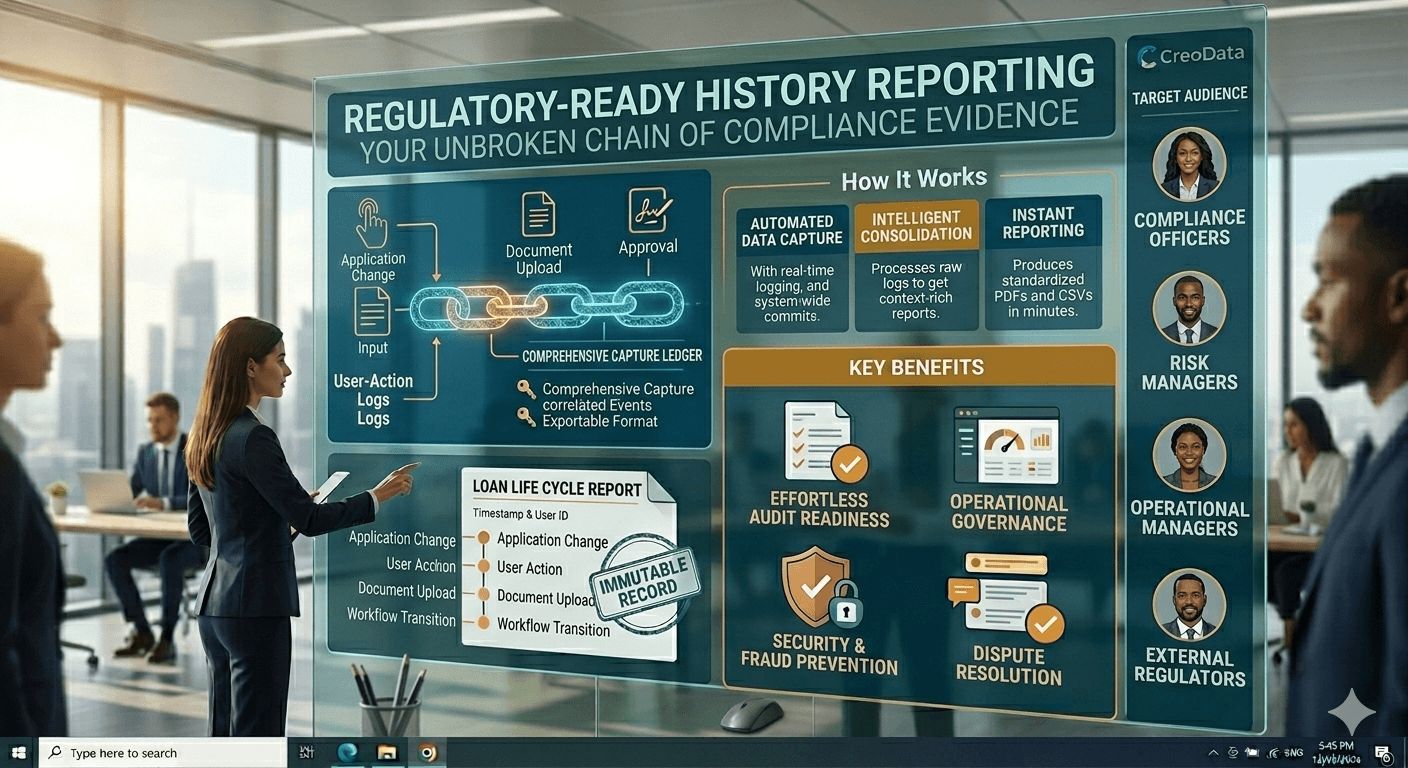
When 40% of a Bank's CTR Batch Came Back Rejected: A goAML Recovery Story
A Kenyan bank was losing days to rejected goAML CTR batches. The fix was not more reviewers — it was validating XML against the FRC schema before submission.

Three Analysts, 900 Alerts a Week: How a Microfinance Lender Broke Its False-Positive Backlog
A microfinance lender drowning in 900 sanctions alerts a week rebuilt AML screening around entity resolution and risk-weighted alerting — not more analysts.

The Email Nobody Could Produce: Rebuilding Evidence Integrity at a 5,000-Mailbox Bank
A regulator asked a 5,000-mailbox bank for eighteen months of email. The bank had the messages but could not prove they were unaltered. Here is what changed.
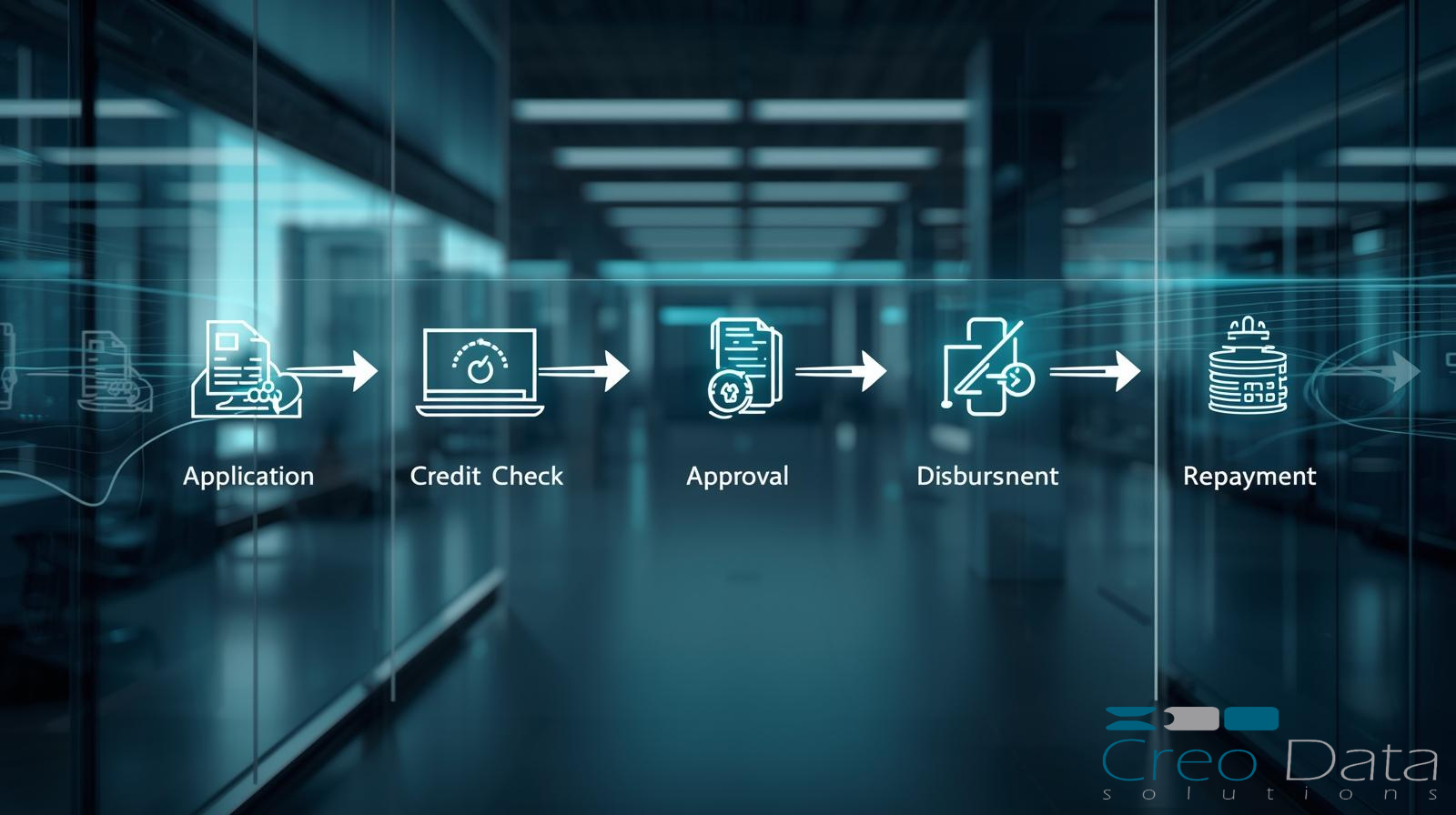
21 Days to Decision: Where a Corporate Lender's Loan Turnaround Was Actually Going
Everyone blamed credit committee for a 21-day loan turnaround. Stage-level data showed the delay was in the handoffs — and three configuration changes fixed it.
The Buy-Off That Took Six Weeks: Fixing Check-Off Lending End to End
Check-off loan buy-offs took six weeks and lost deals. Desk-accurate affordability, cached compliance checks and an owned clearance stage cut that to 11 days.

Two Ledgers, One Truth: How an NGO Closed the Gap Between M-Pesa and Business Central
An NGO paid field teams on M-Pesa and posted to Business Central weeks later. Linking approval, payment and posting cut month-end close from 11 days to three.

The Auto-Renewal Nobody Read: What 340 Unreviewed Contracts Cost One Company
61 supplier contracts had auto-renewed unread. AI clause extraction and obligation tracking turned a static document library into a queryable exposure report.

62% Never Finished: Diagnosing Abandonment in Business Account Opening
62% of applicants abandoned a bank's online business account opening. Reordered forms, guided beneficial ownership and visible progress took completion to 71%.

The Team That Looked Fine Until It Wasn't: Reading Burnout Risk From Calendars Alone
A consultancy lost three senior staff in one quarter. Calendar, Planner and org-chart metadata — not email content — showed the burnout signals months earlier.

Nine Hours a Month Downloading Invoices: The Smallest Automation That Paid Back Fastest
Nine hours a month filing Business Central invoices in SharePoint by hand, and a three-day audit request. Posting-triggered export fixed both in an afternoon.
Forty New Agents, Thirty Wrong Locations: Planning a Network With Real Geography
A bank picked 40 agent locations from a ward spreadsheet and eleven underperformed. Geocoding and travel-time catchments showed why, and fixed the next round.

Bank Account Opening Software: What It Is, What It Does, and How to Choose It (2026)
A practical guide to bank account opening software — what a modern account opening system does across business, personal, group and joint accounts, how digital onboarding works end to end, and the checklist banks should use to choose one.

KYC Onboarding in Banks: The Step-by-Step Process (and Where It Breaks Down)
How KYC onboarding actually works in a bank — the data captured at account opening, who must be identified and screened, the review stages that follow, and the failure points that turn a ten-minute application into a two-week wait.
What Is a KYC System? Core Components, Data Captured, and How Banks Use One
A KYC system is the software backbone of customer due diligence — this guide explains its core components, the data it captures at onboarding, how it differs from an AML platform, and what to look for when evaluating one.

Digital Onboarding Solutions for Banks: Build, Buy, or Configure?
What a digital onboarding solution for banks must cover, the three routes to one (build, buy SaaS, configure a deployable product), their five-year cost, and the questions to ask.

Personal Account Opening, Digitised: What Banks Must Capture (and How to Keep It Under Ten Minutes)
What a digital personal account opening journey must capture — identity, employment and income, addresses, next of kin, facilities — and how banks keep the highest-volume onboarding journey fast without cutting compliance corners.

Chama and Group Account Opening: How Banks Onboard Savings Groups Digitally
Chamas and savings groups are a huge deposit opportunity that most onboarding software cannot handle — this guide covers what group account opening must capture, from the member register to the group resolution, and how banks digitise it.

Joint Account Opening: Requirements, Signing Mandates, and KYC for Every Holder
Joint account requirements: full KYC and ID documents for every holder, the operating mandate (either to sign, jointly, any two) and the survivorship instruction.

Maker-Checker in Banking Systems: Why Four Eyes Beat Two
Maker-checker — the four-eyes principle — is banking's oldest control, and the one most software only pretends to enforce. What maker-checker means in onboarding systems, where it must apply, and how to tell enforcement from policy.

Changing Bank Application Forms Without an IT Project: No-Code Form Builders for Onboarding
Bank onboarding forms change constantly — new regulations, products, segments. This guide covers what a no-code form builder for banking must include: conditional logic, versioning, maker-checker publishing, bilingual forms, and funnel analytics.

AI in Bank Customer Onboarding: What It Should Do — and What It Never Should
AI is arriving in bank onboarding as conversational applications and document pre-checks. This guide draws the governance line: where AI genuinely helps account opening, and the decisions it must never be allowed to make.
Account Opening Turnaround Time: Setting and Hitting SLAs in Corporate Onboarding
Account opening turnaround time — how banks set, monitor, and hit SLAs across the onboarding workflow, where applications stall, and how SLA monitoring fixes it.
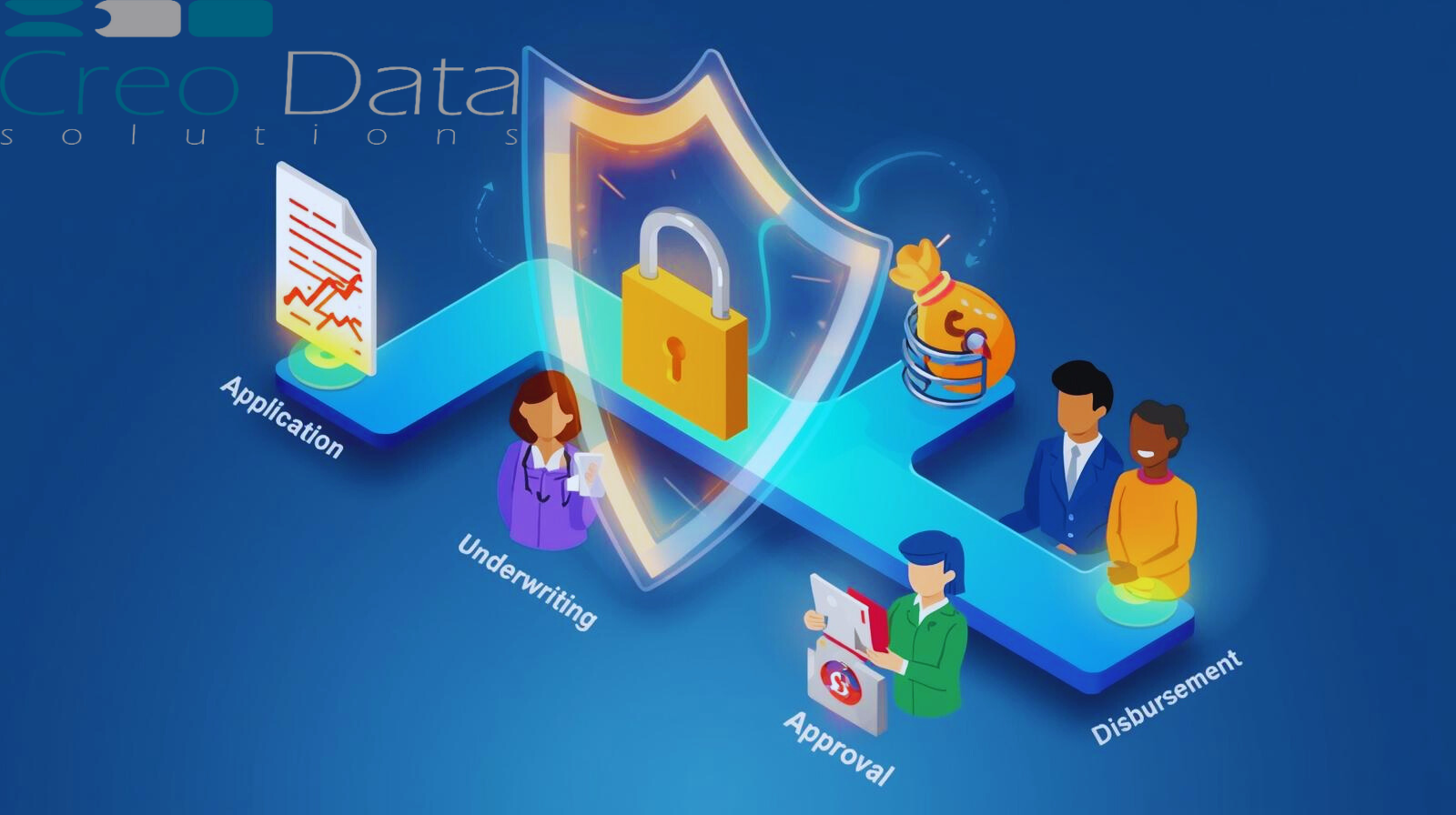
Authorized Signatories and Signing Mandates: Getting the Account Mandate Right
Authorized signatories vs signing mandates, the mandate types banks support (singly, jointly, any two, either-or-survivor) and how to record them at onboarding.
Beneficial Ownership and Significant Stakeholders in Business Account Opening
Capturing beneficial ownership and significant stakeholders at account opening — why UBO matters, what to collect, and how to record ownership defensibly.
Board Resolutions for Opening a Company Bank Account
Board resolutions for opening a company bank account — what they are, what banks require, and how digital onboarding captures the resolution and authorised officials.

Building an Audit-Ready Business Account Opening Trail
Building an audit-ready business account opening trail — append-only audit logs, four-eyes controls, RBAC and branch scoping, so every onboarding decision is defensible.

Business Account Opening for Banks: The Complete Guide to Digital Corporate Onboarding (2026)
The complete guide to digital business account opening for banks — the corporate onboarding lifecycle end to end, from KYB, CDD, beneficial ownership, and signatories to documents, SLAs, audit, and account creation.
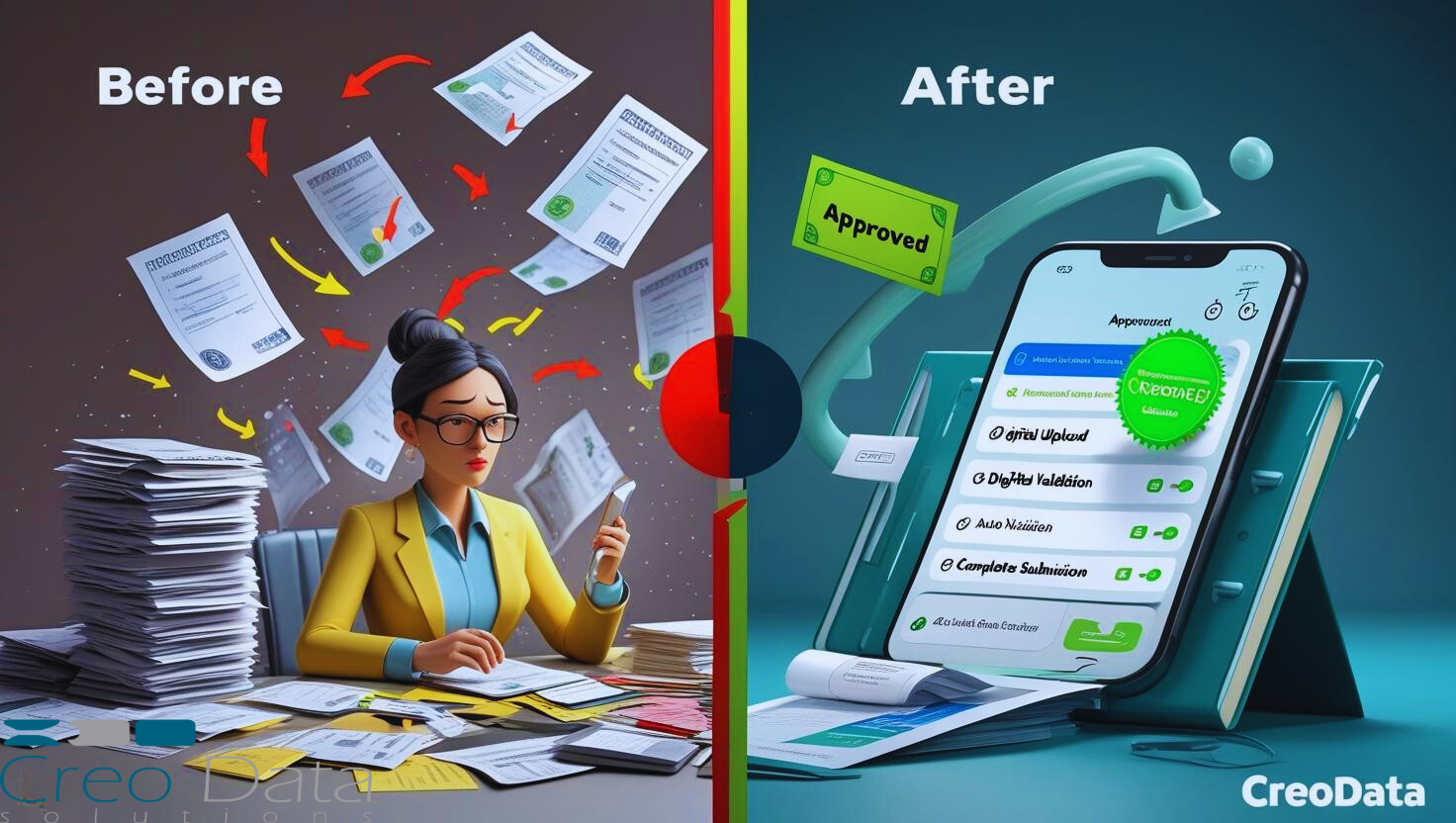
The Business Account Opening Document Checklist (Kenya)
The business account opening document checklist for Kenya — Certificate of Incorporation, CR12, KRA PIN, Memorandum and Articles, board resolution, and more, with a digital checklist approach.

Customer Due Diligence for Business Accounts: CDD, EDD and the Risk-Based Approach at Onboarding
Customer due diligence for business accounts — how CDD, EDD, and the risk-based approach apply at onboarding, and what banks must collect before an account is opened.

Check-Off Loans in Kenya: How Payroll-Deduction Lending Works
A practical guide to check-off (payroll-deduction) loans in Kenya — how deductions at source work for private employers and government payrolls via IPPD, the deduction-data process, and the controls a lender needs.
Compliance Checks in Loan Origination in Kenya: IPRS, CRB, KRA and AML Screening
The compliance checks behind every workplace-banking loan — IPRS identity verification, CRB credit checks, KRA PIN validation and Comply Advantage AML/PEP screening — how they are orchestrated, cached and reviewed.
From Approved Application to Open Account: Integrating Onboarding with Core Banking
From approved application to open account — how digital onboarding integrates with core banking, the account-creation handoff, and patterns for straight-through processing.

The Corporate Account Opening Process, Step by Step
The corporate account opening process step by step — from business information and account selection through compliance, signatories, board resolution, documents, review, and account creation.
Credit Analysis and Underwriting for Unsecured Personal Loans
How credit analysts underwrite workplace-banking loans — the business-rules engine (PEP, CRB, debt-income, retirement age), bank-statement and net-pay checks, enhanced due diligence and the limits on varying a loan.
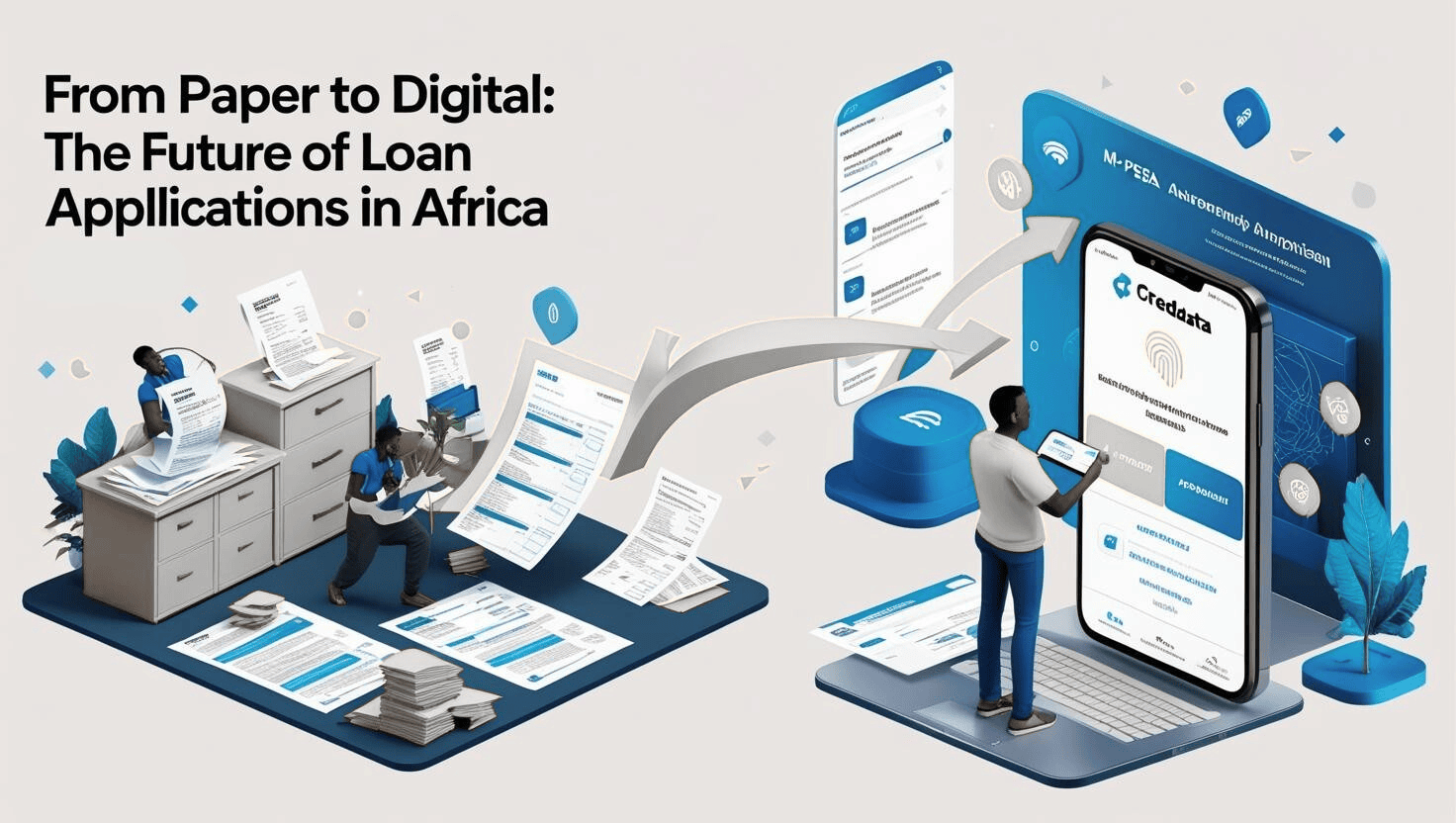
Digital Business Account Opening for Banks: From Paper Forms to Straight-Through Onboarding
How banks replace paper business account-opening forms with a guided, compliant digital journey — what digital onboarding is, the benefits, and what a modern platform must do.

Employer Scheme Onboarding: Setting Up Workplace-Banking Lending
How banks onboard employers and configure lending schemes — approved-employer lists, scheme parameters (interest, tenure, fees, insurance), and the allowance and deduction variables that drive affordability.
FATCA and CRS for Business Accounts: Tax Declarations at Onboarding
FATCA and CRS for business accounts — the tax-residency declarations banks must collect at onboarding, entity classifications, and how to capture them cleanly.

Forward, Reverse and Affordability Loan Calculators Explained
The three calculators every workplace-banking lender needs — forward (amount to instalment), reverse (instalment to maximum amount), and the payslip affordability check — and how they guide the pre-sale conversation.

KYB Explained: What Banks Must Verify When Onboarding a Company
What KYB (Know Your Business) means in practice — the entity, ownership, and activity facts a bank must verify before opening a company account, and how to capture them digitally.

Audit Trail, RBAC and Security in a Lending Platform
How a workplace-banking platform stays defensible and secure — an immutable audit trail, role-based access control with ten lending roles, maker-checker separation, and the session, CSRF and inter-service protections behind it.
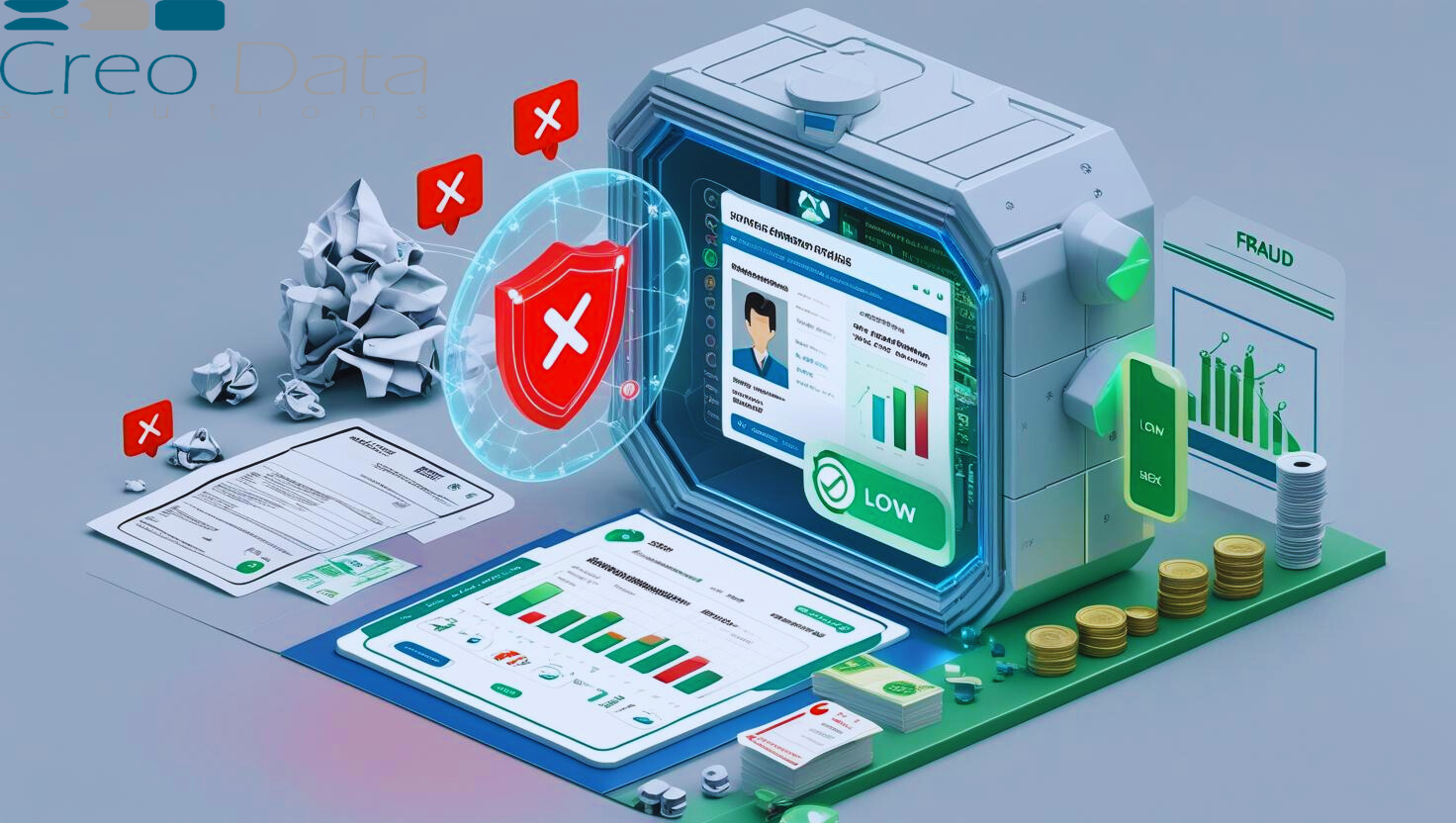
Affordability on a Payslip: What It Means and How Lenders Calculate It
What 'affordability' on a payslip means: the net pay left to service a new loan after statutory deductions and existing check-off loans, and how lenders calculate it.
Loan Application Documents and the OTP-Signed Offer: A Lender Checklist
The documents a workplace-banking loan needs in Kenya — the existing-vs-new-to-bank checklist, payslip and salary-statement rules, the auto-generated offer, OTP e-acceptance and the check-off authorization form.
Loan Booking and Disbursement in Kenya: From Approval to Funds in the Account
How an approved workplace-banking loan is booked in the core banking system and disbursed — limit marking, the Finacle booking fields, the one-month moratorium, break-period interest, fee recovery and partial/final disbursements.

Loan Buy-Offs and Takeovers: How Bank Loan Settlement Works
How loan buy-offs (takeovers) work in workplace-banking lending — eligible institutions, settlement via RTGS or bankers cheque, suspense accounts, and the clearance evidence a lender must hold before final disbursement.
Loan Processing Turnaround Time and SLAs for Kenyan Lenders: Making Origination Measurable
How service-level agreements and turnaround-time monitoring keep loan origination on track — per-stage SLA timers, breach detection, TAT reporting and the dashboards operations teams use to find stalled applications.
Maker-Checker Controls in Loan Booking and Disbursement for Kenyan Banks
How dual control (maker-checker) protects loan booking and disbursement — inputter and verifier separation enforced in the database, what each role verifies, and why four-eyes matters for funds release.

White-Label, Multi-Tenant Onboarding: One Platform Across Brands, Branches and Segments
White-label, multi-tenant account onboarding — how one platform serves multiple brands, branches, and segments with per-tenant branding, forms, and document rules.

PEP and Sanctions Screening at Account Opening
PEP and sanctions screening at account opening — what to screen, how declarations and checks fit the onboarding flow, and how to handle a hit without stalling good customers.
Why Business Customers Abandon Account Opening — and How to Reduce Drop-off
Why business customers abandon account opening, and how to reduce drop-off — save-and-resume drafts, self-service portals, status tracking, and a shorter path to submission.
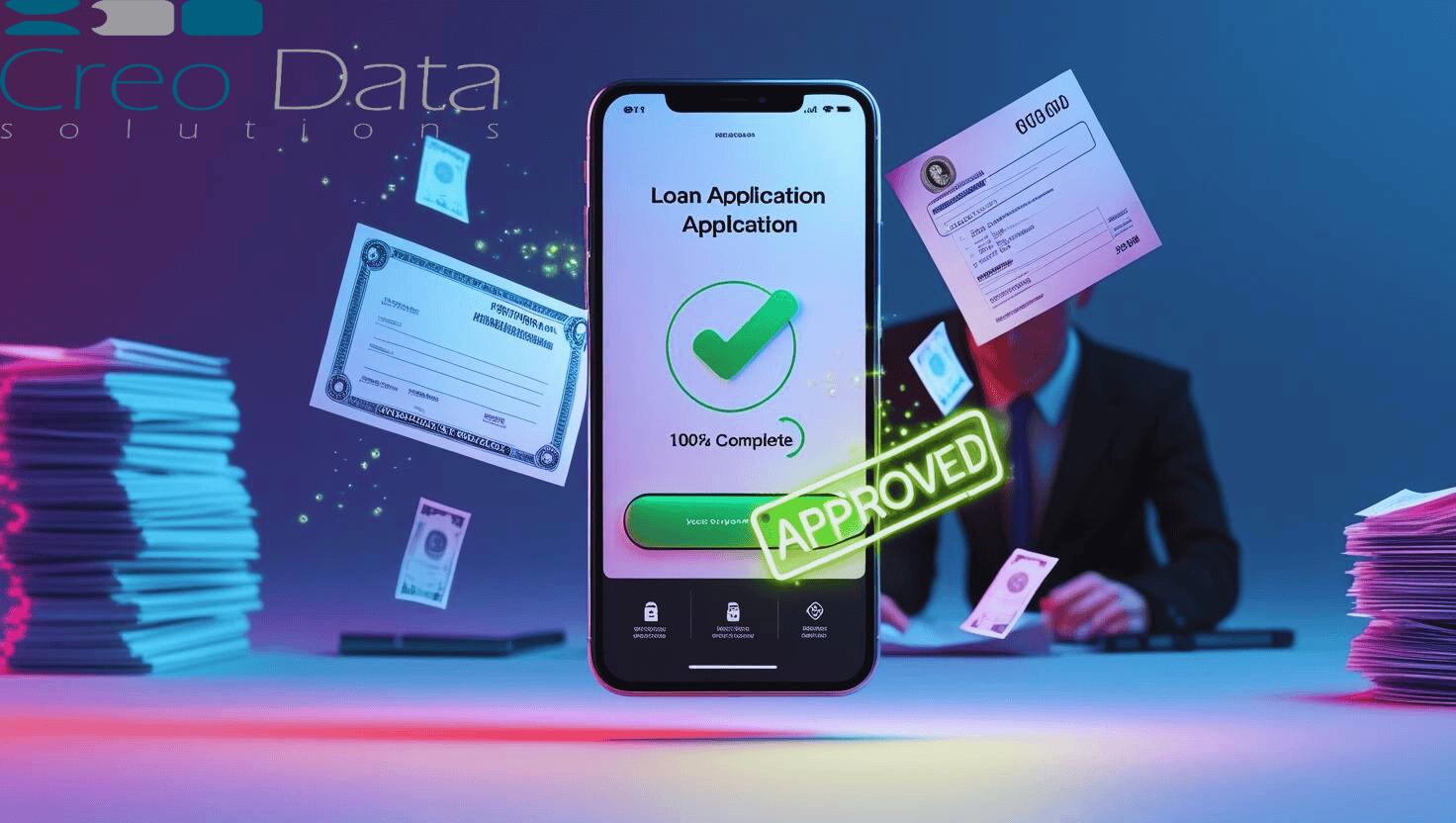
What Is Workplace Banking? Scheme-Based Lending Explained for Banks
Workplace banking explained: what scheme-based, employer-anchored lending is, how check-off repayment works, why banks build dedicated workplace-banking programmes, and what a modern origination platform must do.
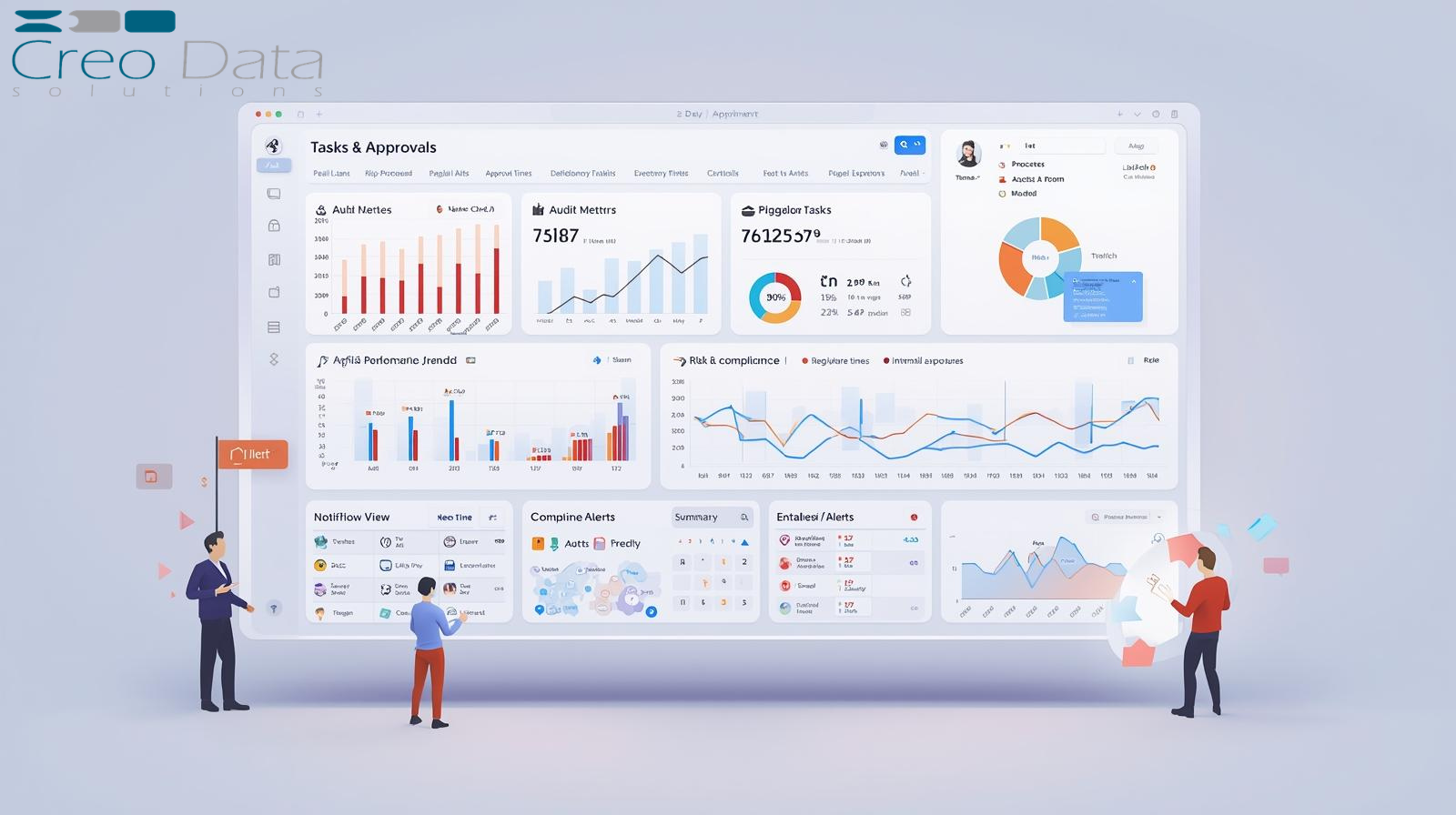
The Complete Guide to Workforce Analytics with Microsoft 365
A complete, practical guide to metadata-driven workforce analytics on Microsoft 365 — measuring productivity, meeting load and workload, predicting burnout ethically, and the privacy, governance and deployment foundations that make it defensible.
Workplace Banking for Lenders: The Complete Guide to Check-Off Loan Origination (2026)
The complete guide to workplace-banking (check-off / scheme) lending — the unsecured loan origination lifecycle end to end, from employer schemes, affordability and calculators to compliance, the multi-stage workflow, disbursement, SLAs, audit and core-banking integration.
The Workplace-Banking Loan Workflow: Stages, Roles and Decision Gates
A walkthrough of the multi-stage workplace-banking loan workflow — every stage, the role that owns it, the decision gates (forward, return, decline, approve, refer), and how new loans, top-ups and buy-offs branch.

Workplace-Banking System Integrations: Finacle, IPRS, CRB, KRA and More
The integrations behind workplace-banking lending — Finacle core banking, IPRS, CRB, KRA, Comply Advantage, IPPD, DMS and RTGS — and the adapter pattern, retry and circuit-breaker resilience that hold them together.

What Is Workforce Analytics? A Metadata-Driven Guide for HR and Leadership
Workforce analytics explained: what it is, how it differs from surveillance, the metadata it uses, the questions it answers, and how a Microsoft 365-native platform turns everyday work signals into ethical insight.

How to Measure Employee Productivity with Microsoft 365 Metadata
A practical look at measuring productivity from Microsoft 365 metadata — the Planner task and calendar signals that matter, why metadata beats content, and how weekly snapshots turn raw activity into trends.

How the Productivity Score Is Calculated: A Transparent Methodology
Inside the composite productivity score: how task completion, on-time delivery, weighted output and a meeting-load penalty combine, why priority weighting matters, and how department KPI weights keep the score fair.
Meeting Load and Focus Time Analytics: Reclaiming Deep Work
How calendar metadata reveals meeting overload and protects focus time — the meeting load index, after-hours meetings, focus hours, and how teams use the signals to reclaim deep work.
Predicting Employee Burnout with Workforce Analytics
How leading indicators in everyday work metadata can flag burnout risk early — the features that drive the model, how risk levels are assigned, and the ethical guardrails that keep scoring fair and private.
Explainable AI in HR Analytics: Why Logistic Regression Beats a Black Box
Why explainability is non-negotiable for people decisions — how a transparent logistic-regression model with configurable coefficients gives HR defensible, auditable burnout scoring instead of an opaque black box.
Workload Distribution: Spotting Overload and Rebalancing Teams
How workload analytics surface overloaded and underutilised team members from task metadata, and how managers can rebalance assignments before deadlines slip or burnout sets in.
Employee Monitoring vs Ethical Workforce Analytics: Where Is the Line?
The difference between intrusive employee monitoring and ethical, metadata-only workforce analytics — what each collects, the trust and morale stakes, and the principles that keep analytics on the right side of the line.
Privacy and Governance for Workforce Analytics: A Practical Framework
A practical governance framework for workforce analytics — lawful basis, DPIA, transparency, role-based visibility, data retention, human-in-the-loop and the audit trail that makes the programme defensible.

Microsoft Graph for Workforce Data: Delta Sync, Least Privilege, Metadata Only
How a workforce analytics platform should pull Microsoft 365 data — the Graph endpoints and least-privilege scopes, why metadata-only access matters, and the delta-sync engine that keeps it incremental and resilient.
Role-Based Access in Workforce Analytics: Who Should See What
A role-by-role model for workforce analytics access — what staff, line managers, executives, HR and system admins should each see, why burnout scores are HR-only, and how visibility is enforced.
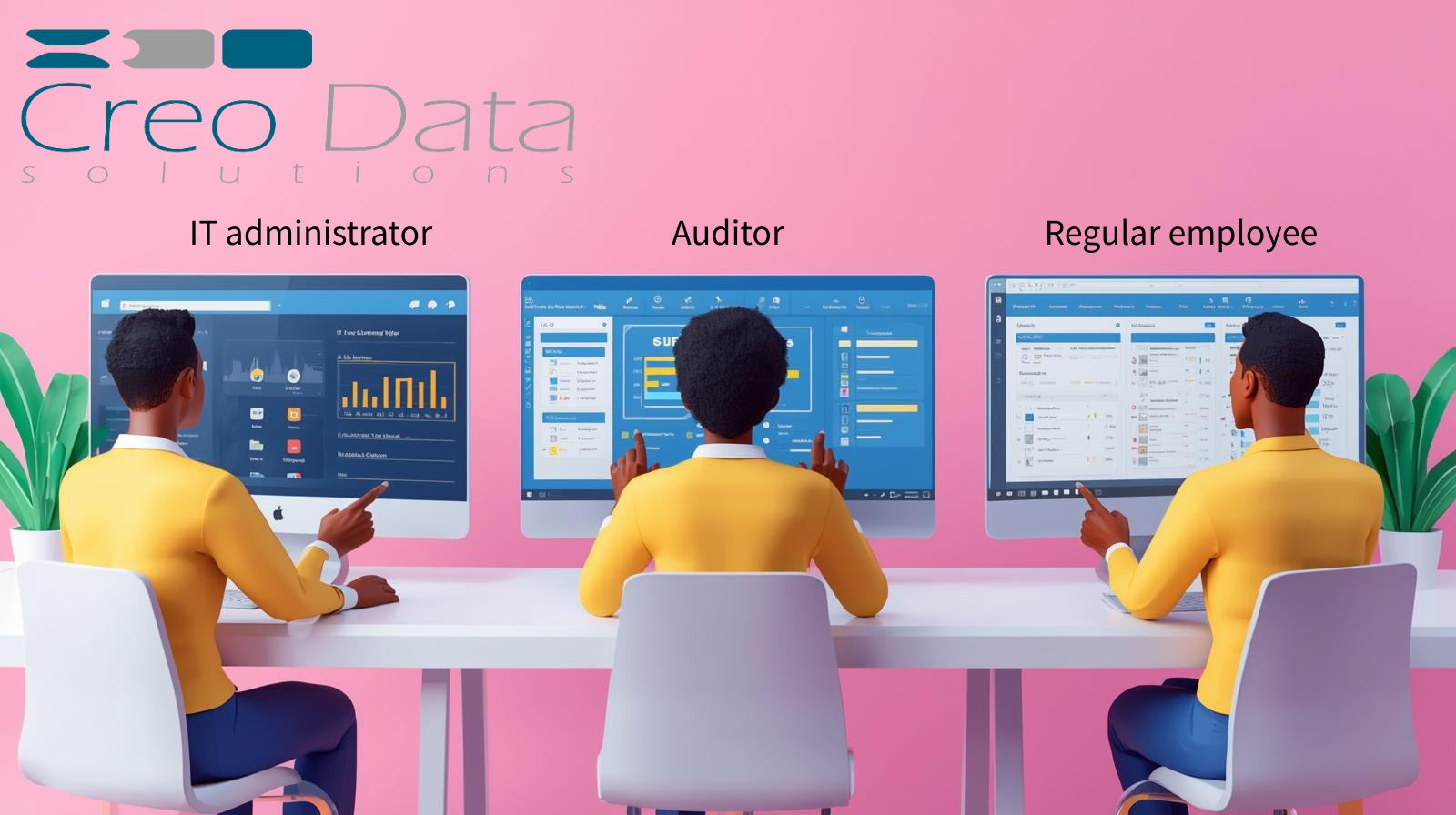
Department KPI Weighting: Why One Productivity Formula Doesn't Fit All
Why a single productivity formula misjudges different teams, and how configurable, per-department KPI weights make the score fair for engineering, finance, HR, sales and more.

Reducing Employee Turnover with Early Burnout Signals
The business case for acting on burnout data early — how leading wellbeing signals, paired with workload rebalancing and manager coaching, can cut attrition, sick leave and project delays.

Deploying Workforce Analytics: Azure Marketplace Managed App or On-Premises
Two deployment paths for workforce analytics — a one-click Azure Marketplace managed application in your own subscription, or on-premises Kubernetes — and how per-user metered billing and backend switches work.

Implementing Workforce Analytics: A Phased Rollout and Change-Management Guide
A phased plan for rolling out workforce analytics — from basic reporting to predictive insight — with the onboarding steps, governance and change-management practices that earn employee trust.
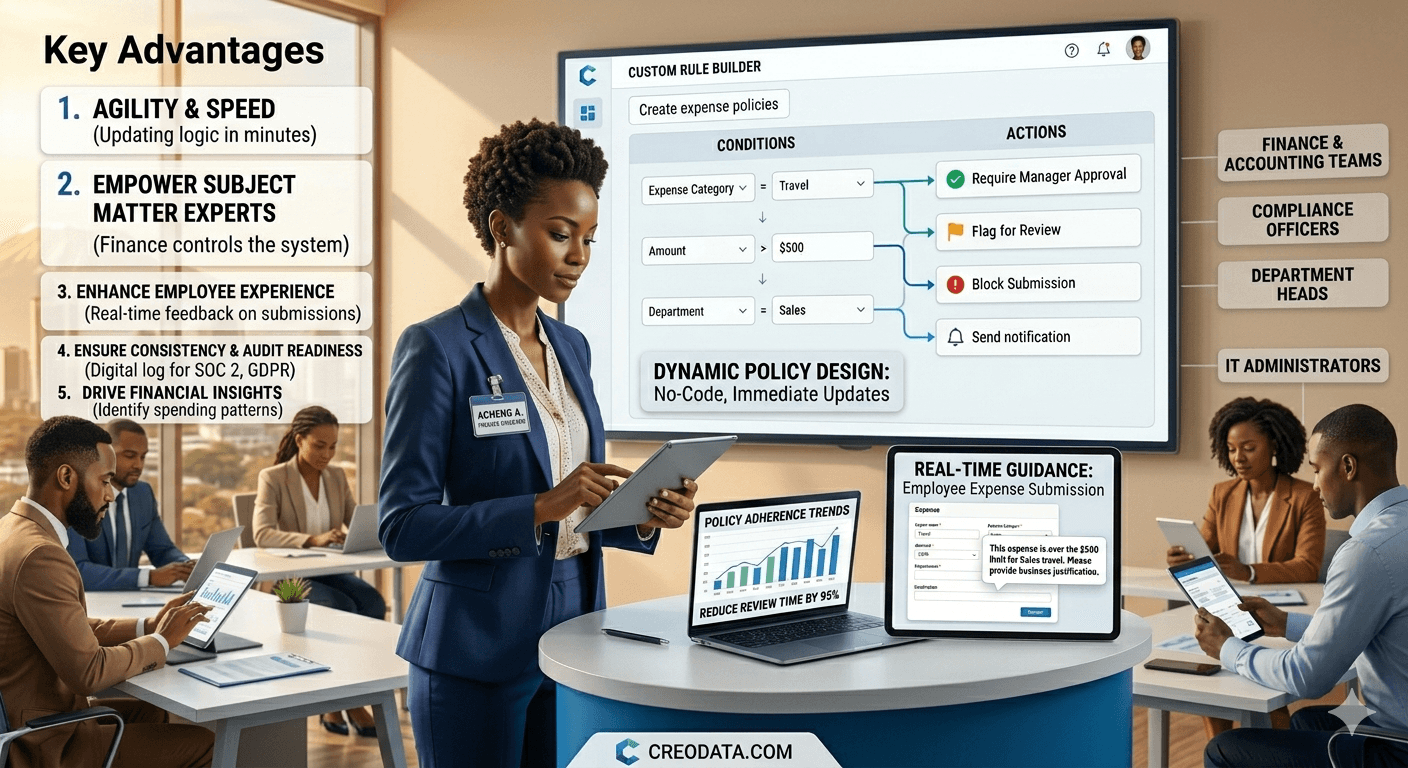
Designing Policies That Match Your Business: A Guide to Dynamic Expense Governance
Build adaptive expense policies with custom rule builders that let administrators create, update, and enforce validation logic dynamically—without writing code.
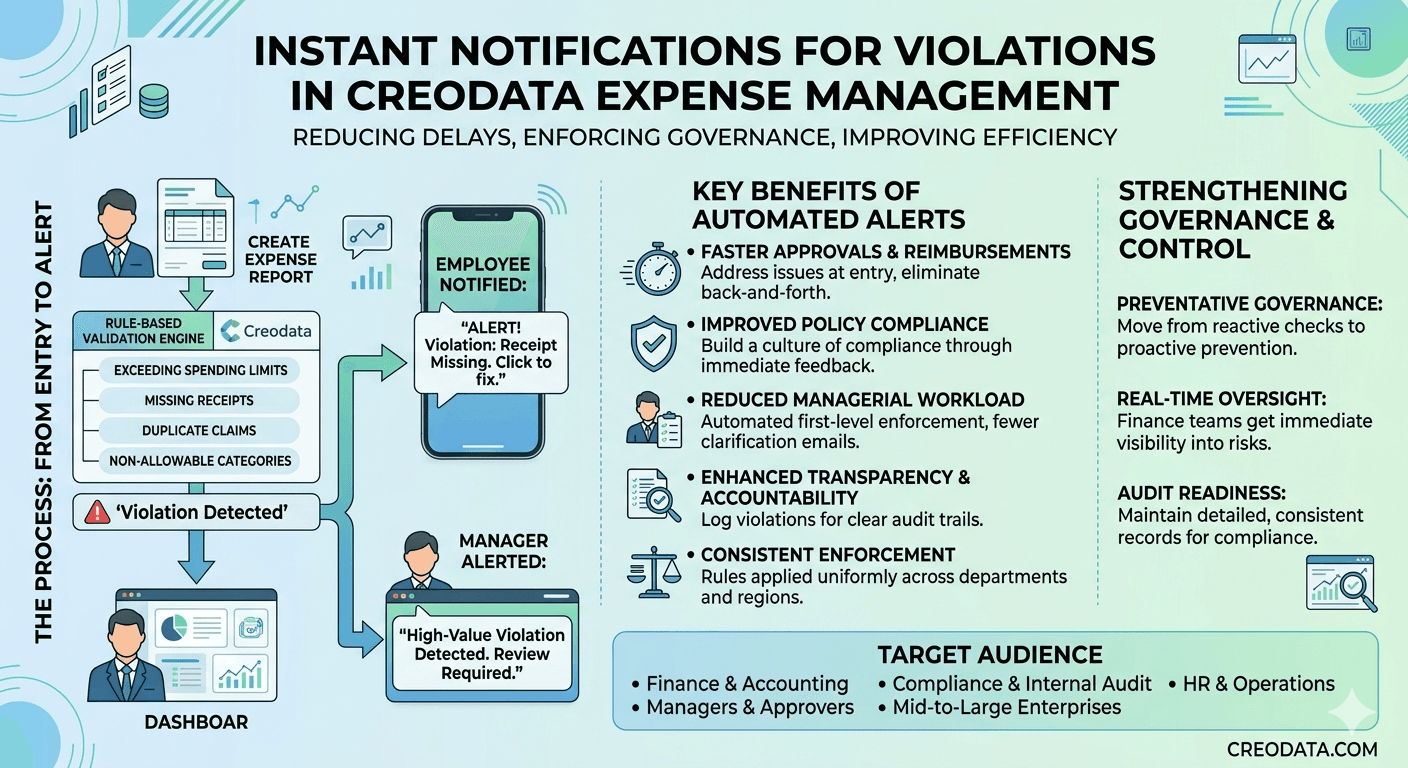
Instant Notifications for Violations
Catch policy violations early with automated alerts that notify managers and finance teams in real time—reducing approval delays and strengthening expense governance.
Staying Compliant with Tax and HR Rules: Regulatory Adherence in Expense Management
Enforce tax thresholds, per diem limits, travel rules, and HR policy constraints automatically across departments and jurisdictions with built-in compliance checks.
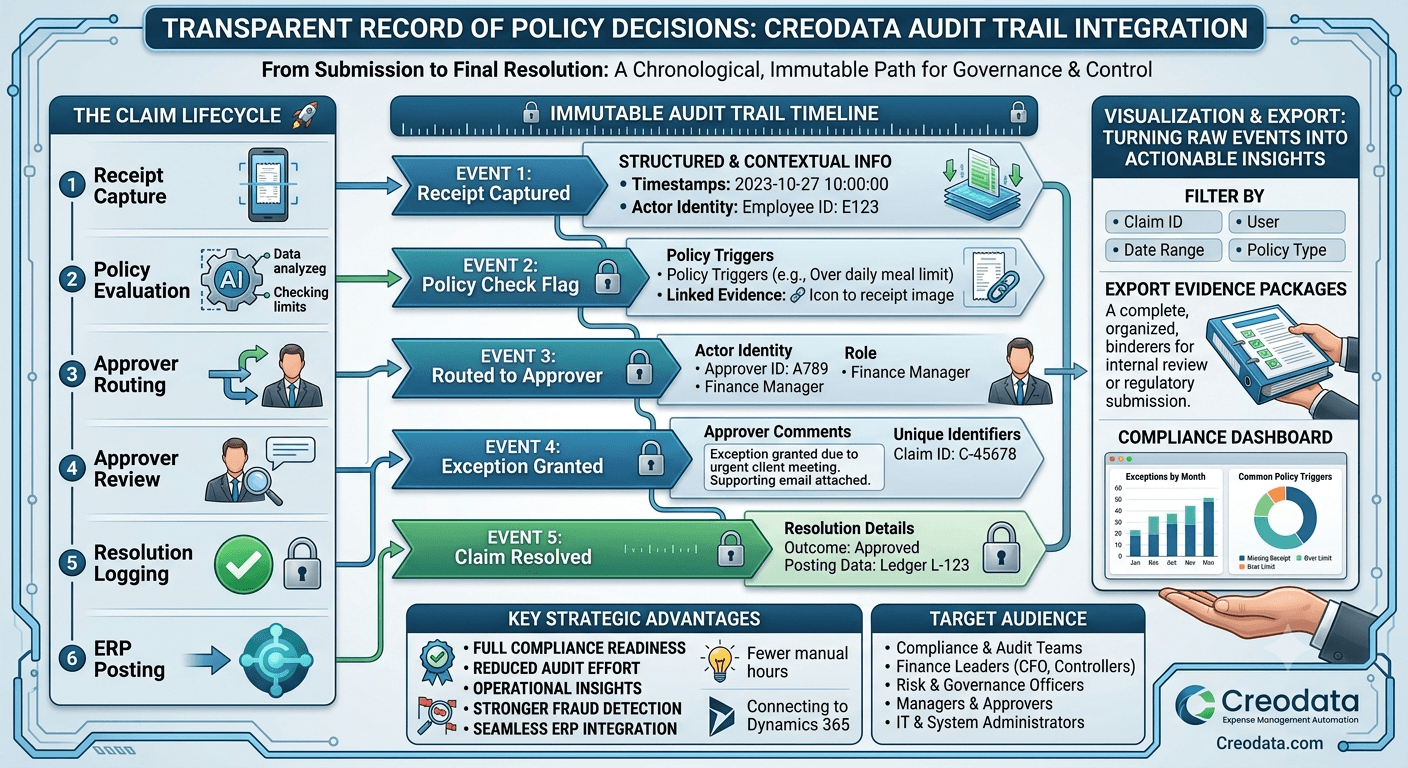
Transparent Record of Policy Decisions
Capture every claim interaction in an immutable audit trail so policy decisions are fully transparent, verifiable, and ready for compliance review.
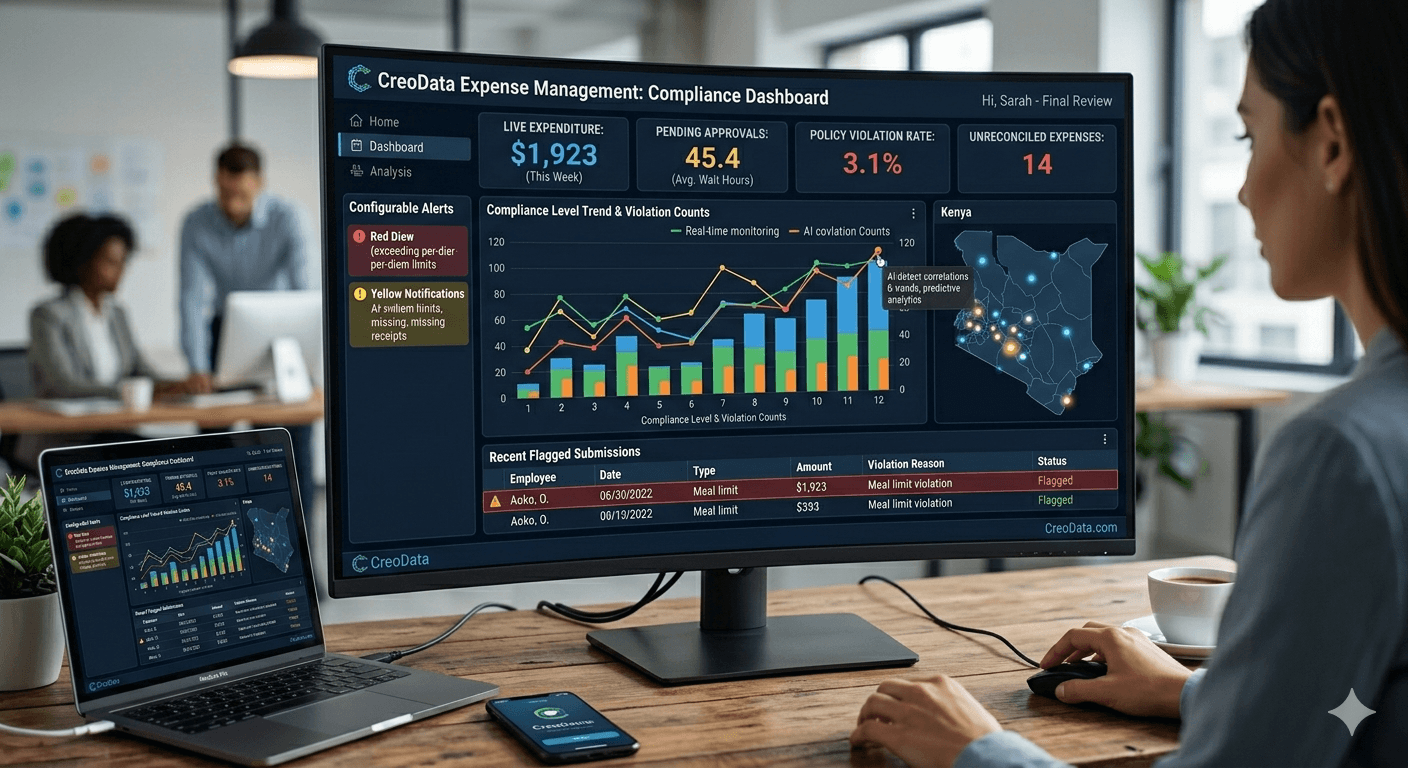
Visual Insights into Expense Behavior: How Compliance Dashboards Transform Financial Governance
Monitor spending patterns and compliance metrics in real time with interactive dashboards that shift expense governance from reactive correction to proactive control.
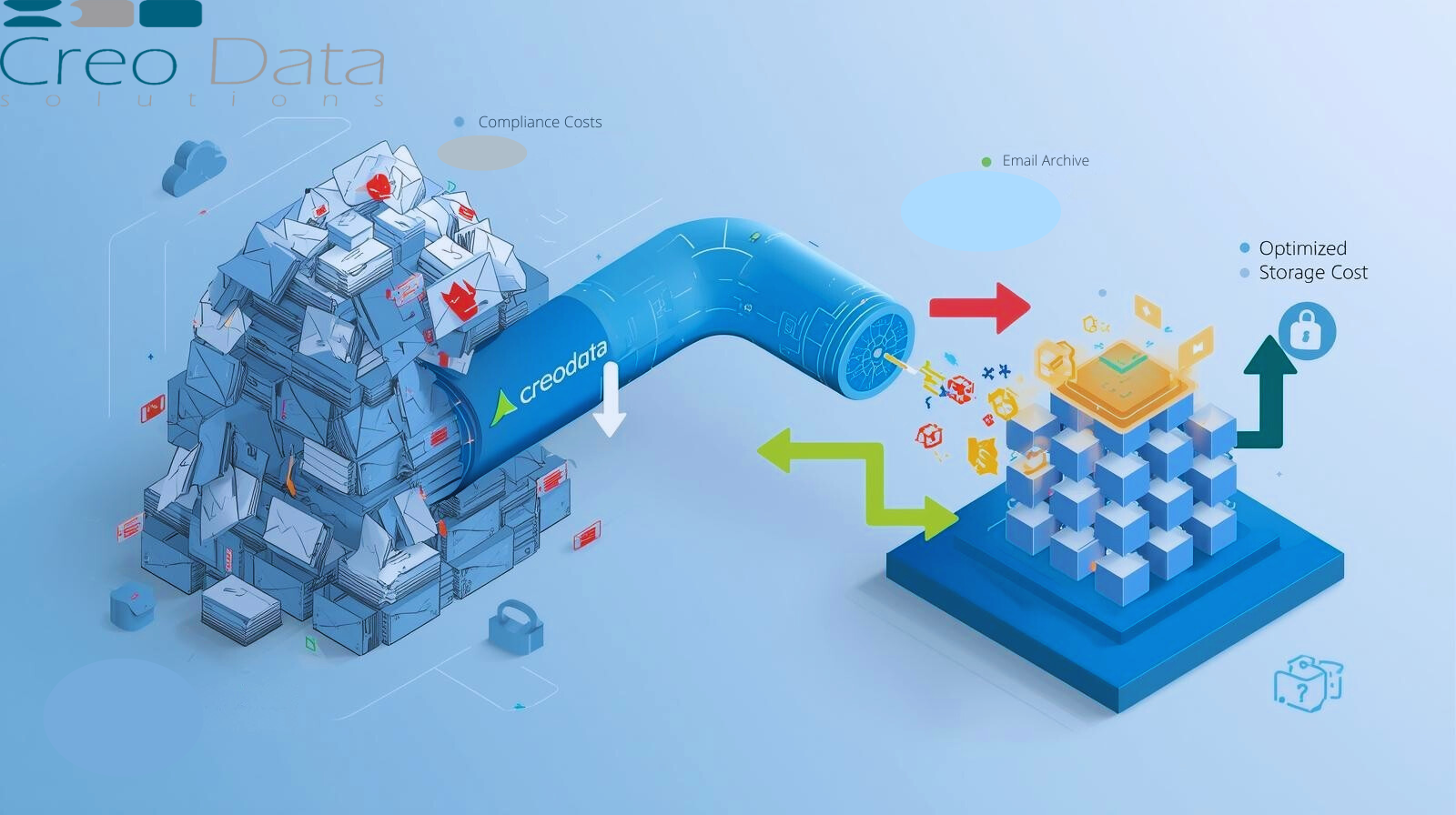
Adverse Media Screening: Catching the Risk Sanctions Lists Miss
Sanctions and PEP lists only show known, designated risk. Adverse media screening surfaces the rest — how negative-news screening works, how to filter for relevance and recency, and where it fits in onboarding, EDD and periodic review.
Audit-Ready AML: Evidence-First Investigations and the Four-Eyes Principle
When an examiner asks you to walk through a single decision, can you? How an append-only audit trail, evidence-first design and the four-eyes principle make every AML decision reconstructable — and inspections far less painful.
AML Case Management: From Alert to Disposition Without Losing the Audit Trail
A walk through the AML case lifecycle — queue assignment, the RFI cycle, SLA management, linked-case investigation, EDD, escalation, and the decision to file or close — built so every step leaves an audit trail.
Why AML Detection Fails Without Data Quality: Ingestion, Mapping, and DQ Rules
No monitoring rule can catch what bad data hides. How disciplined ingestion, field mapping, source certification and data-quality rules give your AML platform the clean, complete data it needs to detect and report accurately.
AML Compliance Platforms: The Complete Guide for Banks, SACCOs & Fintechs (2026)
What a modern AML compliance platform does end to end — customer risk assessment, sanctions and PEP screening, transaction monitoring, case management, entity resolution, explainable AI, data quality, audit trails, and regulatory reporting — the complete 2026 guide for East African institutions.

Keeping Up With AML Regulatory Change: Obligation Registries and Change Notices
AML obligations in East Africa change constantly, and 'we did not know' is not a defence. How an obligation registry, change-notice ingestion and tenant acknowledgement keep your controls aligned to current rules — with evidence you stayed current.
Beneficial Ownership and Entity Resolution: Mapping the Network Behind a Customer
Money launderers hide behind layers of entities. How entity resolution and a beneficial-ownership graph reveal the real network — resolving duplicate records, linking related parties, and surfacing UBO and layering for investigators.
Customer Risk Assessment: Building a Defensible 6-Factor CRA Model
How to build a customer risk assessment model regulators will accept — the six risk factors, configurable weights and bands, periodic review by risk band, and override controls protected by four-eyes approval.

Email Journaling for Microsoft 365: The Complete Guide (2026)
What email journaling is, how it differs from archiving and backup, why it matters for compliance and legal hold, deployment options on Microsoft 365, and how to choose a solution — the complete 2026 guide.

Enhanced Due Diligence (EDD): When to Apply It and What It Requires
When standard CDD is not enough — the triggers for enhanced due diligence, the measures it requires (source of funds and wealth, senior approval, enhanced monitoring), and how to document EDD so it survives an inspection.
Expense Management Automation with AI OCR: The Complete Guide (2026)
How expense management automation works end to end — AI OCR capture, policy validation, approval workflows, corporate-card reconciliation, ERP and GL integration, and audit — the complete 2026 guide for finance teams.
Explainable AI in AML: SHAP, Four-Eyes Activation, and the Kill Switch
AI can sharpen AML detection, but only if every decision is explainable and governed. How explainable AI works in compliance — SHAP top-3 reasons, confidence scores, human Accept/Modify/Reject, four-eyes model activation, drift monitoring and a kill switch.
Loan Management Systems in Kenya for Banks, SACCOs & MFIs: The Complete Guide (2026)
How a loan management system works end to end, from intake and credit approval to disbursement and audit, and what is different for lenders in Kenya.
Money Laundering Typologies Every Compliance Team Should Monitor
A field guide to the money laundering and terrorism financing typologies that matter in East Africa — placement, layering and integration, structuring, mobile-money abuse, trade-based laundering and funnel accounts — and how each maps to a monitoring rule.

How to Reduce False Positives in AML Screening Without Missing Real Risk
AML screening commonly drowns teams in false positives. The tuning levers that cut the noise safely — match thresholds, list scoping, secondary identifiers, explainable match reasons, and governed, four-eyes threshold changes with back-testing.
The Risk-Based Approach to AML: Designing a Program FATF and Your FIU Expect
The risk-based approach is the backbone of every credible AML program. How to translate FATF expectations into an enterprise risk assessment and proportionate controls that connect customer risk, screening, monitoring, case management and reporting.

Sanctions and PEP Screening Explained: Lists, Matching, and Decisions
A practical guide to sanctions and PEP screening — the lists involved, how fuzzy and multi-script name matching works, why every hit needs an explainable reason, and how to run a defensible false-positive workflow at onboarding and on an ongoing basis.
Transaction Monitoring in AML: How Rule-Based and Behavioural Detection Work
How AML transaction monitoring works end to end — rule-based versus behavioural detection, batch and streaming evaluation, typology-aligned rule packs, back-testing and tuning, and how alerts feed case management.
Watchlist Management in AML: Keeping Sanctions and PEP Lists Current and Auditable
Screening is only as good as the lists behind it. How watchlist management works — provider sync, manual uploads, versioning, and freshness and coverage dashboards that prove your lists were current when you screened.
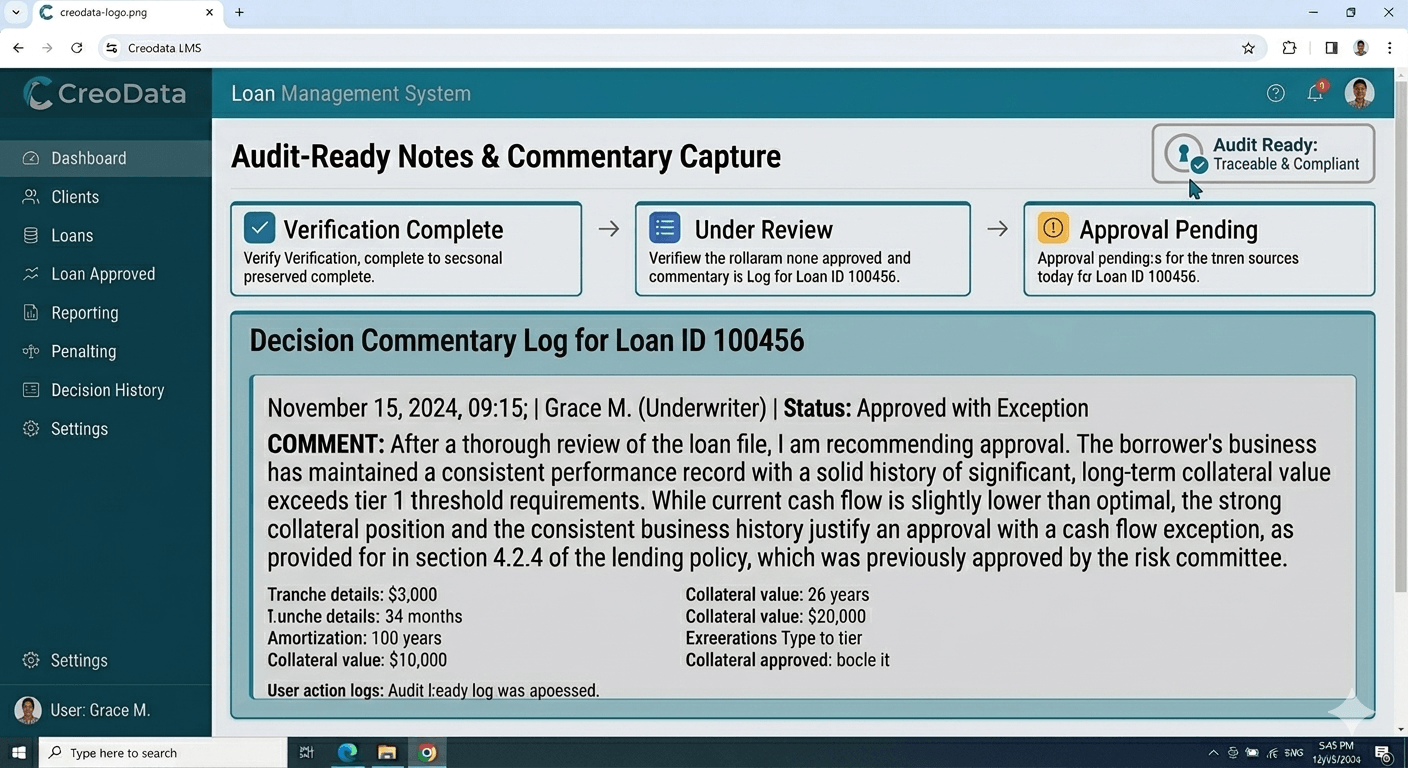
Audit-Ready Notes & Commentary Capture
Log user comments and notes alongside status changes in loan workflows for richer context, stronger accountability, and audit-ready decision trails.
Automated Document Verification Microservice
Verify loan documents at scale with a dedicated microservice for KYC, AML, and compliance checks—reducing manual review and accelerating approvals.

Complete Status Change Audit: Transition Logging in Audit Trail & History
Track every loan status transition with who changed what, when, and from which state—building accountability and compliance into your lending workflow.
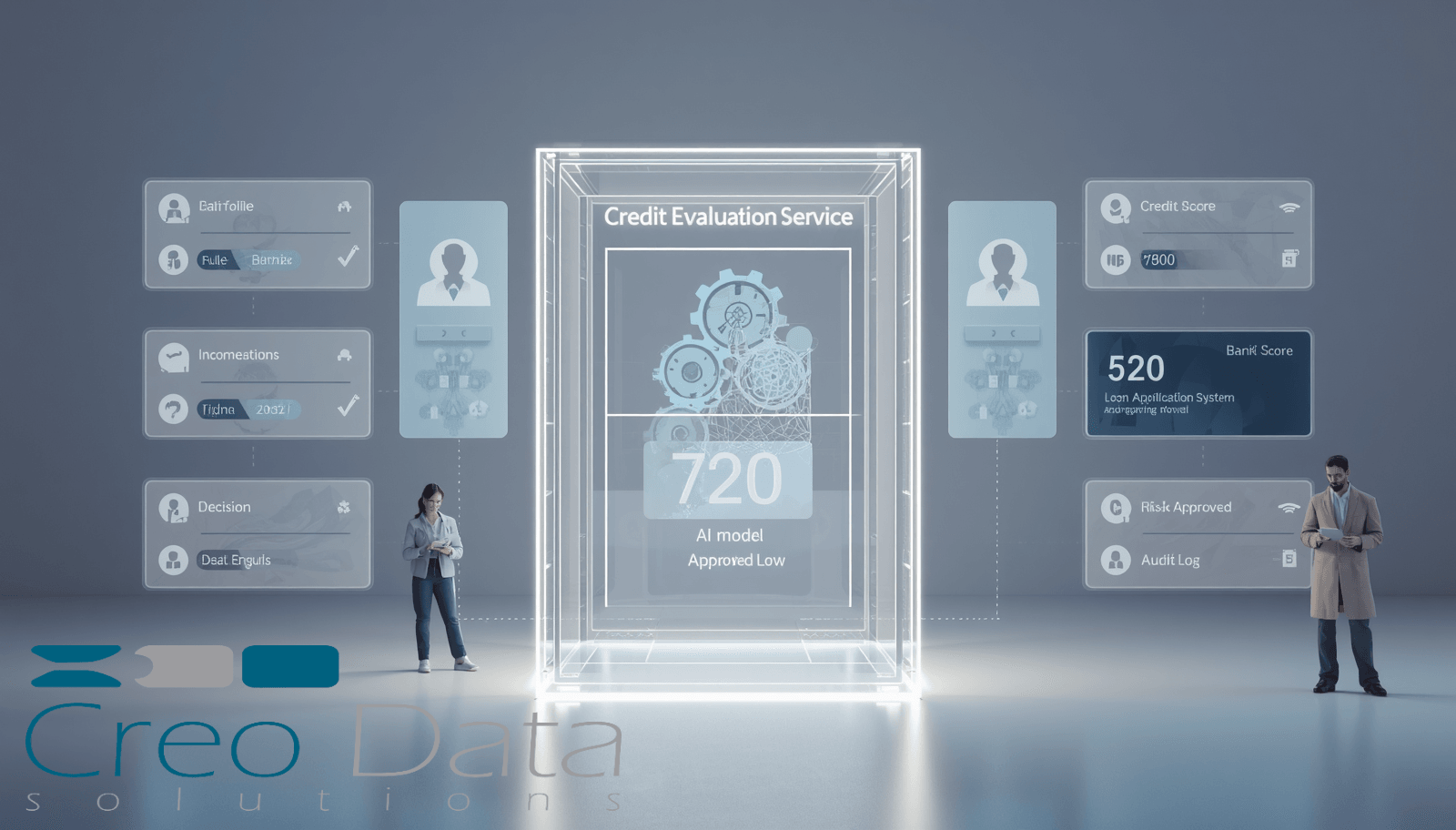
Credit Evaluation Microservice
Isolate credit evaluation in a dedicated microservice for faster, fairer, and auditable lending decisions that scale with modular loan-management architecture.

Disbursement Trigger Microservice
Decouple disbursement from monolithic loan systems with a microservice that reliably triggers fund transfers once loans are approved.
goAML Reporting: The Complete Guide for Banks and FIUs (2026)
goAML is the UNODC system FIUs use to receive CTRs and STRs. What it is, who must report, the XML schema, rejections, and country rules across East Africa.
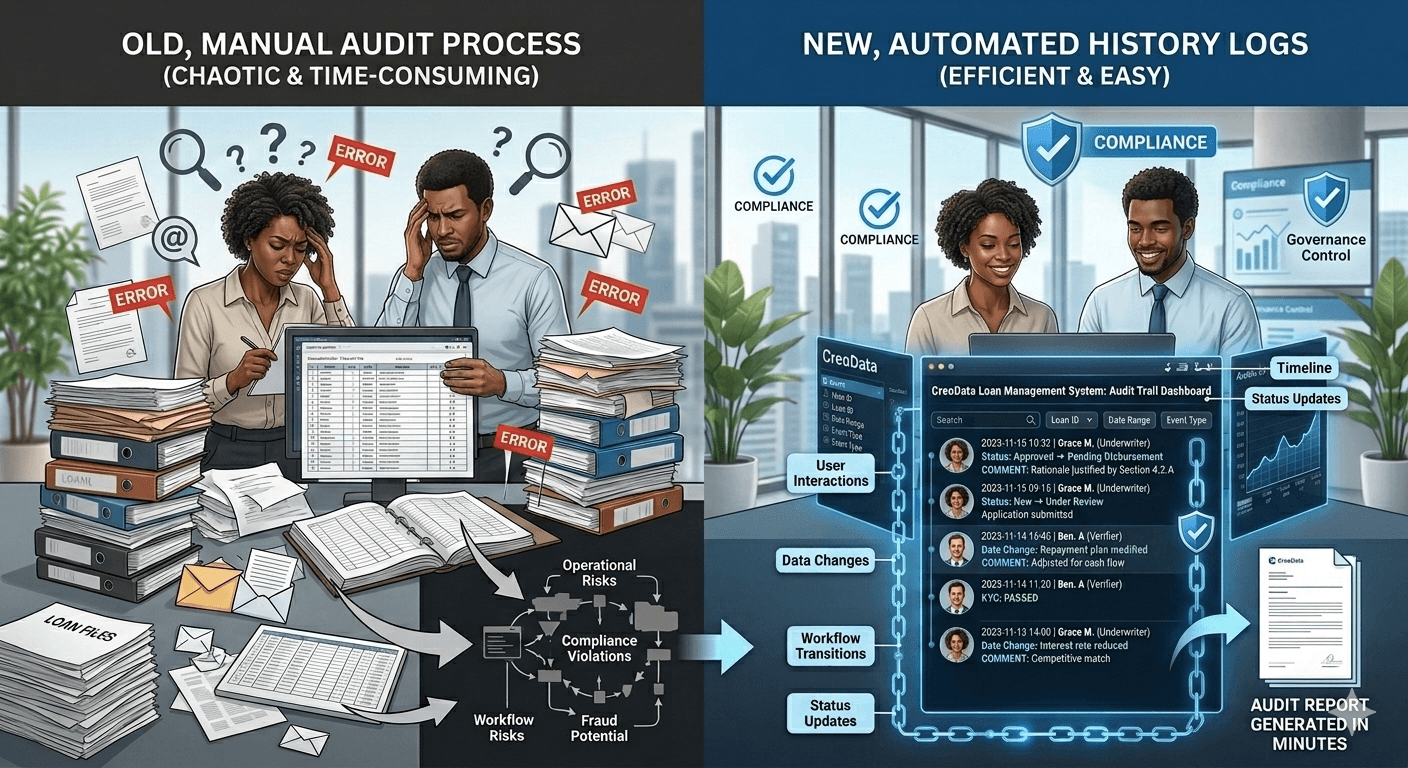
Internal Audits Made Easy with History Logs
Give internal audit teams searchable history logs across the loan lifecycle so compliance verification and governance reviews take minimal manual effort.
Regulatory-Ready History Reporting: The Cornerstone of Modern Lending Compliance
Generate complete, immutable history reports on demand to meet regulatory scrutiny and turn compliance from a reactive scramble into proactive operations.

Repository Abstraction & Dependency Injection in Loan Modules
Build flexible, maintainable loan modules with repository abstraction and dependency injection for clean data access and modular microservice architecture.
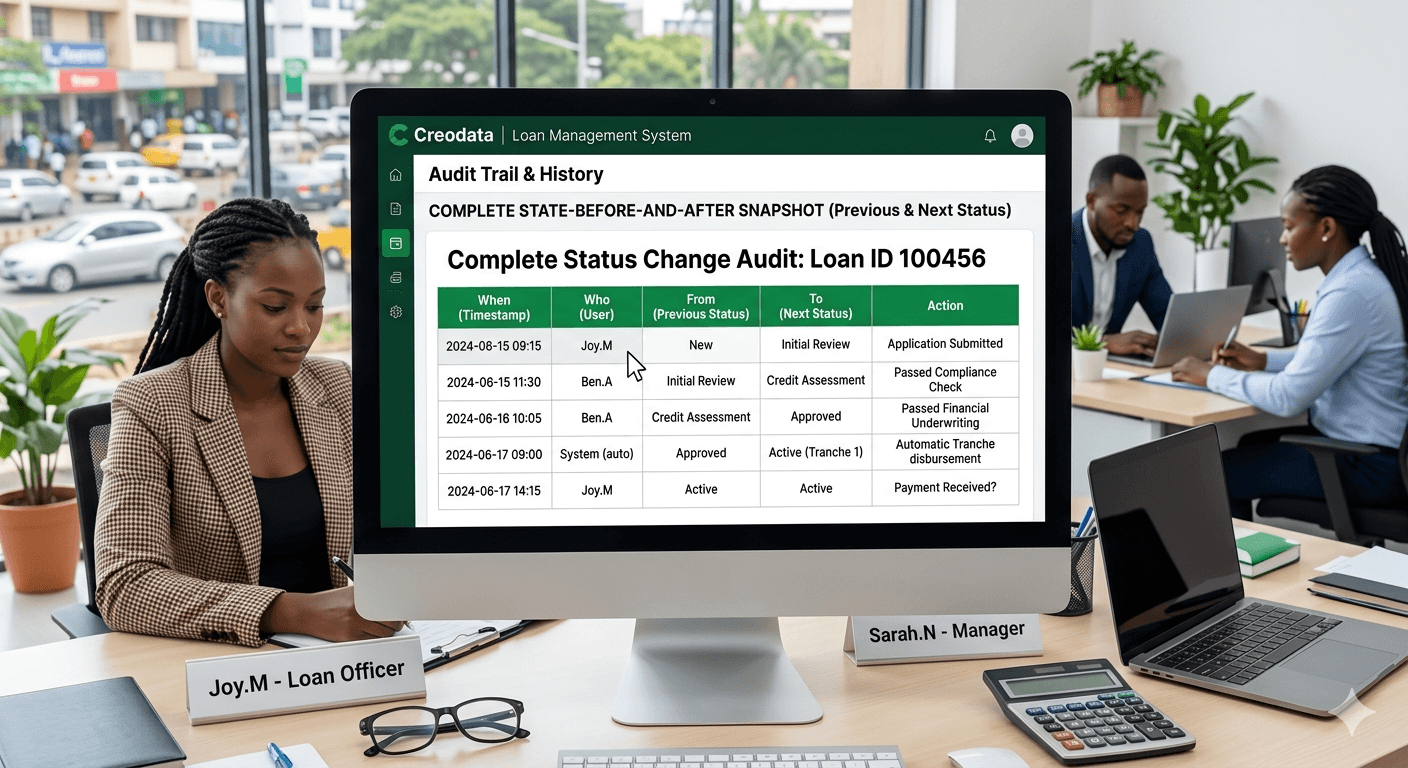
State-Before-and-After History Snapshot
Capture before-and-after snapshots of loan application state so auditors and compliance teams can verify exactly what changed at every workflow step.
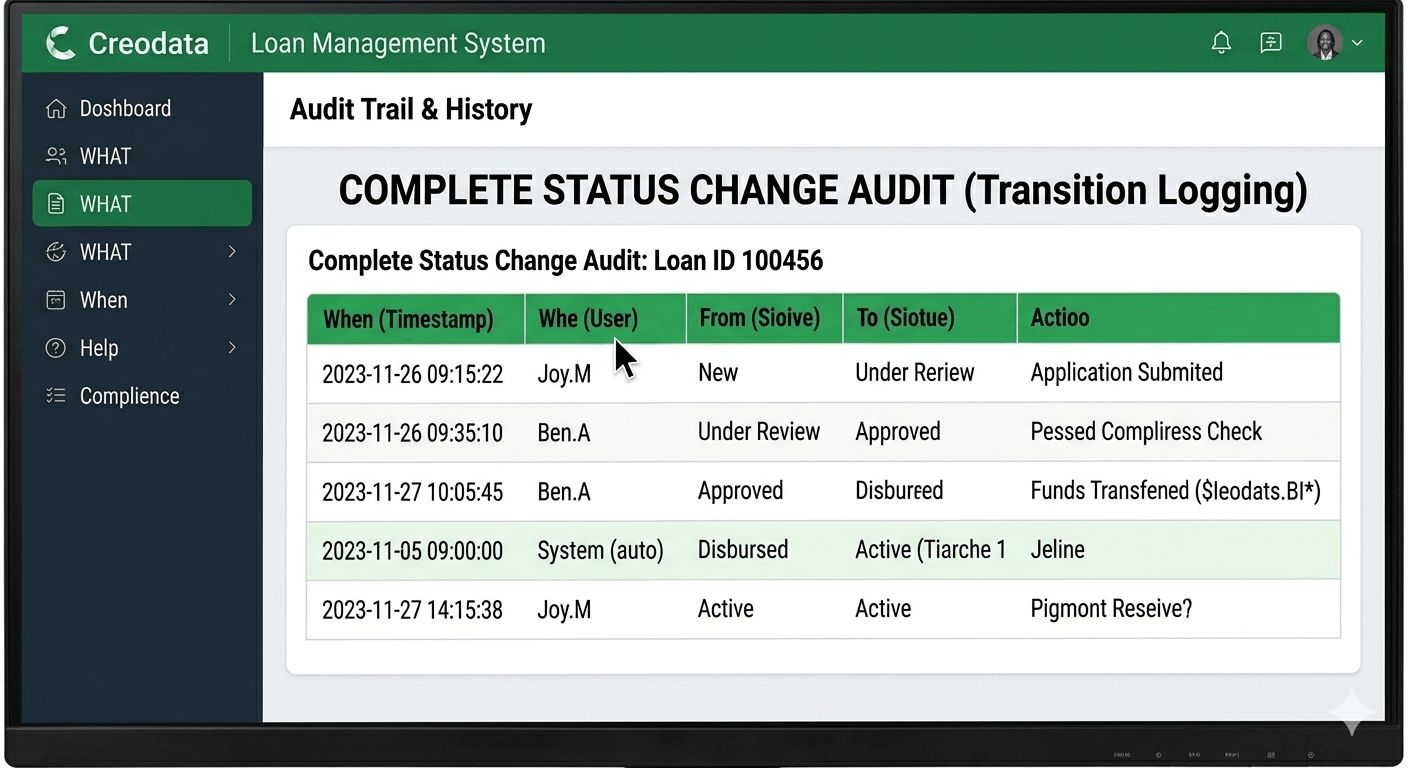
Time-Stamped Application Audits: Strengthening Audit Trail & History with Timestamp Records
Record every loan workflow action with immutable timestamps for a reliable chronological audit trail from application through approval or rejection.
User Action Traceability in Loan Workflow
Track who submitted, verified, approved, and changed each loan application so every action across the lending workflow is fully traceable.
Seamless Purchase via Azure Marketplace: Simplifying Licensing & Commercial Procurement for Mail Journaling
Subscribe to Creodata Mail Journaling through Azure Marketplace for unified billing, self-service procurement, and native Azure integration—without lengthy contract cycles.

Connecting Mail Journaling with SIEM and DLP Tools
Stream mail journaling data into SIEM and DLP platforms via REST APIs and webhooks for real-time threat detection, deeper visibility, and stronger data protection.
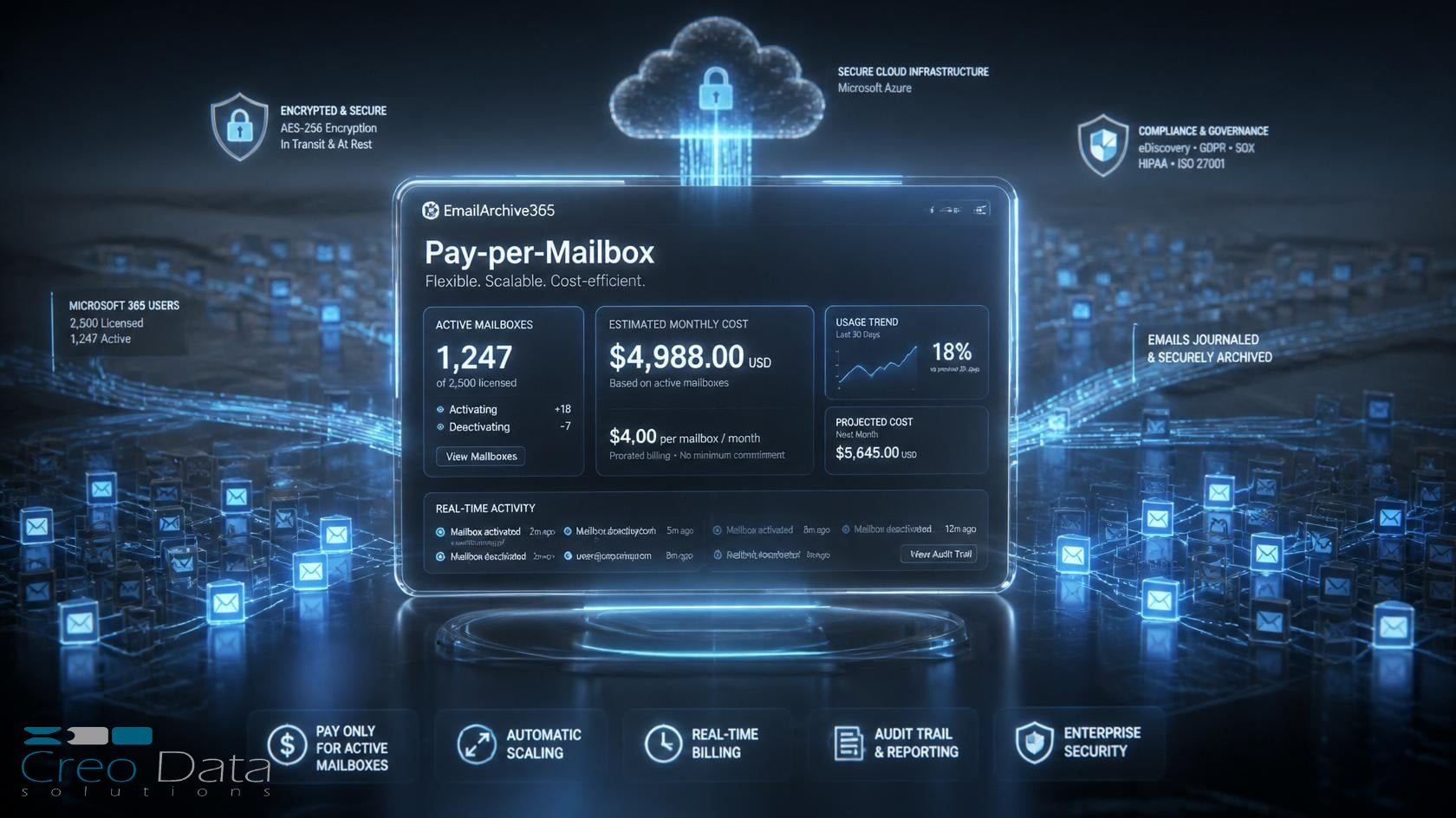
Flexible Mailbox-Based Pricing
Pay only for active journaled mailboxes with metered billing that aligns cost with actual usage and scales efficiently as your organization grows.

Running Mail Journaling in Mixed Environments: Hybrid Flexibility for Integrations & Extensibility
Run mail journaling across on-premises and cloud simultaneously with hybrid flexibility that supports gradual migration while maintaining compliance and data sovereignty.

Scaling Costs with Business Growth: The Smart Path to Enterprise Compliance
Scale mail journaling costs with business growth using cloud SaaS pricing—start small, expand gradually, and pay only for what you use without peak-capacity upfront investment.

Seamless Cloud Hosting with ARM and Bicep
Deploy Mail Journaling on Azure with ARM templates and Bicep for repeatable, infrastructure-as-code hosting integrated with Azure storage and secret management.
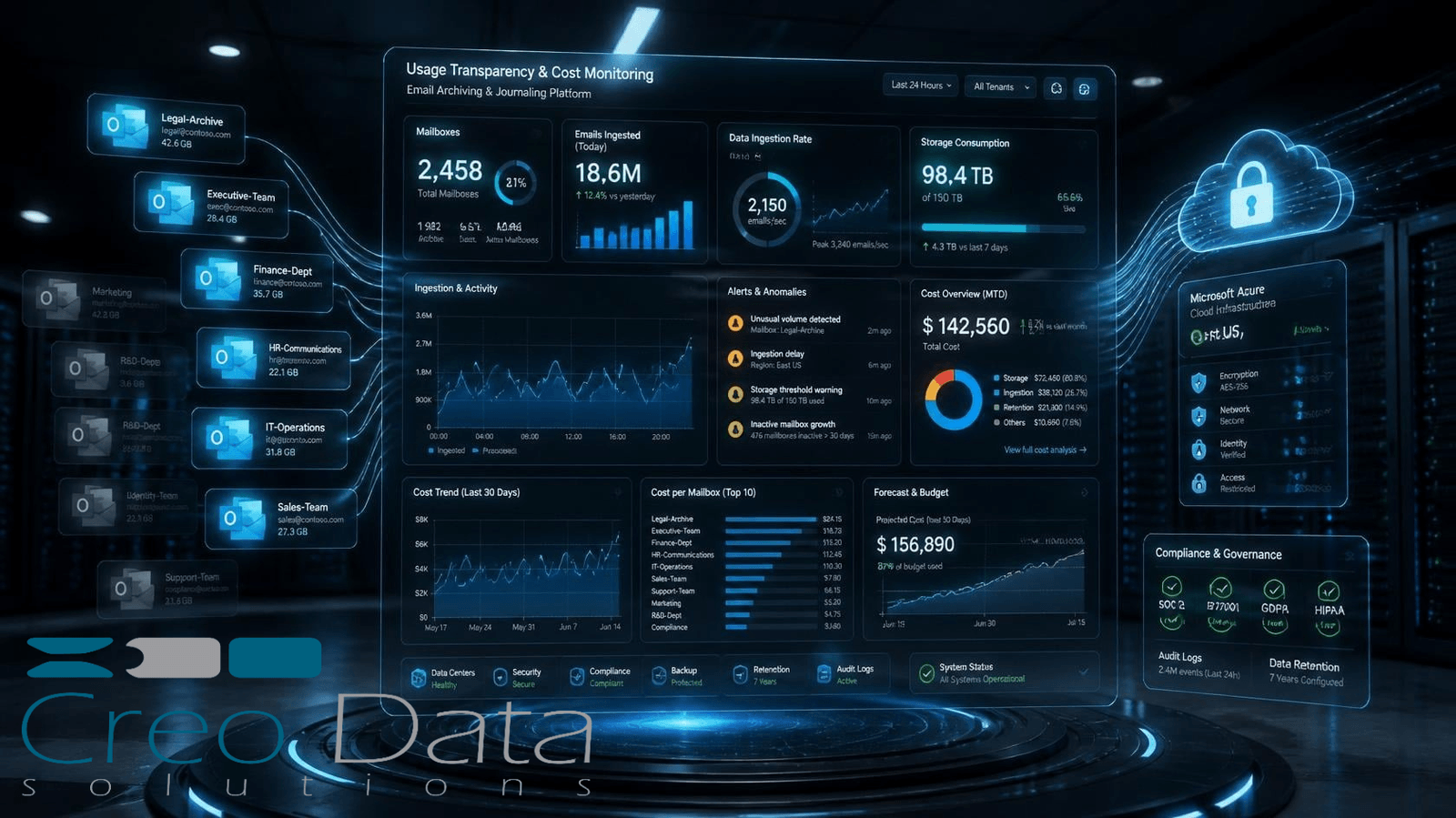
Track Usage and Costs in Real Time: Mastering Financial Oversight in Email Archiving
View mailbox usage metrics and monthly cost breakdowns in real time through dashboards that turn email journaling into a financially optimized compliance function.
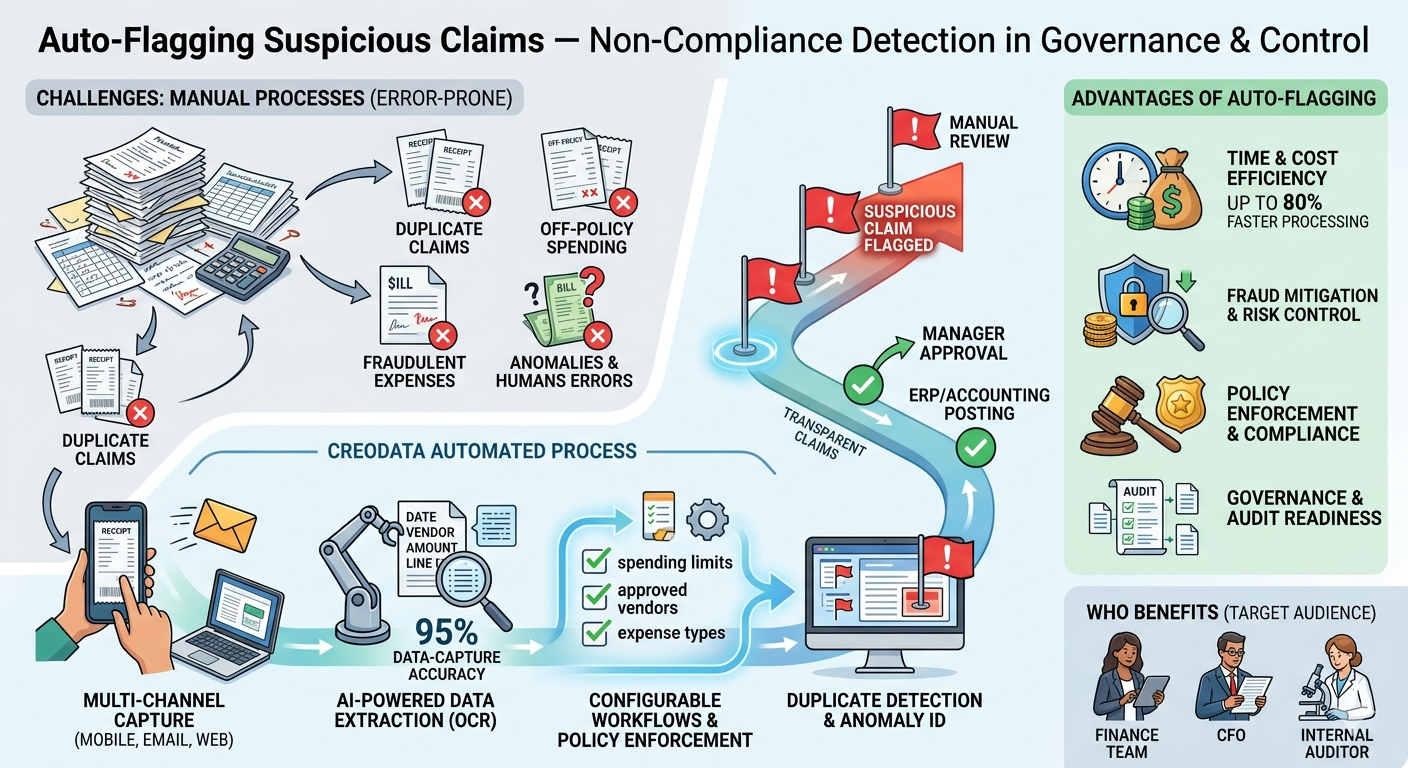
Auto-Flagging Suspicious Claims — Non-Compliance Detection in Governance & Control
Automatically detect duplicate claims, off-policy spending, and suspicious patterns before reimbursement—with AI capture, configurable workflows, and full audit trails.
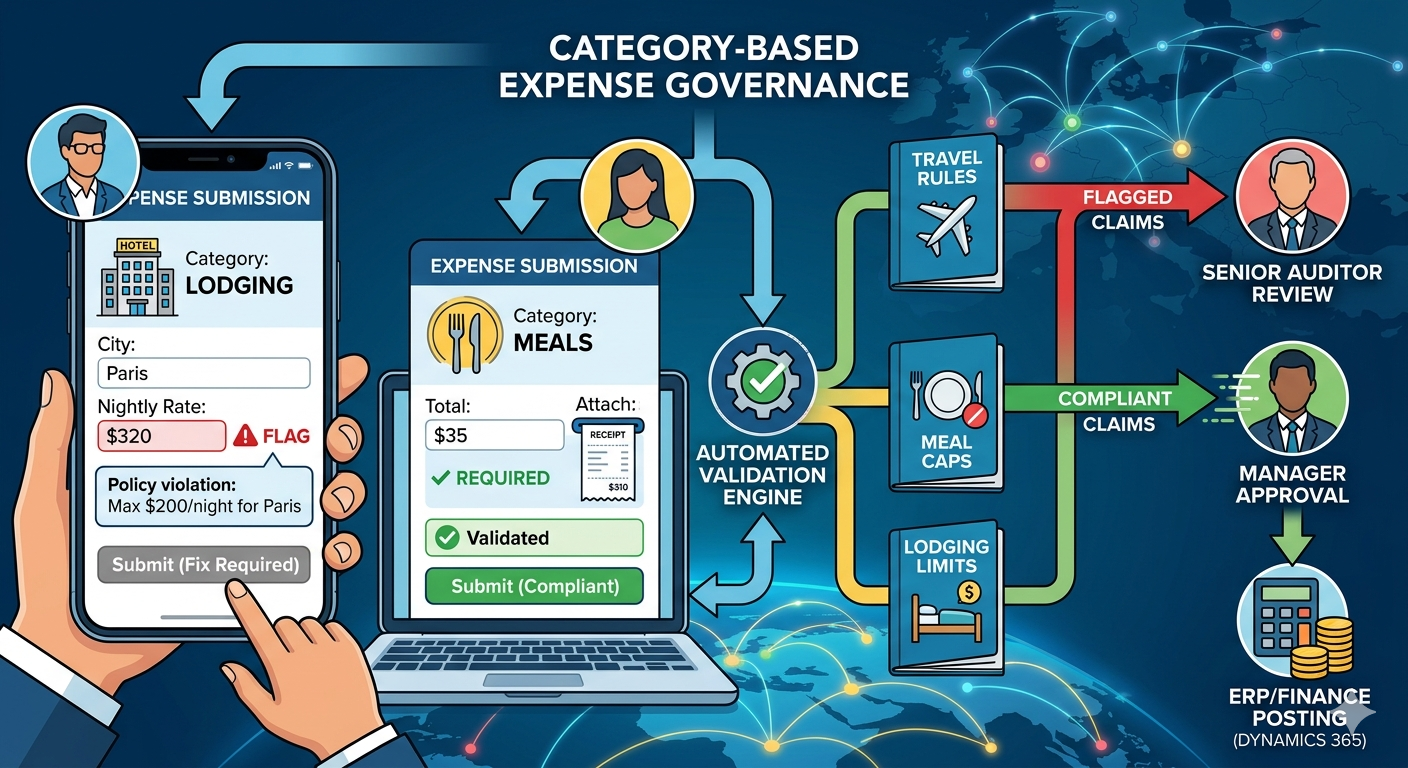
Different Rules for Different Expense Types: Governance & Control with Category-Based Rules
Apply custom validation rules per expense type—travel, meals, lodging, and more—to enforce policy automatically, reduce manual review, and strengthen governance across your organization.
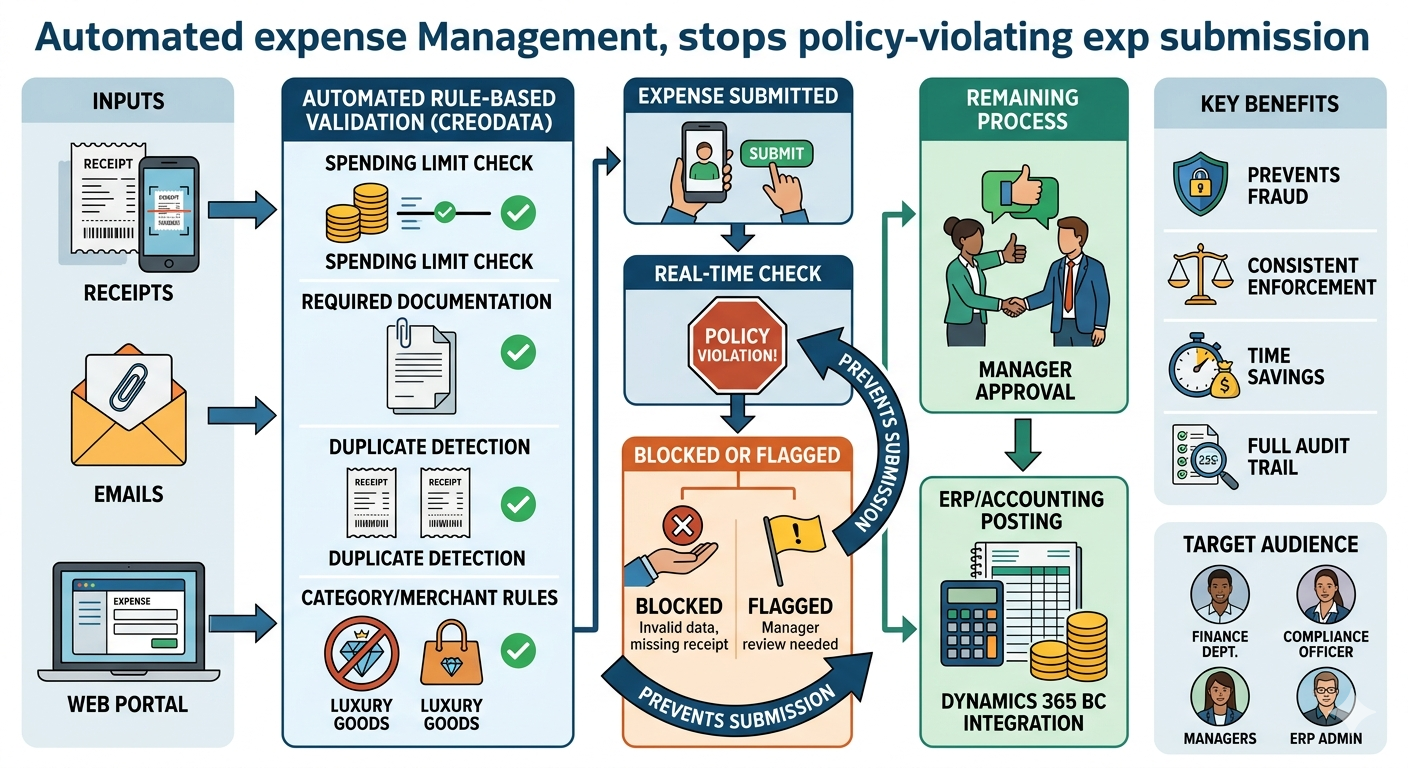
Preventing Policy Violations Before Submission: Rule-Based Validation in Governance & Control
Block or flag policy-violating expenses at submission with real-time rule checks—spending limits, documentation requirements, duplicate detection, and category-specific controls.
Rwanda FIC goAML Reporting: A Practical Guide for Banks
How Rwandan banks and reporting persons file STRs and CTRs with the Financial Intelligence Centre through goAML — sector-specific thresholds, the 24-hour STR rule, and 2023–2026 changes.
Tanzania FIU goAML Reporting: A Practical Guide for Banks
How Tanzanian banks and reporting persons file STRs and CTRs with the FIU through goAML — the USD 10,000 CTR threshold, 24-hour STR deadline, and Zanzibar rules.
Uganda FIA goAML Reporting: A Practical Guide for Banks
How Ugandan banks and accountable persons file STRs and large cash transaction reports with the FIA through goAML — the UGX 20 million threshold, the two-working-day STR deadline, and 2024–2026 changes.
Data-Driven Loan Intelligence: Event-Based Insights for Smarter Lending
Discover how event-based insights across the loan lifecycle help lenders improve approval rates, detect bottlenecks early, and build smarter, data-driven lending operations on Creodata.

Document Upload as a Service
Learn how a dedicated UploadDocumentsFn microservice handles loan document ingestion, validation, and secure storage—so lending platforms stay modular, compliant, and scalable.
Fast Application Submission Microservice
See how a SubmitLoanApplicationFn microservice decouples loan intake from monolithic origination—enabling faster submissions, elastic scale, and independent evolution for lenders.

Automating Mailbox Maintenance Tasks
Programmatically archive, clean up, and configure mailboxes with Creodata Mail Journaling APIs—reducing IT workload, enforcing retention policies, and keeping Microsoft 365 environments compliant at scale.

Real-Time Mailbox Monitoring via Webhooks
Push mailbox events to compliance, SIEM, and custom systems in real time with webhook subscriptions—turning Creodata Mail Journaling into an active, event-driven integration platform.
Keeping Systems in Sync Through Polling
Use polling endpoints to keep external systems synchronized with mailbox events when webhooks are not feasible—reliable pull-based integration for Creodata Mail Journaling.

Deploying Mail Journaling in Private Infrastructure
Host Creodata Mail Journaling on your own Kubernetes cluster for full data sovereignty, compliance, and control when cloud SaaS deployment is not an option.

Audit-Ready Event Logs
Capture immutable, searchable event logs for every loan lifecycle action—giving auditors and regulators full traceability of who did what, when, and why.
Timely Applicant Notifications
Deliver real-time proactive alerts to loan applicants and credit teams at every application stage—powered by event-driven architecture and Azure Service Bus.

Adapting to Unique Accounting Structures
Map expenses to custom charts of accounts with configurable templates and flexible integration—aligning Dynamics 365 automation with multi-entity and jurisdiction-specific ledger structures.

Automated Expense Policy Validation: Governance & Control
Enforce corporate spending rules in real time with AI-powered capture, automated policy checks, and ERP integration—blocking non-compliant claims before approval.
From Expense Data to Financial Intelligence
Turn real-time expense data into actionable insights with Creodata and Dynamics 365 analytics—improving spend visibility, budgeting, and cost control across teams and projects.
Kenya CTR Threshold: The USD 15,000 Rule Explained
Kenya's CTR threshold is USD 15,000 or equivalent per cash transaction, filed with the FRC through goAML by Friday of the same week. What counts and what does not.
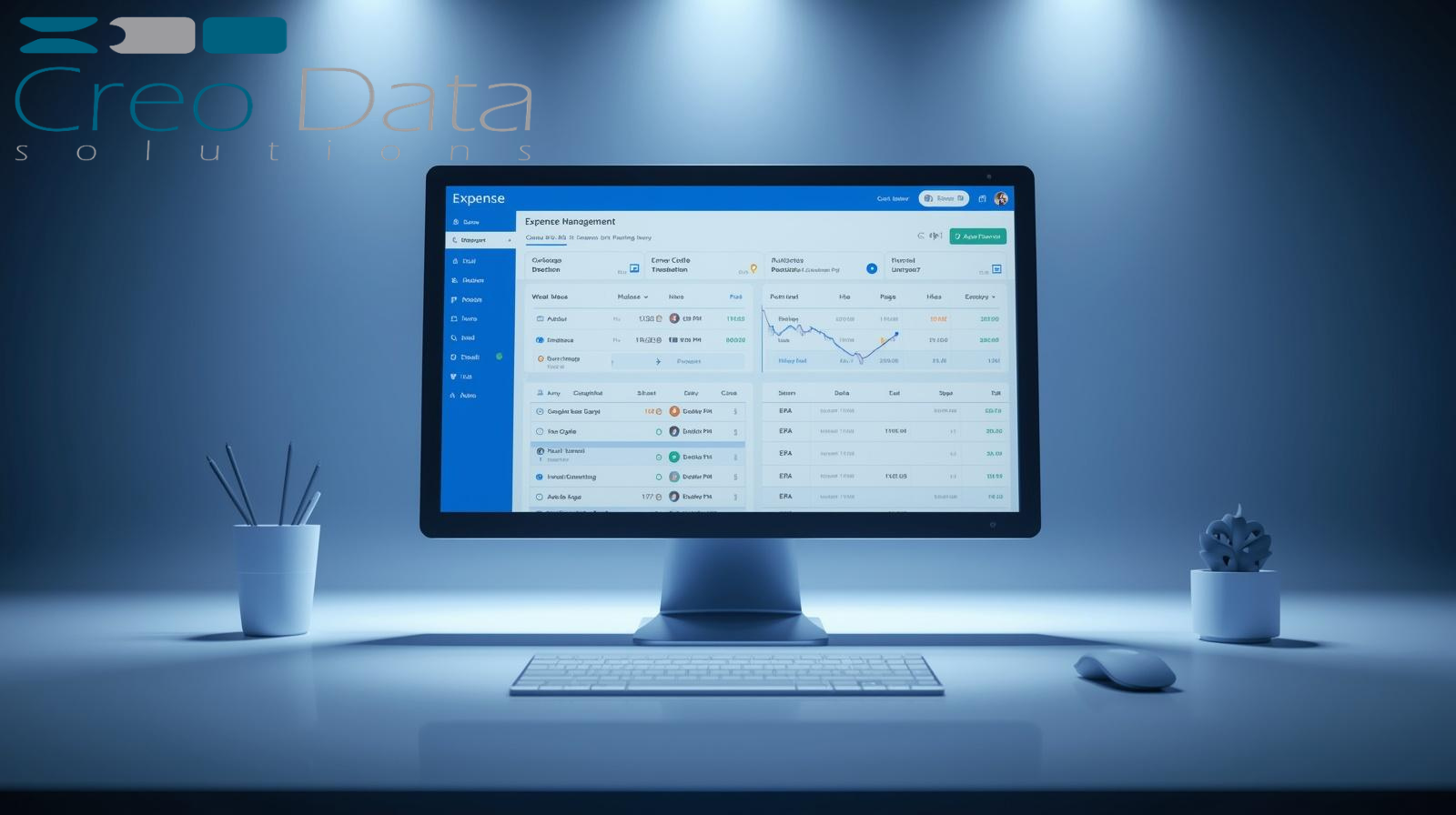
Reducing Posting Errors with Validation Rules
Reduce ERP posting errors with automated validation, mapping, and exception handling—preventing duplicates, misclassifications, and missing data before they hit the ledger.
Scaling Loan Operations Efficiently
Learn how asynchronous event handling helps lending platforms absorb spikes, decouple workflows, and scale loan origination through repayment without bottlenecks.
Simplifying Multi-Entity Expense Reporting
Streamline multi-entity expense capture, approval, and GL posting with integrated automation—accelerating consolidation, improving governance, and reducing reconciliation effort.
Strengthening Financial Audit Trails
Build audit-ready expense records with automated capture, policy enforcement, approvals, and synchronized GL posting—delivering full traceability from receipt to ledger.

Unified Event Publishing Layer
Standardize event publishing across modules with a single interface contract, improving consistency, governance, observability, and flexibility in event-driven systems.

Programmatic Access to Email Archives
Explore how REST APIs unlock automation, integration, and compliant retrieval from archived email — turning your archive into a programmable platform.
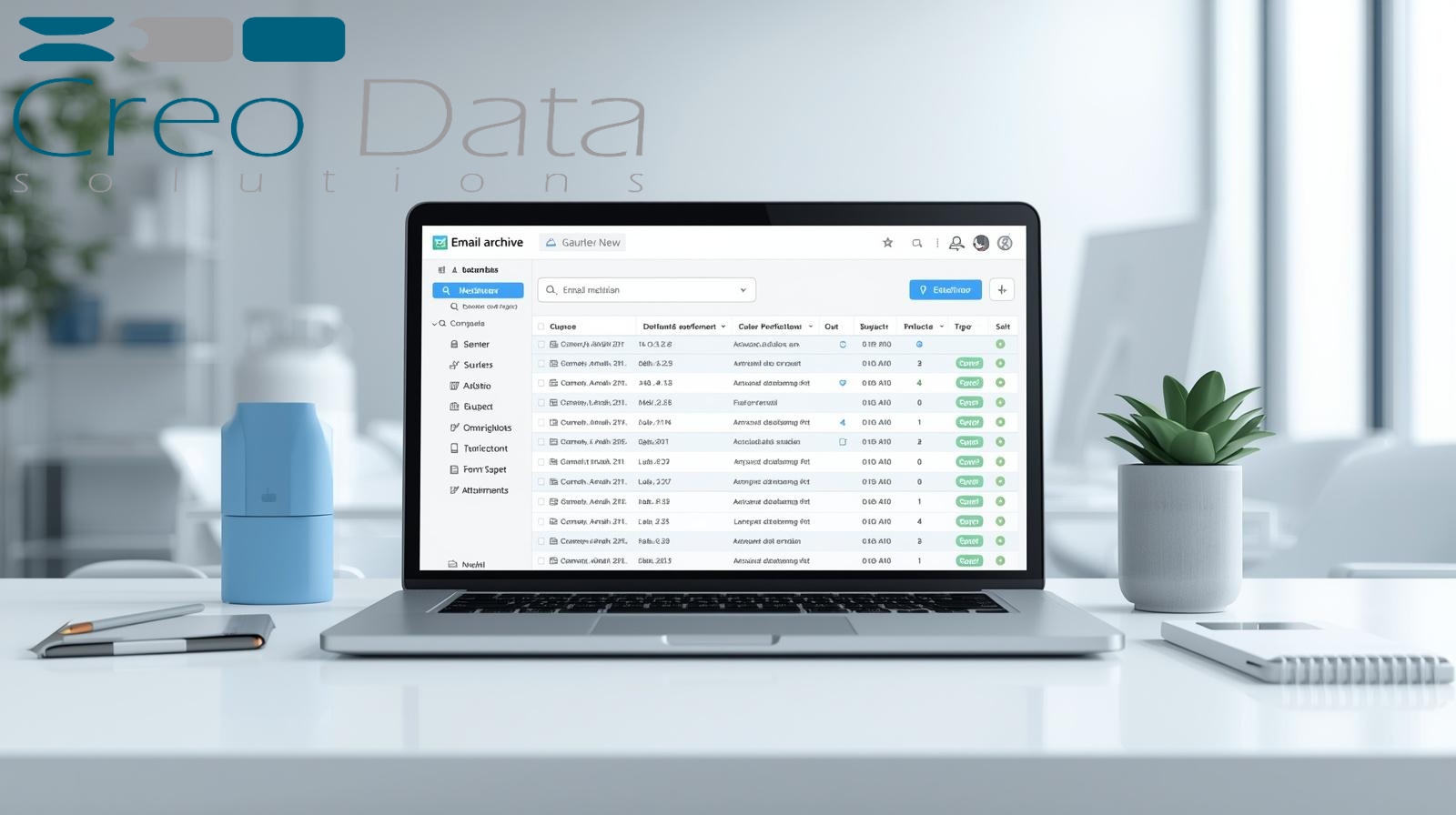
Querying and Filtering Mail Records via API
Learn how metadata indexing and API-driven filters make it easy to search, extract, and act on archived email at scale for compliance, audits, and e-discovery.

Streamlining User Onboarding and Offboarding through Automated User Lifecycle Management
Automate onboarding and offboarding with directory sync and role-based access control to reduce orphan accounts, tighten compliance, and improve IT efficiency.
Loan Origination System Integration with Core Banking: A Guide for Kenyan Banks and SACCOs
Learn how Creodata's Loan Management Module integrates with core banking systems using Azure Service Bus for real-time synchronization of loans, repayments, and fund transfers.

Instant Expense Visibility in ERP: How Real-Time Data Flow Supercharges Finance Control
See how real-time expense capture, approvals, and posting into Microsoft Dynamics 365 Business Central give finance instant visibility, tighter control, and faster closes.
Real-time Application Status Updates
See how an event notification framework provides real-time loan application status updates for borrowers and loan officers, improving transparency, speed, and audit readiness.
Unified Approval Across Systems
Learn how approval workflow sync keeps expense decisions and audit trails aligned across Creodata Expense Management and Microsoft Dynamics 365 Business Central.

Eliminate Manual Journal Entries
See how automated receipt capture, approvals, and direct ERP posting eliminate manual journal entry work, improve GL accuracy, and create an audit-ready expense workflow.

Event-Driven Architecture: Event Grid Triggers for Automated Document Verification
See how Azure Event Grid triggers power automated document verification in a loan management context, enabling real-time compliance checks, faster processing, and scalable event-driven workflows.
Fine-Tuned Permissions for Sensitive Data
See how granular permission controls in RBAC secure confidential email archives by limiting actions like viewing, exporting, and modifying to the right roles.

Accurate Expense Classification: GL Account Mapping in Integrations & Automation
Learn how GL account mapping automates expense classification and posting to the correct ledger accounts in Dynamics 365 Business Central, improving reporting accuracy and audit readiness.

Instant Loan Application Notifications
Learn how an event-driven architecture with Azure Service Bus enables instant loan application notifications, improving customer experience, operational efficiency, and visibility for lenders.
Managing Multiple Teams Securely
Learn how multi-tenant administration and RBAC help regulated organizations securely manage access across multiple teams, departments, or clients—without data overlap.
Seamless Credit Workflow Transitions
Learn how event-driven workflow transition events can move loans smoothly from credit check to approval and disbursement, improving speed, consistency, and auditability for lenders.

Seamless ERP Synchronization
Learn how Creodata Expense Management integrates with Microsoft Dynamics 365 to automate posting of approved expenses into the ERP in real time, reducing manual entry and improving accuracy and visibility.
AML Compliance Landscape in East Africa: 2026 Outlook
2026 AML compliance landscape across Kenya, Uganda, Tanzania, Zambia, and Rwanda — ESAAMLG evaluations, regulatory tightening, mobile money risks, and RegTech trends.
AML Risk Scoring Engines: How Automated STR Recommendations Work
How AML risk scoring engines cut the time spent on false positives, automate STR recommendations, and help compliance officers focus on real threats.
How to Automate AML Reporting in East Africa: A Practical Guide
Learn how East African banks can automate AML reporting, reduce CTR and STR errors and cut the manual work of goAML filing. A practical implementation guide.
Core Banking Integration with goAML: API, SFTP, and CSV Options
How to integrate core banking systems (T24, Finacle, FlexCube) with a goAML reporting platform using REST API, SFTP file transfer, or CSV import. Field mapping guide included.
ESAAMLG Mutual Evaluations: What Every East African Bank Must Know
How ESAAMLG mutual evaluations affect East African banks — what assessors look for in AML reporting, common deficiencies, and how to prepare your institution.
goAML Submission Rejected? How to Diagnose and Fix Common Errors
Your goAML XML was rejected by Kenya FRC or another FIU. Here's how to read rejection notices, identify root causes, and fix errors to resubmit successfully.
goAML XML Schema v5.0.2: CTR and STR Mandatory Fields Reference
Complete reference for goAML XSD v5.0.2 mandatory fields for CTR and STR submissions — field names, data types, Kenya localization rules, and validation requirements.
goAML XSD v5 XML Generation: The Complete Technical Guide
Complete technical guide to goAML XSD v5.0.2 XML generation — schema structure, mandatory fields, encoding pitfalls, country extensions, and validation pipelines.
How to File a CTR with Kenya FRC: A Step-by-Step Guide
Step-by-step walkthrough for compliance officers on preparing and filing a Cash Transaction Report with Kenya's FRC via the goAML portal — from data collection to submission.
How to Write an STR Narrative for goAML: Best Practices
Write STR narratives that satisfy Kenya FRC requirements — the mandatory elements, typology language, common rejection reasons, and templates for compliance officers.
goAML Kenya: FRC Registration, Portal Login and CTR/STR Filing (2026 Guide)
How goAML reporting to Kenya's FRC works: who must register, the goAML portal login, CTR and STR deadlines, XML schema rules, and how to automate filing.
Microservices Architecture for AML Platforms: Why It Matters for Banks
Discover how microservices architecture solves the scalability, resilience, and update challenges that cripple monolithic AML systems in East African banks.
Mobile Money AML Reporting in Kenya: M-PESA, Airtel Money & Beyond
How Kenyan banks should approach AML reporting for M-PESA, Airtel Money, and T-Kash — structuring detection, goAML classification, Daraja API integration, and FRC obligations.
On-Premises vs Cloud AML Platform: Which Is Right for African Banks?
On-premises vs cloud AML platform comparison for African banks — regulatory data residency, CBK compliance, deployment costs, and hybrid architecture options.
POCAMLA and POTA Compliance for Kenya Banks: 2026 Guide
A practical guide to Kenya's POCAMLA and POTA obligations for banks, SACCOs, and MFIs — reporting duties, CBK guidelines, penalties, and best practices for 2026.
STR Indicator Library: AML Typologies for Kenya Banks (2026)
A comprehensive library of STR indicators and AML typologies for Kenya FRC reporting — covering ML, TF, structuring, mobile money, real estate, and trade finance red flags.
Zambia FIC goAML Compliance: A Practical Guide for Banks
How Zambian banks and financial institutions file STRs and CTRs with FIC Zambia through the goAML portal — thresholds, XML rules, and local requirements.

Detecting Unauthorized Access Instantly
Real-time access monitoring, layered on top of a Role-Based Access Control (RBAC) system, allows administrators to detect, alert, and respond to unauthorized or anomalous access as it happens.
Meeting Compliance Through Access Governance
Discover how role-based access control (RBAC) combined with audit and logging discipline enables organizations to meet compliance requirements, reduce risk, and build trust.
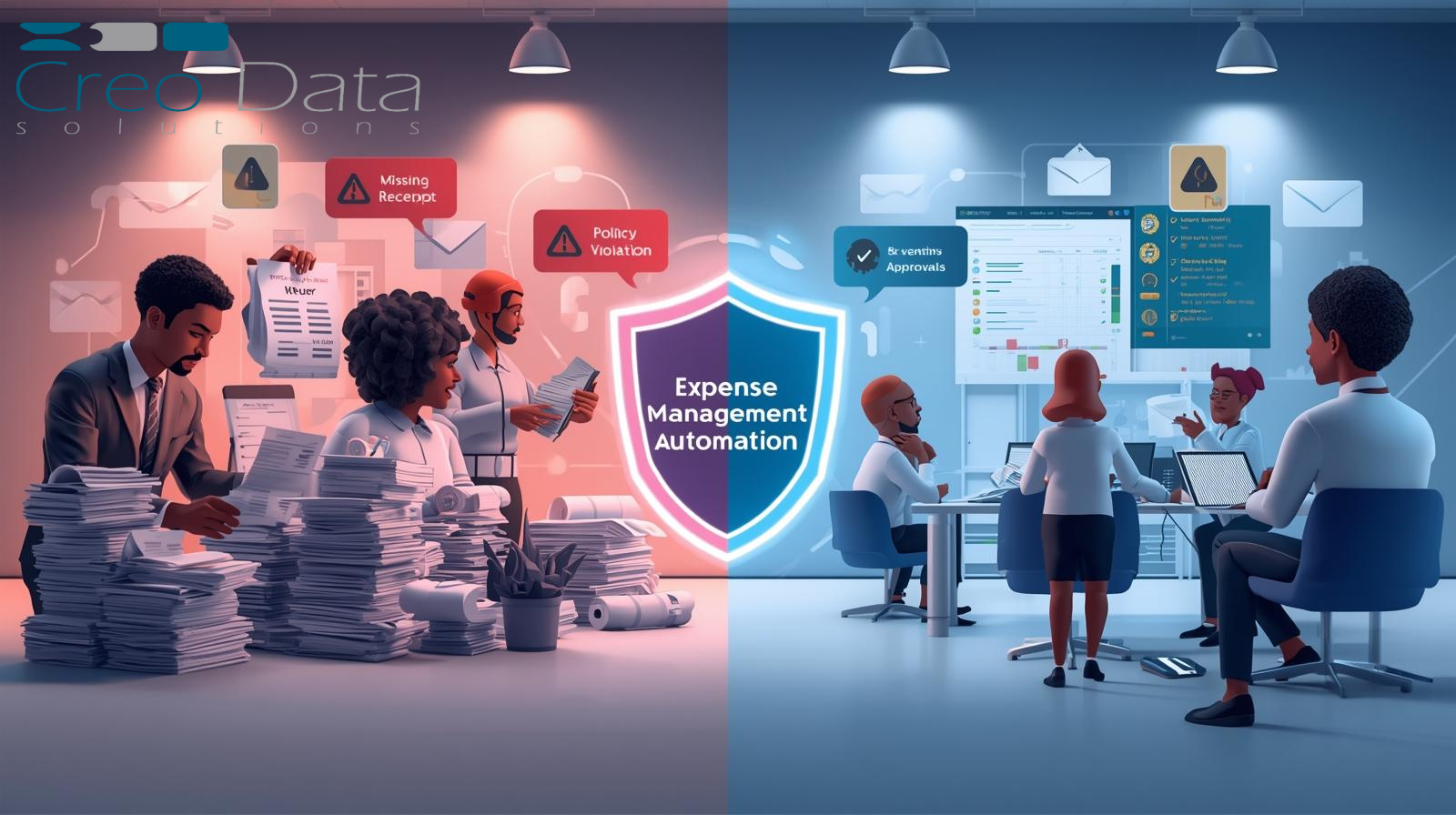
Integrate with Expense Rules
Discover how to integrate corporate expense rules into your reconciliation workflow, using policy automation to enforce limits, vendor filters, and compliant spend with Creodata's Expense Management Automation.

User Adoption Tips: Change Management for Auto-Matching Workflows in UX & Training
Practical UX and change-management tips to drive user adoption of auto-matching expense workflows, from training strategies to designing intuitive submission and exception experiences.

Audit Log of Access Events: Full Visibility into User Actions
Discover how audit logs of access events provide complete visibility into user actions, enabling compliance, security investigations, and access governance in modern RBAC systems.
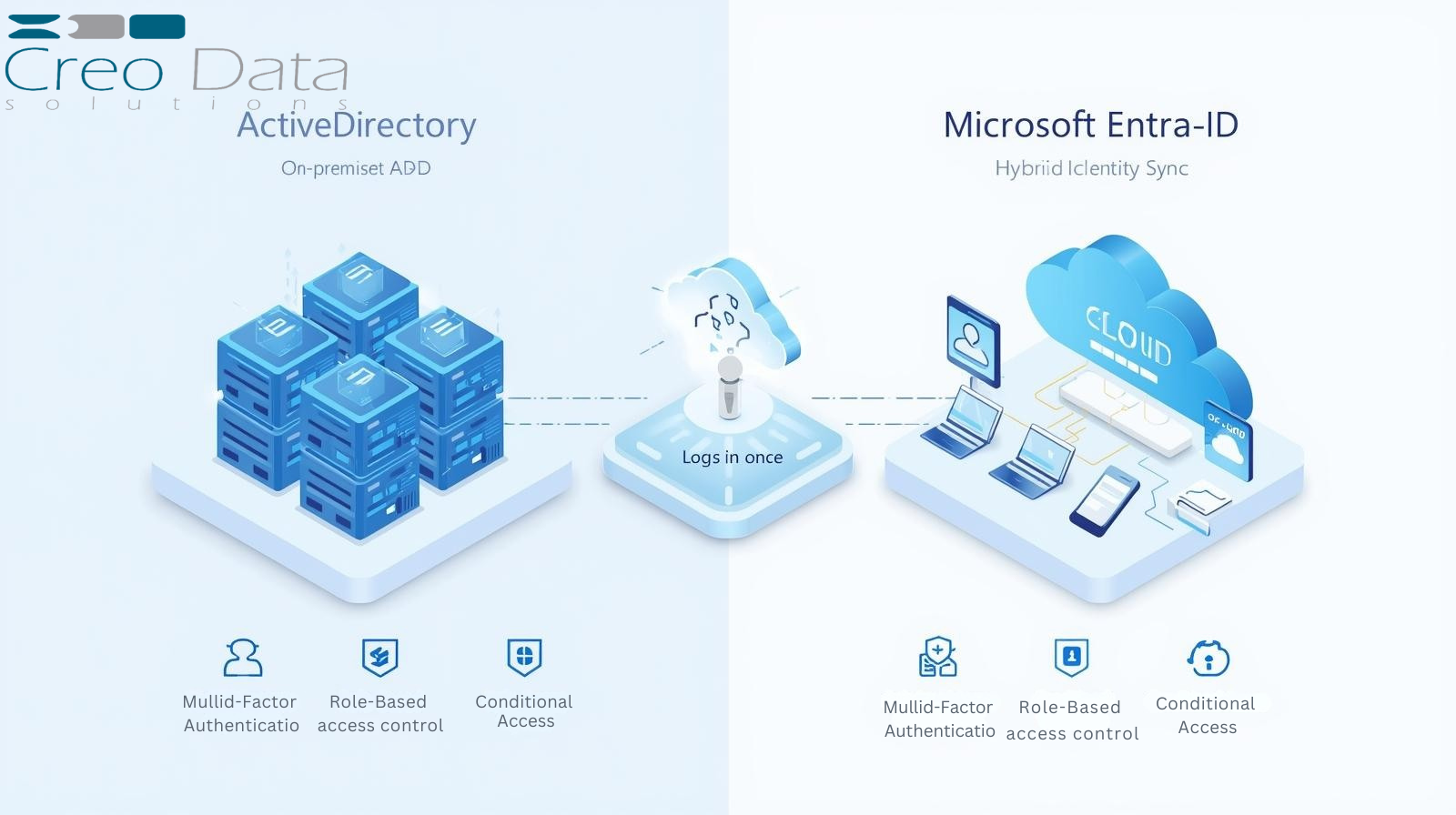
Hybrid Identity Management for On-Prem Environments
Hybrid identity management explained: unify on-prem Active Directory and Microsoft Entra ID with consistent RBAC, sync architecture, and policy enforcement.
Insights from Reconciliation: Unlocking Spend Visibility Through Reconciled Card & Expense Data
Discover how organizations unlock powerful spend insights from reconciled card and expense data, including vendor frequency analysis, mismatch rate calculations, and actionable analytics for cost control and compliance.

Audit Trail — Every Action Logged for Transparency and Accountability
Learn how Creodata's Loan Management System uses comprehensive audit trails to log every action across the loan lifecycle for transparency, compliance, and risk control.
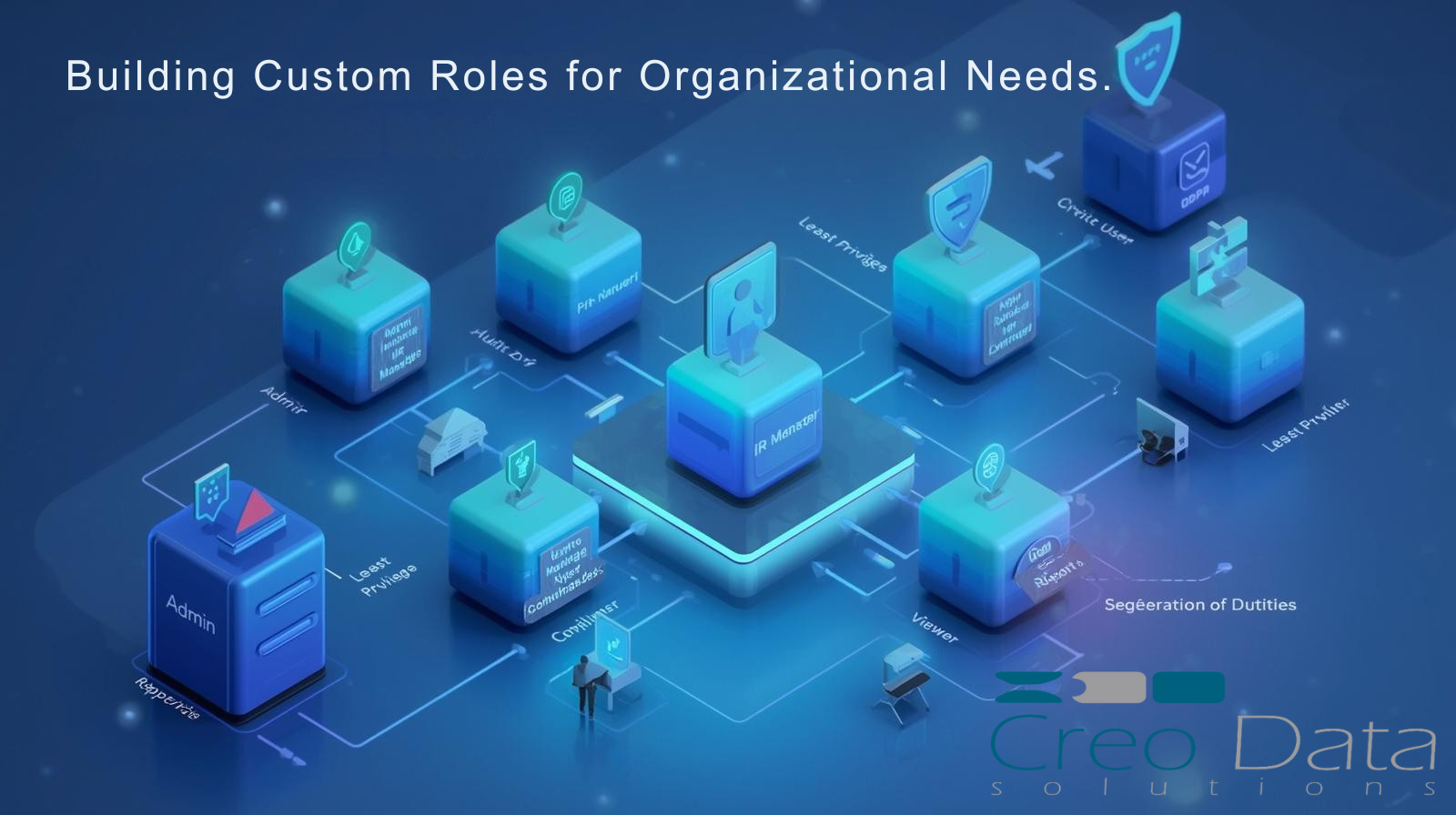
Building Custom Roles for Organizational Needs
Explore how to design custom RBAC roles that align with organizational structure, segregation-of-duties requirements, and evolving security and compliance needs.
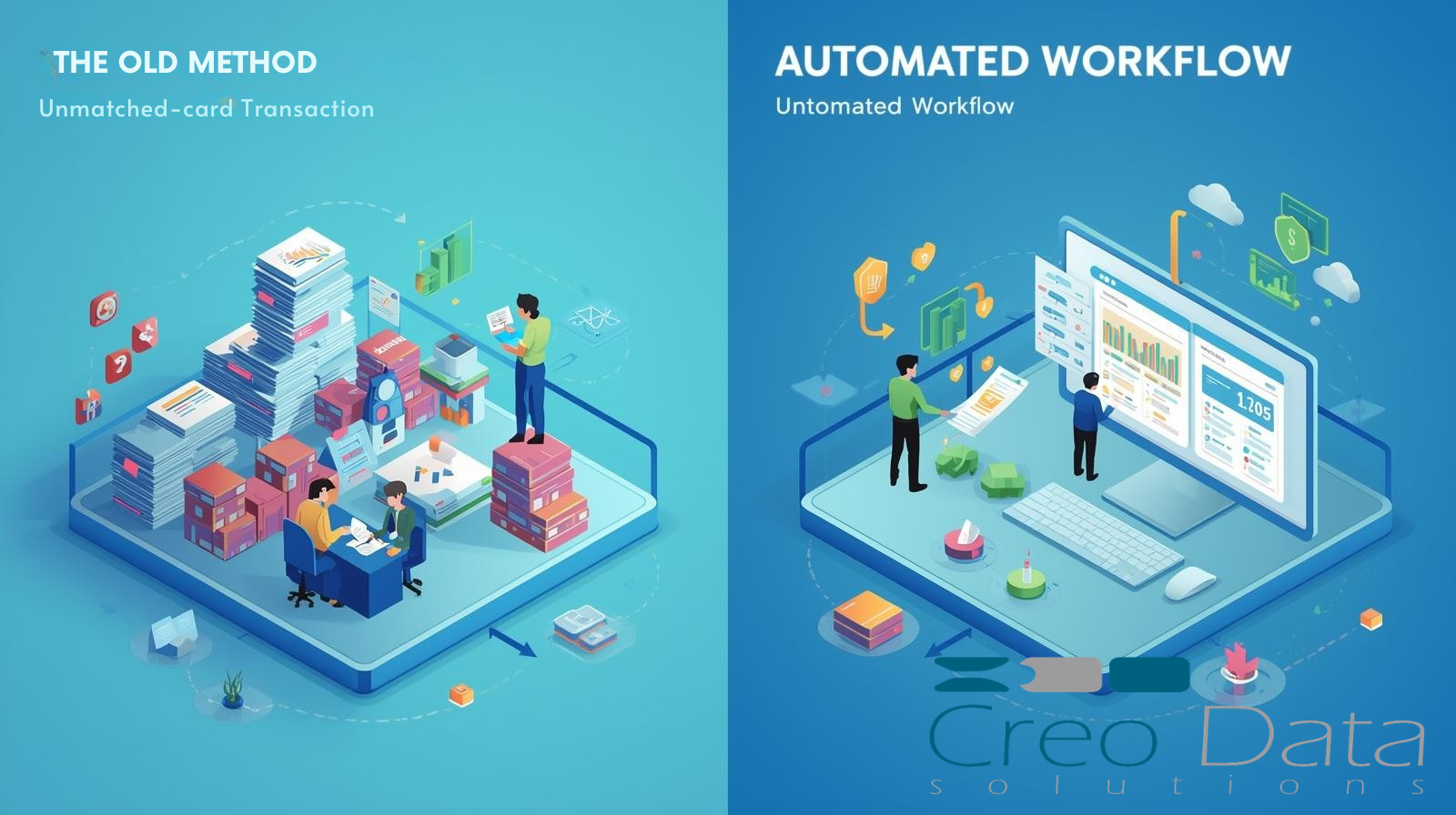
Exception Resolution Workflow: Fixing Unmatched Card Transactions
Learn how Creodata's Expense Management Automation resolves unmatched card transactions with a structured exception workflow for review, escalation, and reconciliation.
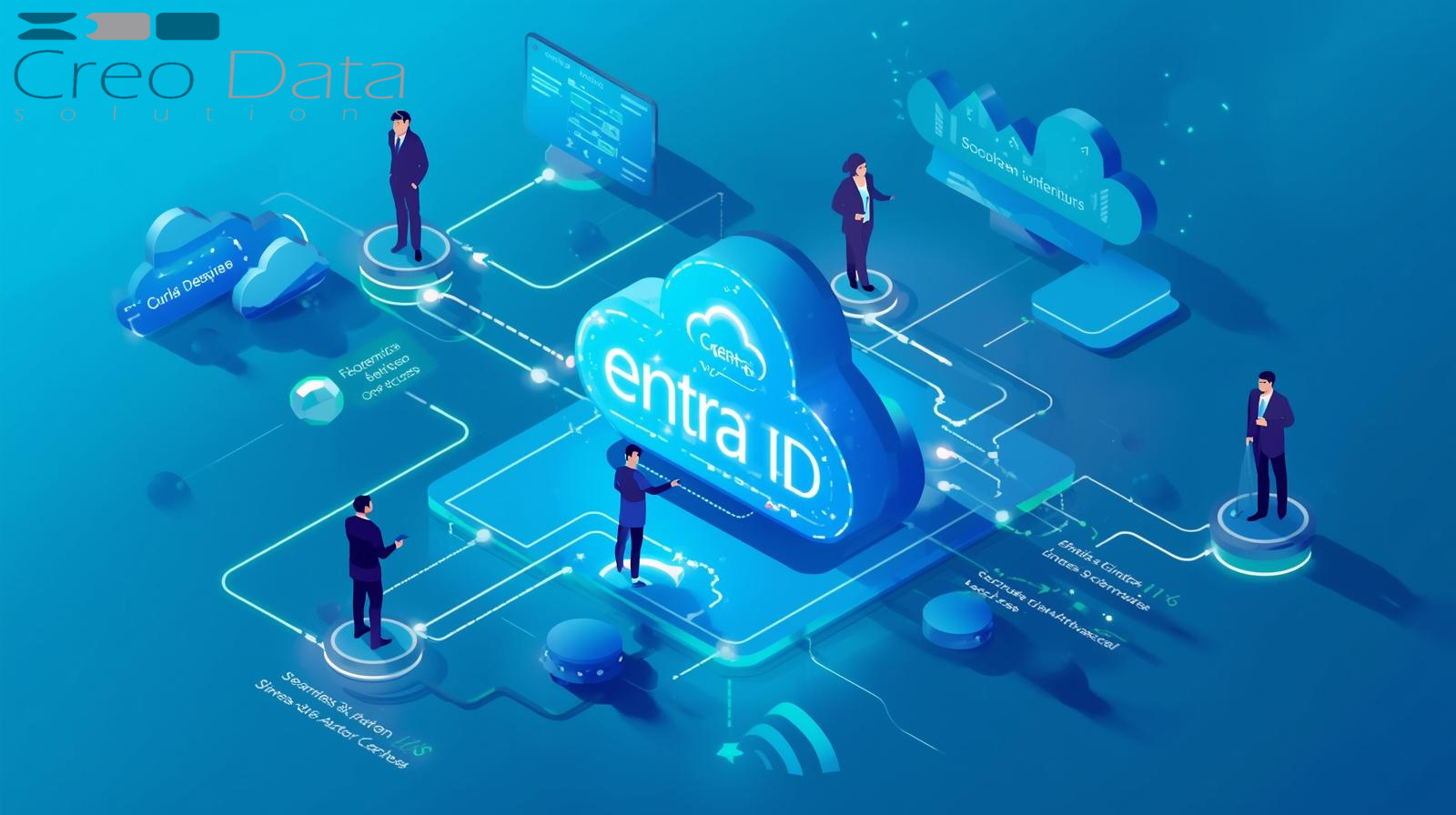
Seamless Enterprise Login via Microsoft Entra ID
Learn how integrating Creodata's solutions with Microsoft Entra ID delivers seamless enterprise login, centralized RBAC, and conditional-access security for financial institutions.
Reconcile in Real Time: Live Matching for Instant Expense Visibility
Discover how live matching in Creodata's Expense Management Automation reconciles expenses as transactions land, giving finance teams real-time visibility and control.
Role Dashboards — A Feature of Data & Oversight
Discover how role-based dashboards in Creodata's Loan Management platform deliver tailored, data-driven views for officers, managers, compliance teams, and executives.

The Loan Origination Process for Kenyan Lenders: From Submission to Disbursement
Comprehensive end-to-end walkthrough of a modern Loan Origination System workflow for SME loans and salary advances, highlighting user checkpoints and decision gates.

Audit Access: Access & Action Logs in Audit Trails
Learn how access & action logs strengthen email governance by tracking who viewed or exported archived emails—supporting compliance, investigations, and audit readiness.

Fast Recovery in Search & Retrieval: Email Restore Use Case
Explore how fast recovery and email restore capabilities help organizations quickly retrieve deleted or inaccessible emails for audits, legal needs, and business continuity.
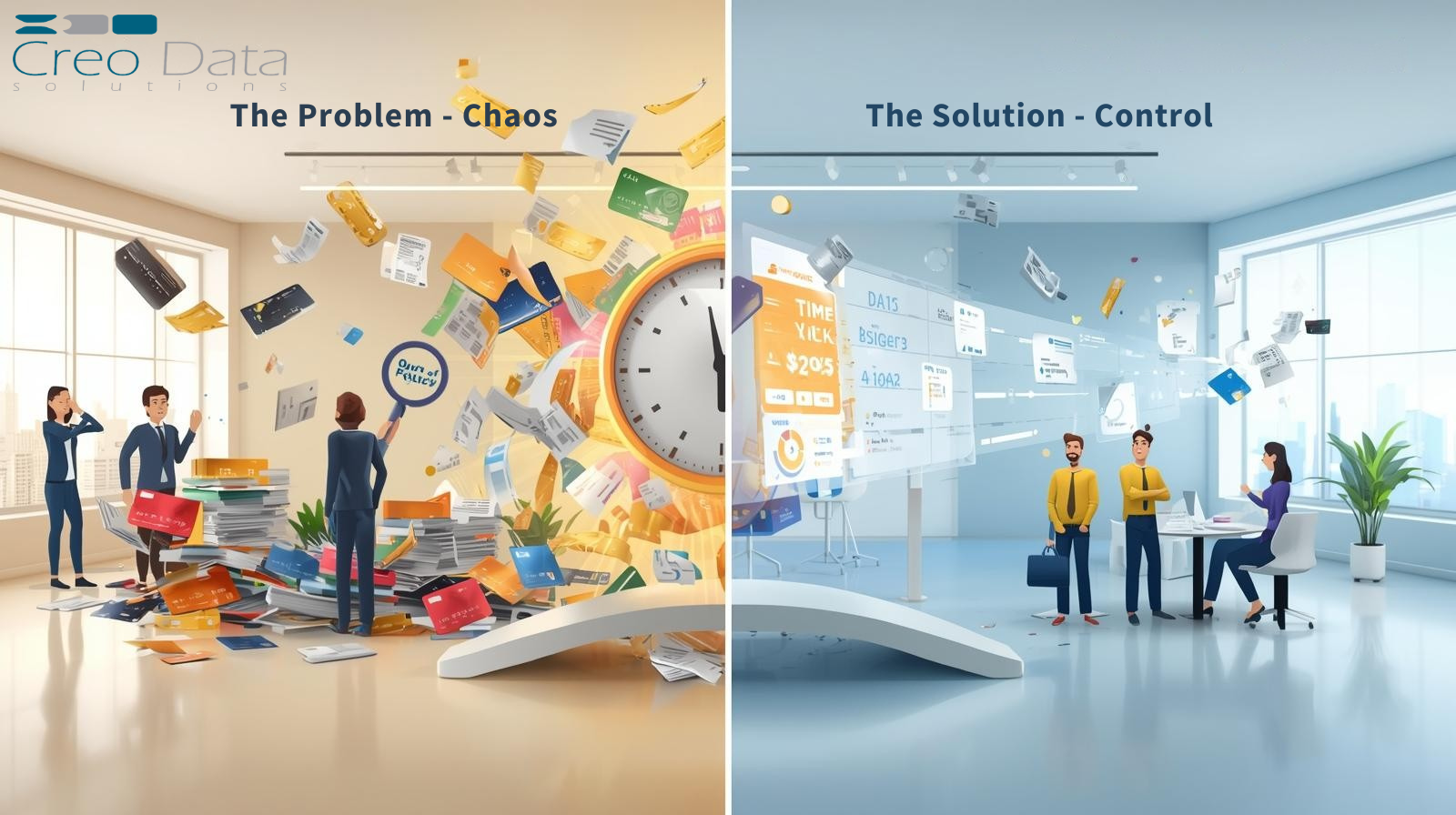
Handling Multiple Cards: Managing Reconciliation at Scale for Large Corporations
Discover how Creodata's Expense Management Automation helps large corporations manage reconciliation at scale when employees hold many physical and virtual corporate cards.

Mobile Reconciliation: On-the-Go Matching for Modern Workforces
See how Creodata's mobile-first expense workflows let employees capture receipts and reconcile transactions on the go, improving accuracy, visibility, and user experience.
Tailored Access for Every Role: Role-Based UI Access in User Management & RBAC
See how role-based UI access (RBAC) tailors Creodata Mail Journaling to each role—Admin, Viewer, Auditor—reducing risk and improving clarity with least-privilege access.
Review & Compliance – Feature: Risk Oversight
See how Creodata's Loan Management System embeds risk review checkpoints into the loan lifecycle so risk officers can block disbursements when red flags appear.
Guided Setup – Quick Onboarding via Azure Marketplace Deploy
See how Creodata's guided Azure Marketplace deploy enables quick onboarding for Mail Journaling, letting organizations start compliant email archiving in hours, not days.

Reduce Manual Workload – Boost Finance Team Productivity via Labor Reduction
See how Creodata's Expense Management Automation reduces manual reconciliation work so finance teams can focus on higher-value analysis and control.
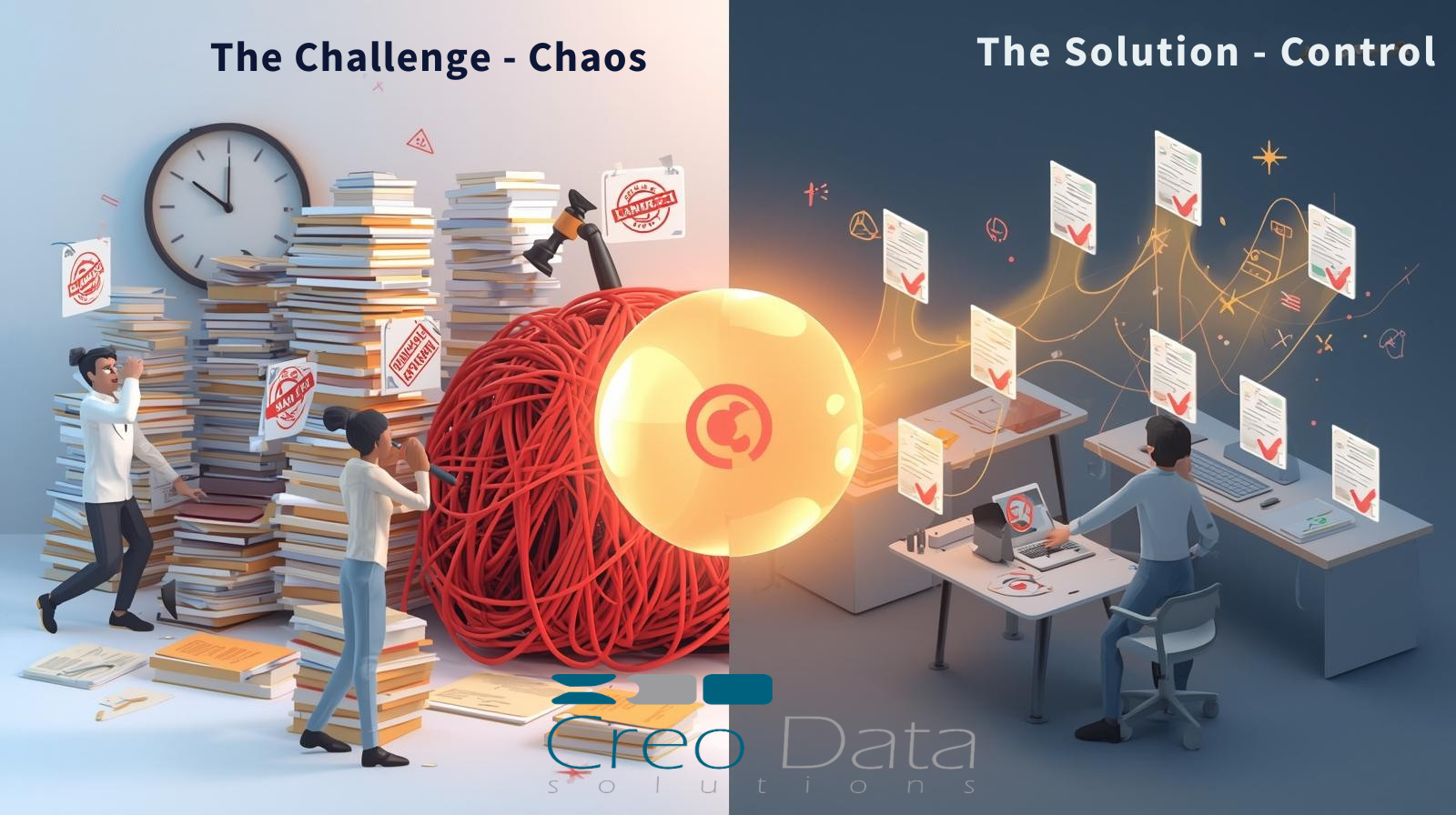
Legal Review: Strengthening Compliance Through Documentation and Conditions
Learn how Creodata's Loan Management platform enables legal teams to check documentation for compliance, attach conditions, and ensure every loan agreement meets regulatory requirements.
Litigation Hold — Preserve Emails for Legal Cases
Learn how litigation hold and freeze-deletions in Creodata's Mail Journaling solution preserve critical email evidence for legal cases and regulatory investigations.

Improve Policy Compliance: Enforcing Spend Policies with Compliance Checks
Discover how automated compliance checks in Creodata's Expense Management solution ensure only policy-compliant card transactions become valid expenses.

Auto-Import Magic: Card Feed Import in Expense Data Ingestion
Discover how automated card feed import in Creodata's Expense Management solution streamlines expense data ingestion, reconciliation, and financial control.

Data Leak Tracing: Advanced Search for Email Security Investigations
Explore how data leak tracing capabilities enable organizations to search archived email bodies and attachments for sensitive keywords and patterns to detect, investigate, and remediate information leaks.
Execution Workflow: Disbursement in Loan Management
How a robust disbursement workflow in Creodata's Loan Management solution turns approved credit decisions into compliant, traceable fund releases.
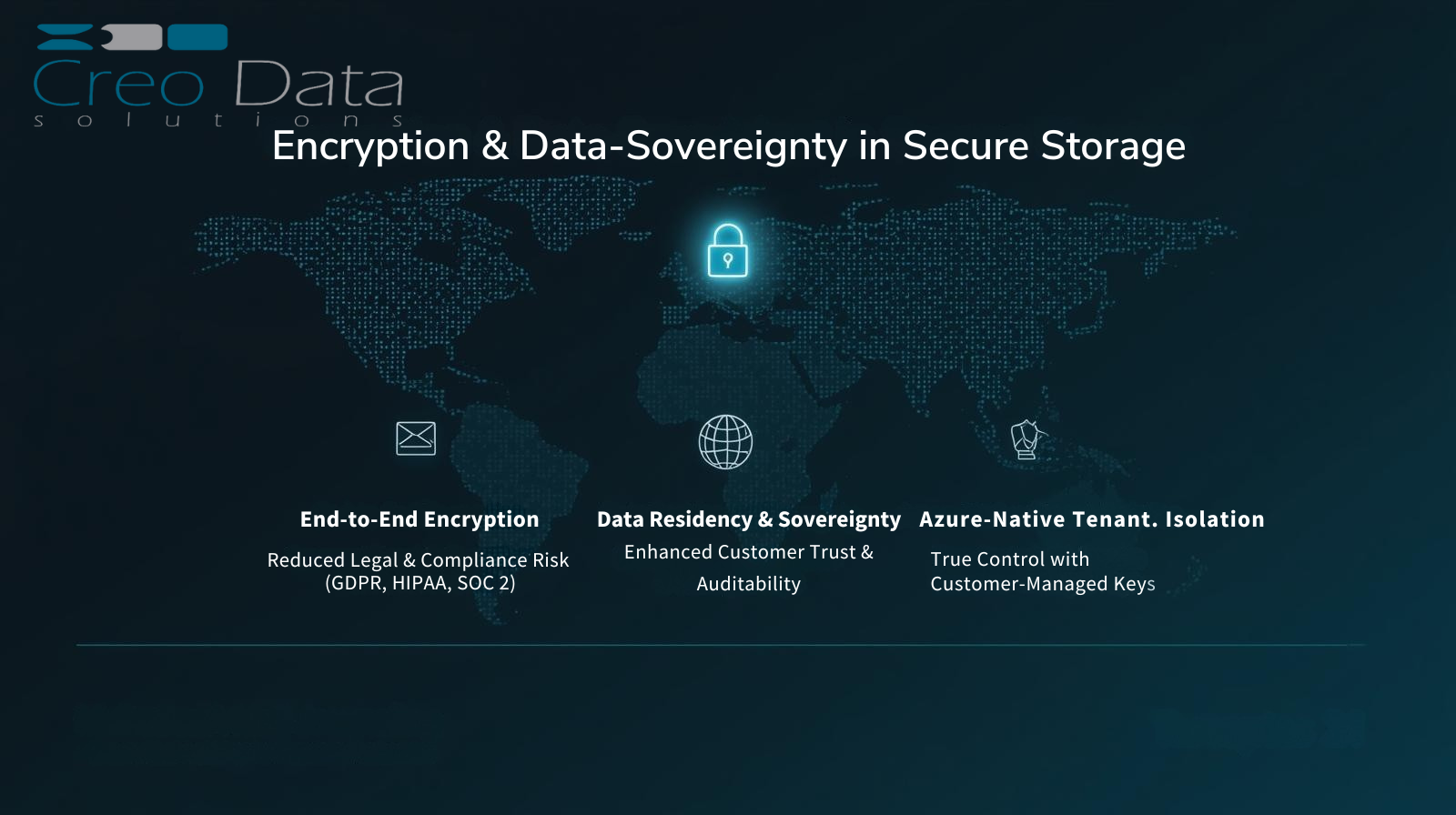
Security & Compliance: Encryption & Sovereignty in Secure Storage
Explore how encryption and data sovereignty in Creodata's mail journaling solution protect sensitive data inside tenant environments while meeting global regulatory requirements.
Seamless Coverage: Hybrid/Cloud Support for Microsoft 365 Integration
How Creodata's hybrid/cloud journaling support delivers seamless coverage across on-premises Exchange and Microsoft 365 environments for compliance-ready email governance.

In-Panel Preview: Enabling Simple Legal Review in Journaling Systems
Discover how in-panel preview capabilities streamline legal review workflows by enabling users to view email content and metadata directly within the journaling system UI without external exports.

Native Format Export: Journal Viewer UI
Learn how native format export (.eml) capabilities in journal viewer UIs enable legally defensible email exports with complete metadata fidelity for eDiscovery and compliance workflows.

Receipt Matching Boost: Elevating Receipt-to-Transaction Linking with Attachment Association
How AI-powered receipt-to-transaction matching in Creodata's Expense Management solution boosts accuracy, compliance, and audit readiness by attaching proof to every card transaction.

Simplify Audit Trail: Ensuring Traceability in External Audits & Compliance
Learn how to simplify audit trails by ensuring traceability between card transactions and expense claims, reducing audit risk and improving compliance for external audits.

Enterprise Archiving with Scalable Architecture: Supporting Millions of Emails Reliably
Discover how scalable architecture enables enterprise email archiving solutions to handle millions of emails reliably, ensuring compliance, security, and business continuity.

Escalation Workflows for High-Value Loans: Credit Governance in Kenyan Banks
Discover how escalation workflows for high-value loan proposals ensure proper governance, oversight, and accountability in corporate lending through automated senior-level review processes.
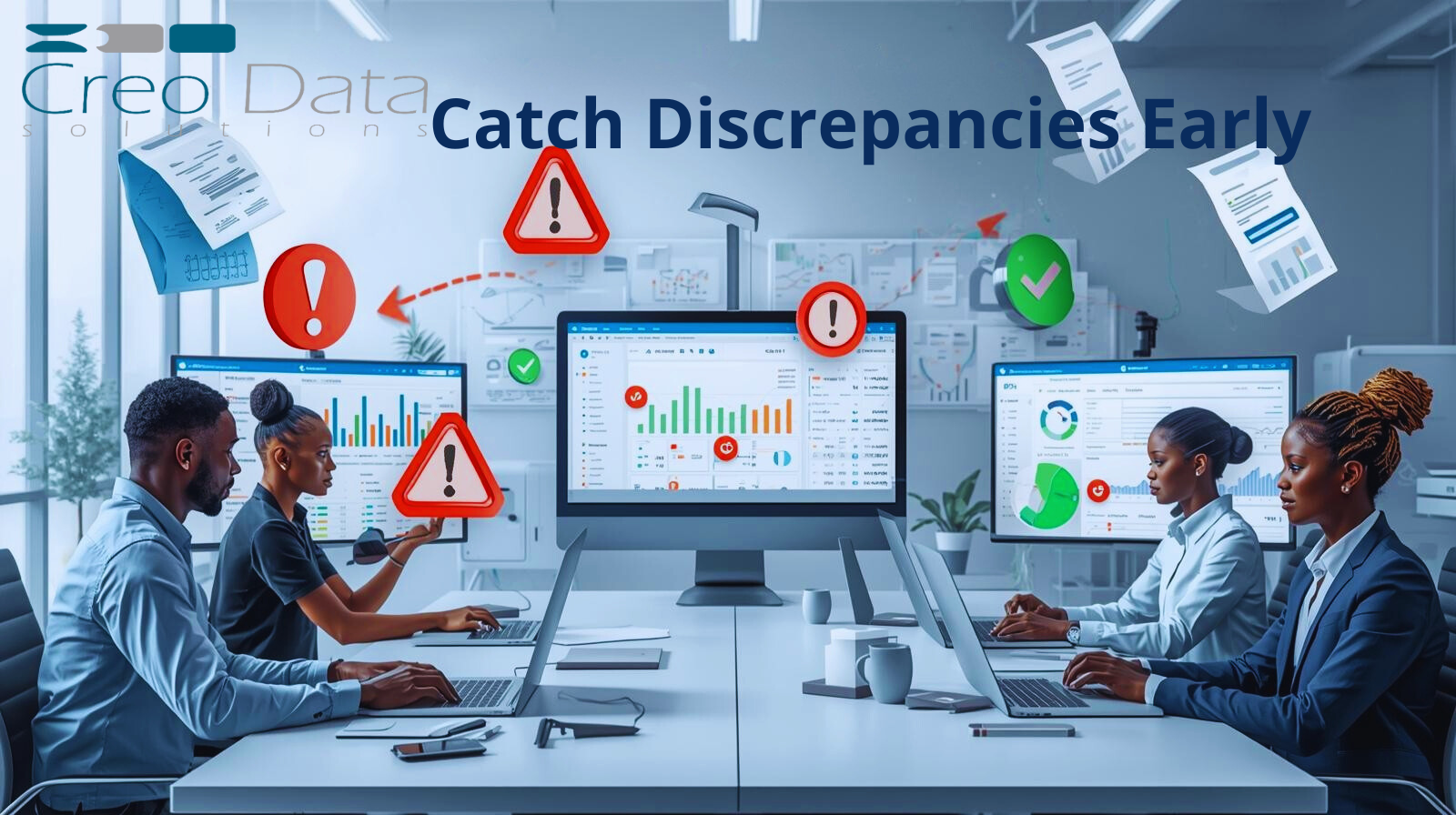
Catch Discrepancies Early: Exception Handling in Expense Management
Discover how early exception detection in expense management helps catch discrepancies, prevent fraud, and reduce audit risk through automated mismatch detection and policy enforcement.
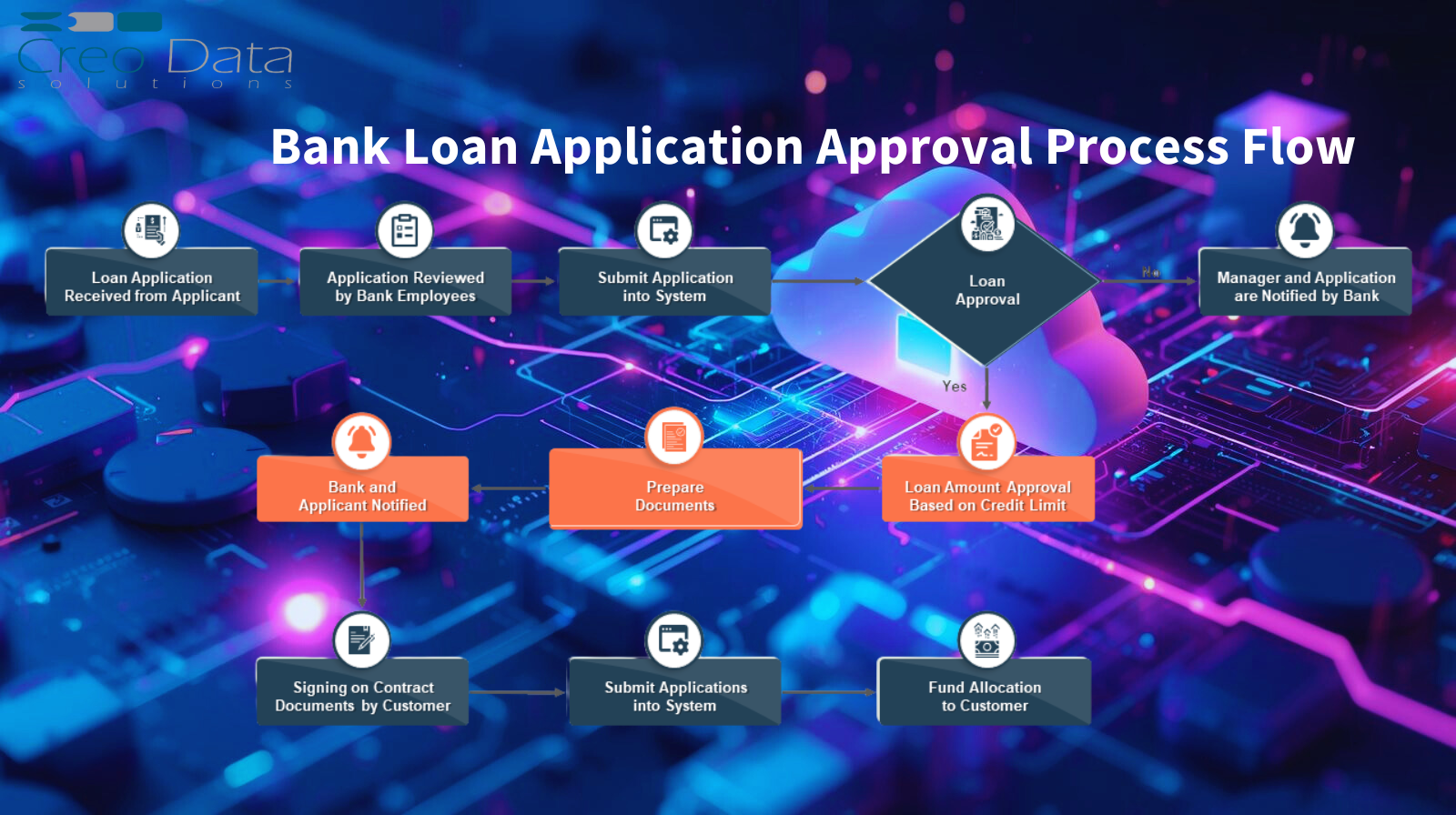
Final Decision – MCC/Board Role in the Decision Workflow
Learn how MCC and Board-level final decision authority in loan management workflows ensures governance, accountability, and risk control for high-value credit decisions.
Proactive Compliance: Real-Time Alerts for Monitoring Journaling & Quota Issues
Learn how real-time alerts enable proactive compliance monitoring for email journaling systems, detecting failures and quota issues before they impact compliance or data integrity.

BCC Approval Workflows: A Smarter Way to Review, Discuss, and Approve Proposals
Enhance loan approval workflows with BCC roles for oversight and governance. Enable risk teams and auditors to review proposals without bottlenecking the primary approval chain.
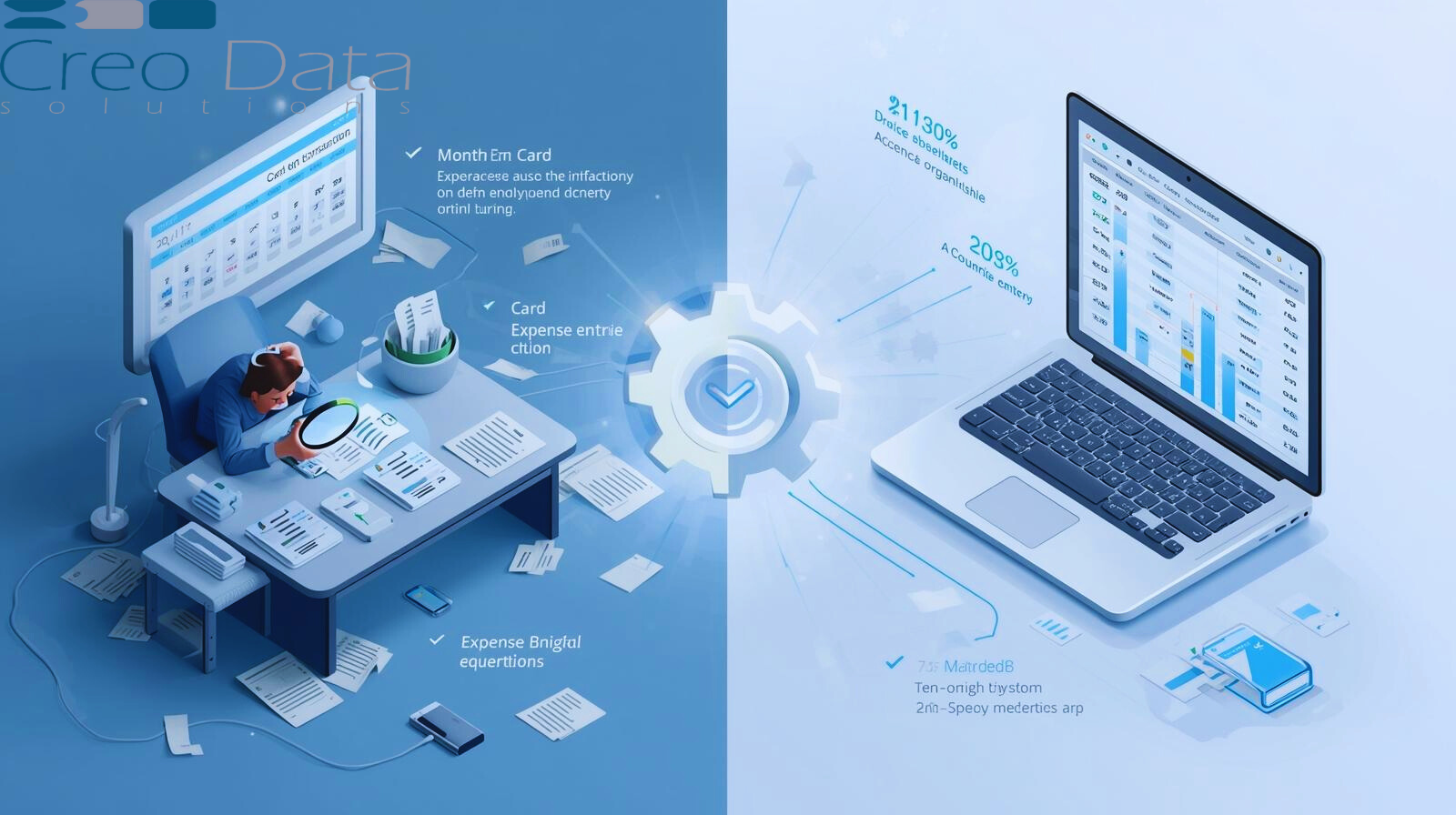
Match & Verify Cards: Ensuring Accuracy in Daily Reconciliation
Automate the matching of corporate card transactions with expense entries to ensure accuracy in daily reconciliation. Reduce errors, improve audit trails, and scale reconciliation effortlessly.
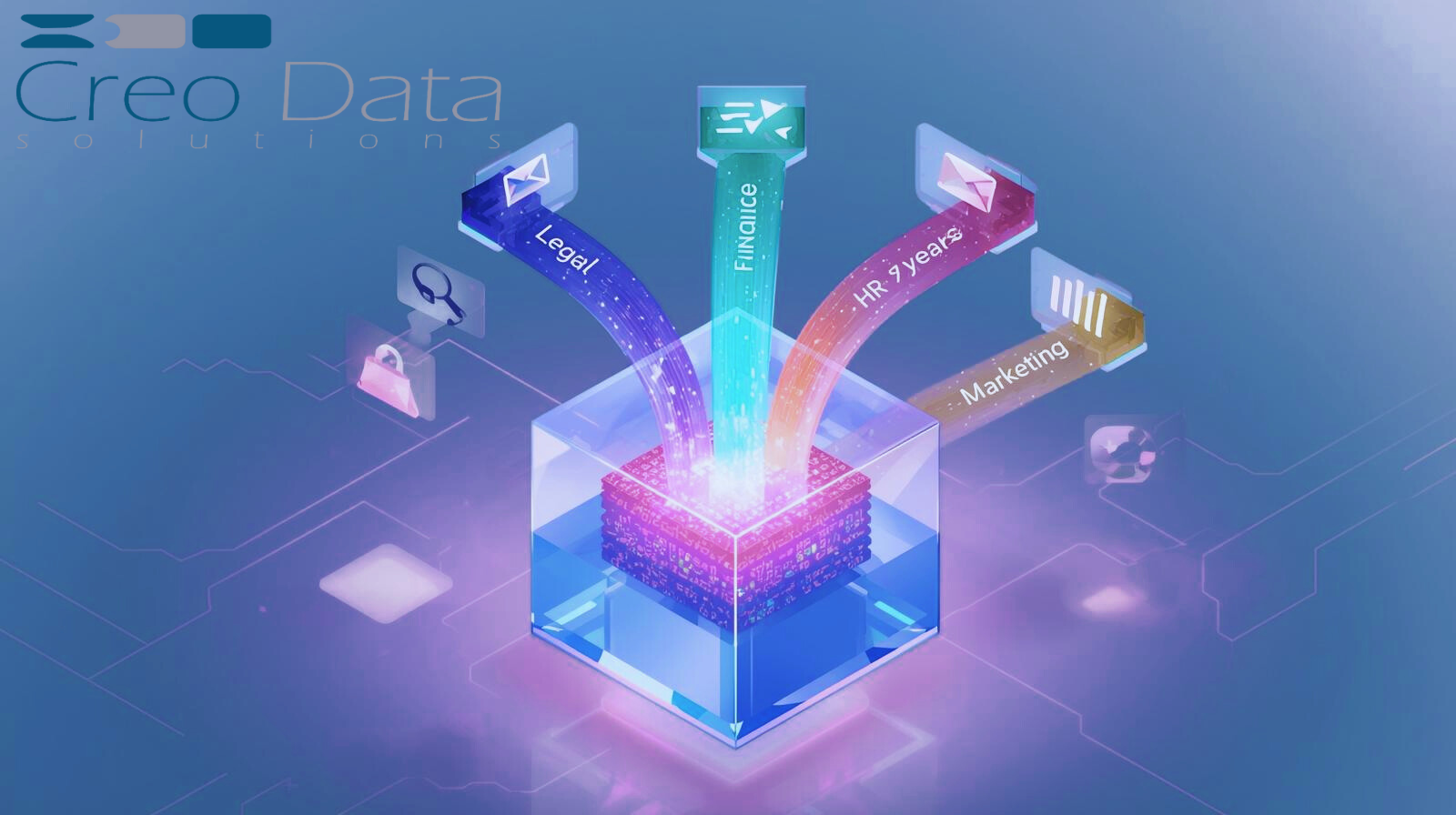
Tailored Archiving: Department-Based Retention Rules in Flexible Retention Policies
Apply different retention durations, archival dispositions, and deletion rules per department. Achieve compliance and operational efficiency with department-based retention policies.
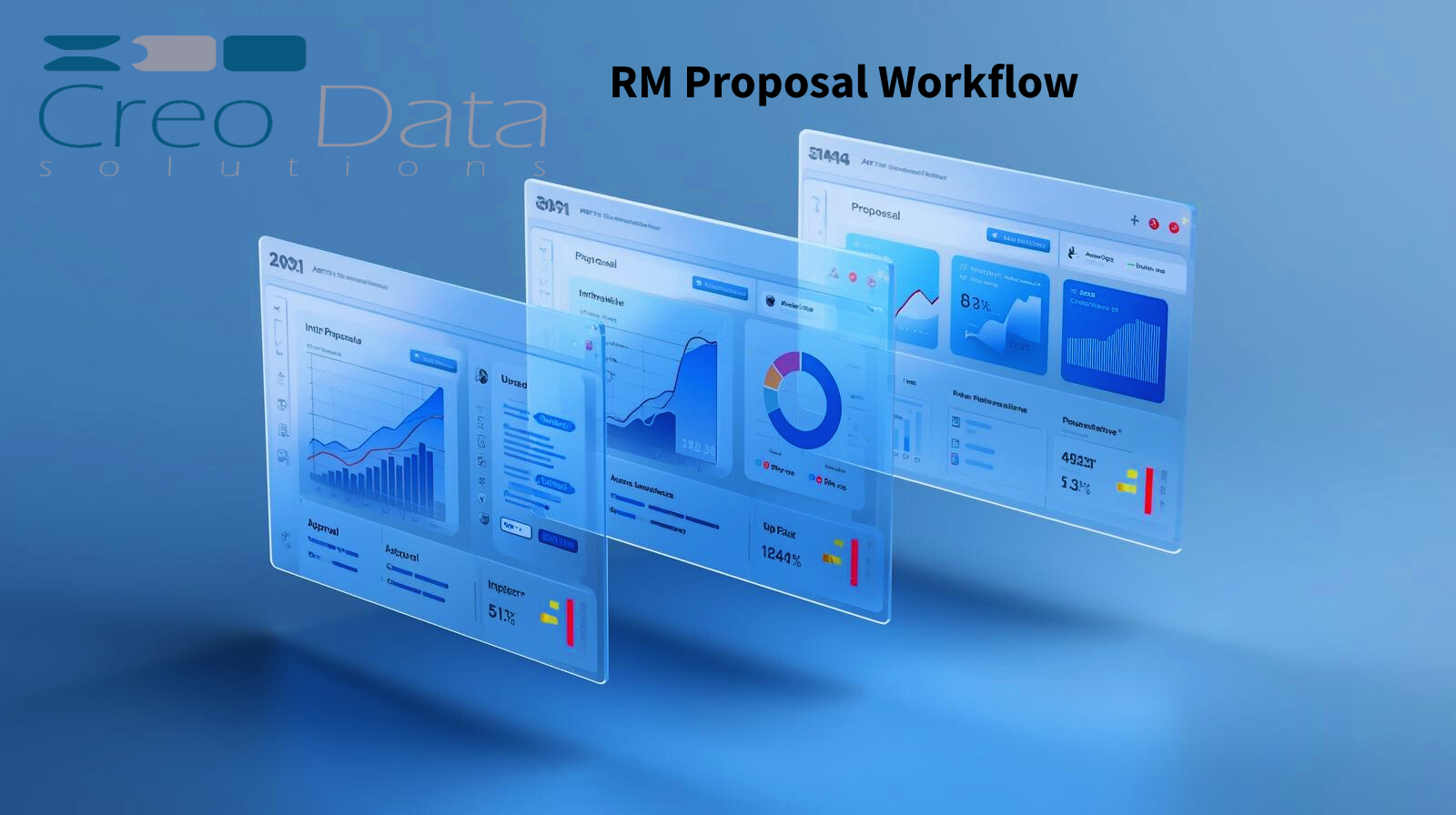
RM Proposal: Structured Proposal Creation for Committee Review
Streamline credit proposal creation for Relationship Managers. Create structured, standardized proposals with templates, auto-population, and integrated workflows for committee review.

Secure Digital Vaults for Customer Documents
Centralized, encrypted platform for borrowers and relationship managers to upload, store, view, and manage loan documents securely in a cloud-based repository.
Integration with SharePoint: Archive in SharePoint
Unified Storage — Manage Emails and Docs Together. Learn how to archive and manage emails and documents side by side in SharePoint for unified search, retention, and governance.
Speed Up Reconciliation
Automate card matching to speed up expense reconciliation during month-end and quarter-end close periods. Reduce manual work by 95% and process expenses 80% faster with AI-powered automation.
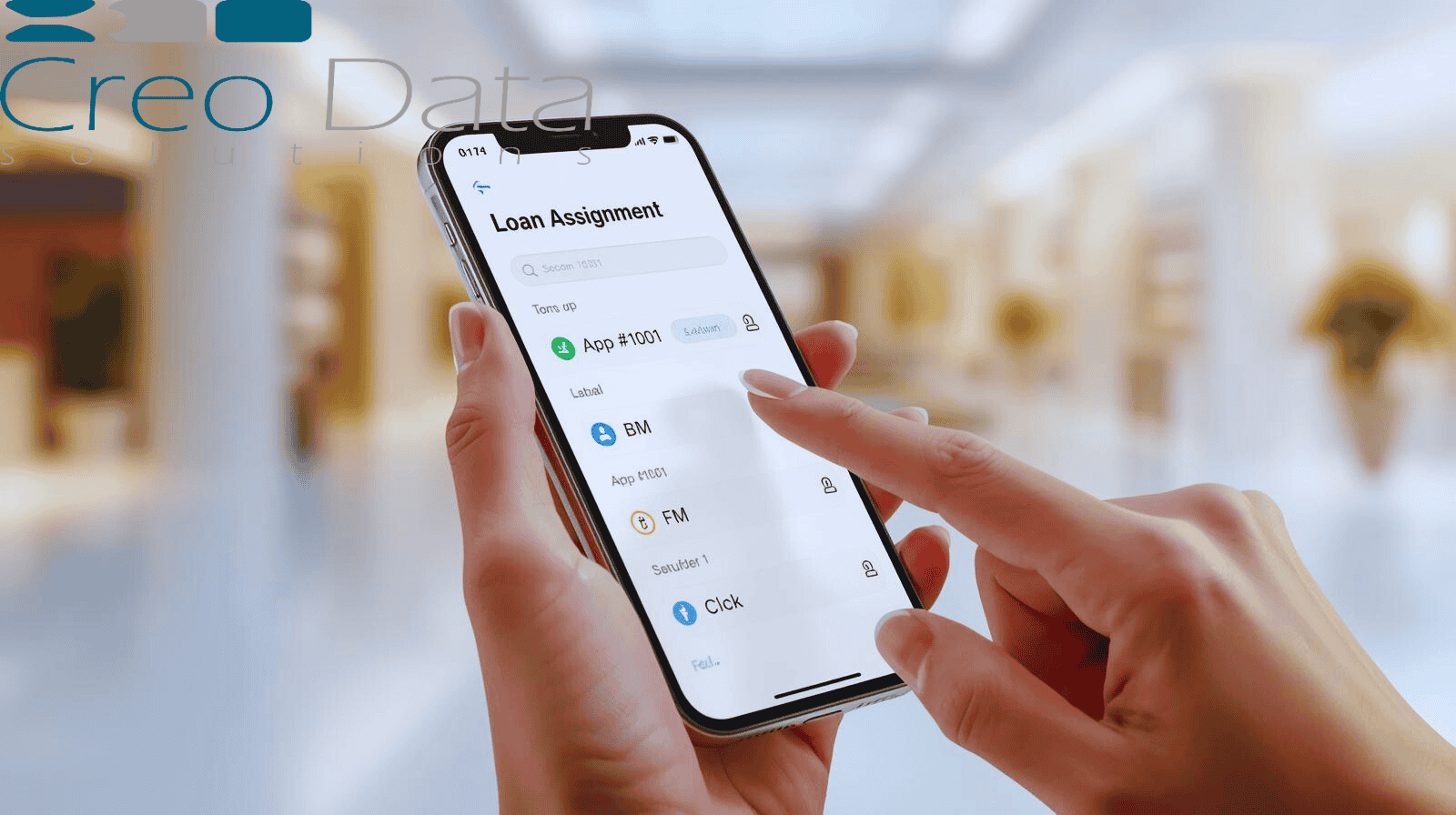
Streamlining Lending Operations: The Strategic Power of the Branch Manager Role in Loan Origination
See how a dedicated Branch Manager role and assignment module in a Loan Management System streamlines lending operations, improves accountability, and accelerates loan origination.

BM Tracking: Enhancing Loan Workflow Visibility and Control
Learn how Branch Manager tracking in a Loan Management System improves loan workflow visibility, SLA compliance, and operational control across branches.

Event Reconstruction: Building a Chronological Email History with Timeline Filters
See how timeline-based email filtering and journaling help investigators reconstruct a defensible, chronological history of communications for audits, forensics, and insider-threat investigations.
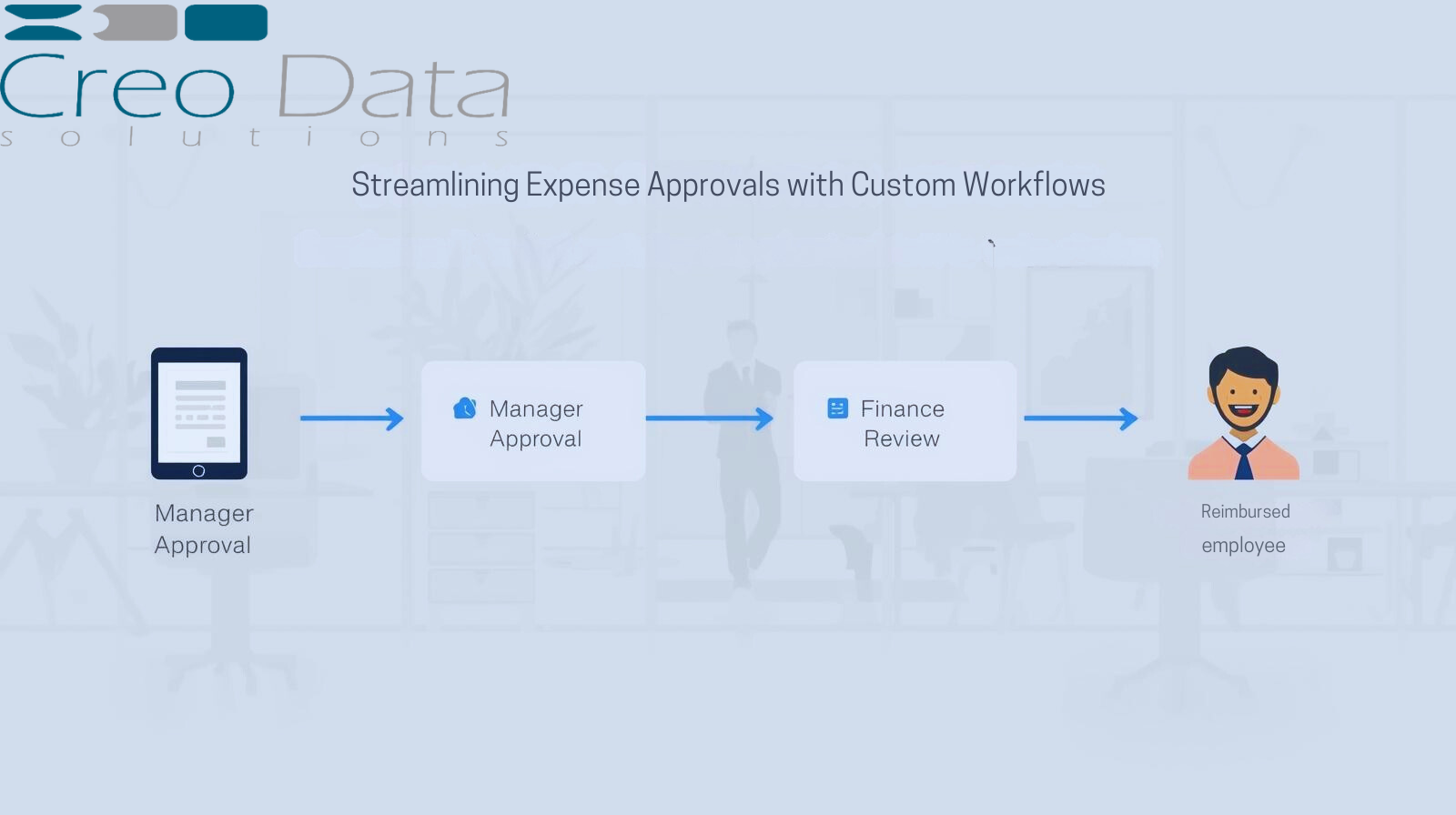
Streamlining Expense Approvals with Custom Workflows
Learn how configurable, multi-level workflows with delegation and automatic flags streamline employee expense reimbursements, reduce bottlenecks, and enhance oversight.

How Finance Teams Gain Control with Custom Approval Routing
Discover how custom approval routing with configurable workflows, delegation, and automatic flags empowers finance teams to maintain control and oversight without becoming bottlenecks.
Reducing Fraud in Expense Management through Automated Approvals
Discover how automated approval workflows with configurable routing, multi-level reviews, and automatic flags help organizations prevent and detect expense fraud proactively.
Multi-Level Approvals for Large Corporate Purchases
Learn how configurable multi-level approval workflows with delegation and automatic flags help organizations manage high-value procurement with proper governance, compliance, and oversight.
CSO Verification: How Loan Operations Rely on Strong Onboarding & Access Controls
Discover how CSO Verification with Role-Based Access Control ensures data integrity, reduces fraud, and streamlines loan application intake in modern lending operations.
Transforming Employee Experience with Faster Expense Reimbursements
Discover how faster expense reimbursements with smart workflow automation can transform employee satisfaction, reduce processing time, and improve operational efficiency.

Fast Audit Search: Quickly Locating Emails for Compliance Checks
Discover how fast audit search capabilities enable organizations to quickly locate and retrieve email evidence for compliance checks, audits, and investigations using mailbox, date, and sender filters.
Cloud-Native Integration: Scaling Storage & Compute for Enterprise Agility
Discover how cloud-native integration empowers enterprises to scale storage and compute seamlessly, enabling operational agility, compliance, and long-term resilience for mail journaling solutions.
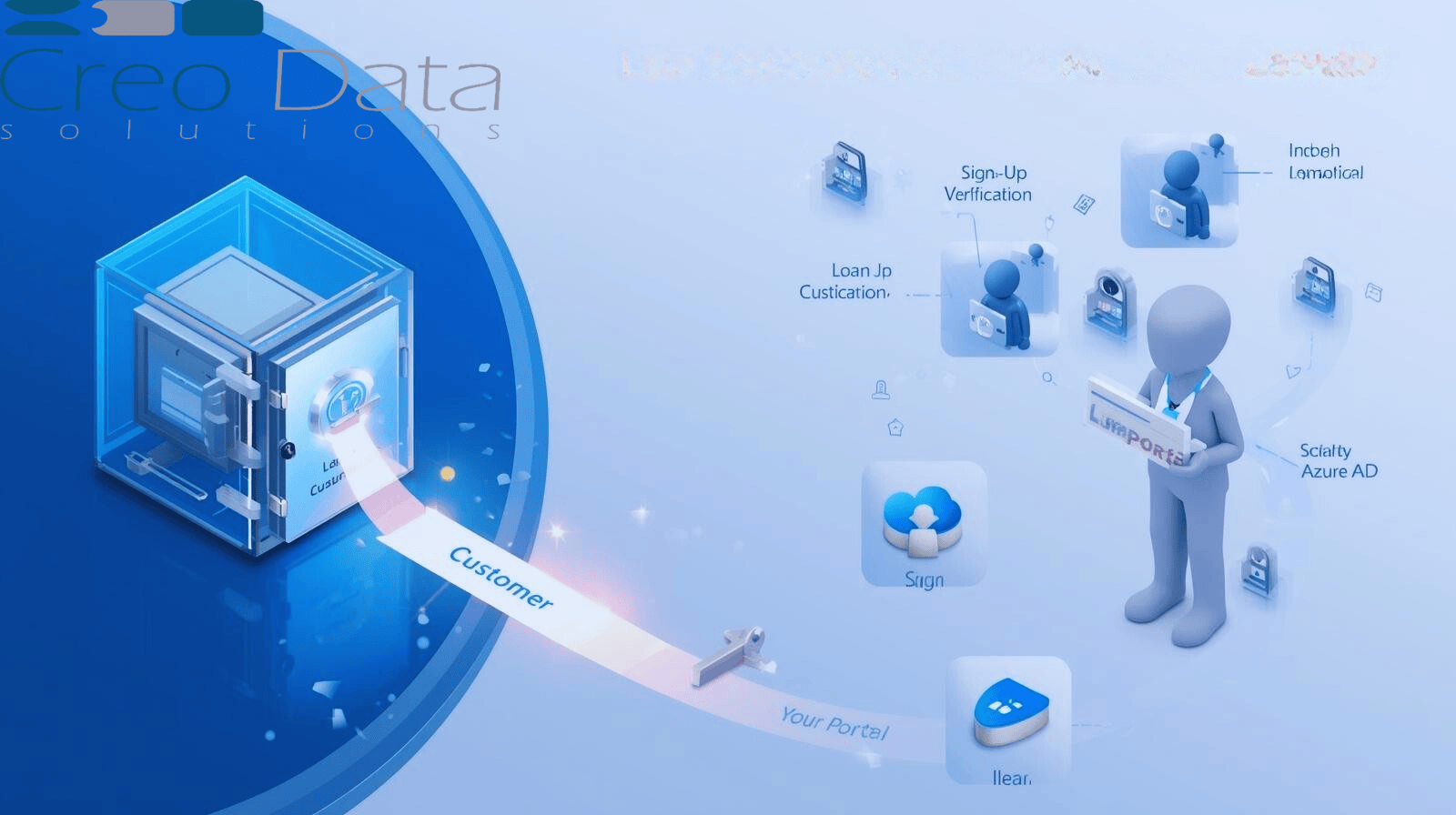
How Customers Are Mapped to Roles in the System
Learn how Creodata's Loan Management System uses Azure AD and RBAC to securely map customers to roles, ensuring proper access control, scalability, and compliance in financial institutions.

Reducing Manual Errors in Expense Approvals with Automation
Discover how automation with configurable workflows, multi-level routing, and automatic flags reduces manual errors in expense approvals, improving accuracy and compliance.

Building a Disaster-Resilient Future: How MinIO Powers Unbreakable Mail Journaling
Learn how integrating MinIO S3-compatible storage with Creodata Mail Journaling creates a disaster recovery-ready solution with near-zero data loss and rapid failover capabilities.

Ensuring Policy Compliance with Configurable Approval Chains: The Key to Unbreakable Expense Policy Adherence
Learn how configurable approval chains with multi-level routing and automatic flags transform expense policies into active enforcement, ensuring unbreakable compliance and financial control.
Transparent Status Monitoring: Keep Management and Clients Informed at Every Stage
Discover how transparent status monitoring in loan management systems provides real-time visibility into application progress, reducing anxiety, building trust, and improving operational efficiency.
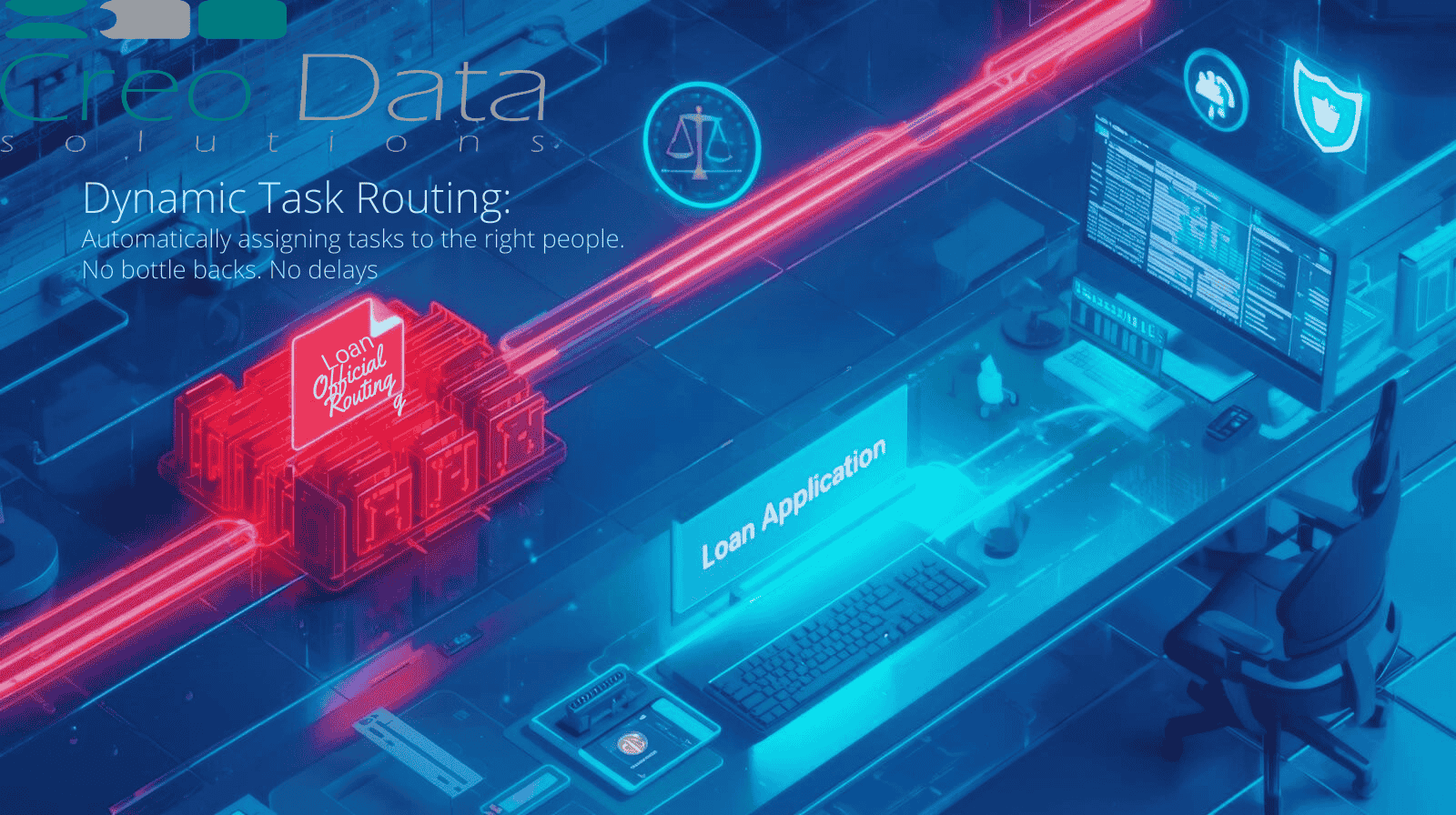
Dynamic Task Routing: Routing Applications Dynamically to the Right Personnel to Avoid Bottlenecks
Learn how dynamic task routing automates workflow assignments in loan management systems, reducing bottlenecks, improving turnaround times, and ensuring tasks reach the right personnel automatically.
Advanced Analytics on Emails: Using Metadata for Trend Analysis, Monitoring, and Detecting Suspicious Activity
Learn how email metadata analytics enables organizations to detect suspicious activity, monitor trends, and maintain compliance using Creodata's Mail Journaling solution for Microsoft 365.

How Automated Flags Prevent Overspending in Expense Reports
Learn how automated flags, configurable rules, and multi-level approval routing help organizations prevent overspending, enforce budgets proactively, and streamline expense management workflows.
Secure Role-Based Access in Loan Management: Ensuring Only Authorized Users Can Perform Actions at Each Workflow Stage
Implement role-based access control to ensure only authorized users can perform specific actions at each workflow stage, protecting sensitive data and ensuring compliance in loan management systems.

Compression with Configurable Options: Optimize Storage Costs
Tailor compression strategies to balance storage savings and retrieval speed, optimizing storage costs while maintaining acceptable performance for archived emails and compliance data.

Custom Workflows for Real-Time Expense Visibility
Achieve centralized monitoring and transparency with configurable multi-level routing, delegation, and automatic flags for real-time expense visibility and better decision-making.
Workflow Automation & State Machines: Real-Time Tracking in Credit Applications
Enable real-time tracking of credit applications with workflow state machines, providing transparency, traceability, and faster turnaround times while ensuring regulatory compliance.

Faster Backups with Gzip / Brotli Compression in Email Archiving
Reduce storage costs and accelerate backups with Gzip and Brotli compression in email archiving, improving backup speeds, reducing bandwidth usage, and enhancing compliance capabilities.
Eliminating Approval Bottlenecks in Travel & Entertainment Expenses
Streamline T&E expense approvals with configurable multi-level routing, delegation, and automatic flags to eliminate bottlenecks, reduce delays, and improve employee satisfaction.

Workflow Automation: Legal Review – Contract & Collateral Documentation
Automate and standardize legal review of contracts and collateral documentation before loan disbursement, reducing risk and accelerating the lending lifecycle while ensuring compliance.
Risk Assessment for Large Loans
Implement automated risk review workflows for loans exceeding 100 million, ensuring thorough risk assessment across multiple vectors before approval and maintaining regulatory compliance.
Smooth Loan Disbursement
Streamline the final disbursement stage with workflow automation, reducing turnaround time for clients, minimizing operational risk, and improving throughput in the credit department.

Improving Audit Readiness with Workflow-Based Expense Approvals
Enhance audit readiness with configurable workflow-based expense approvals featuring multi-level routing, delegation, and automatic policy flags for compliance.
Governance & Compliance in Workflow Automation
Ensure board-level oversight for high-value loans with automated workflow escalation, enhancing governance, compliance, and risk management for financial institutions.

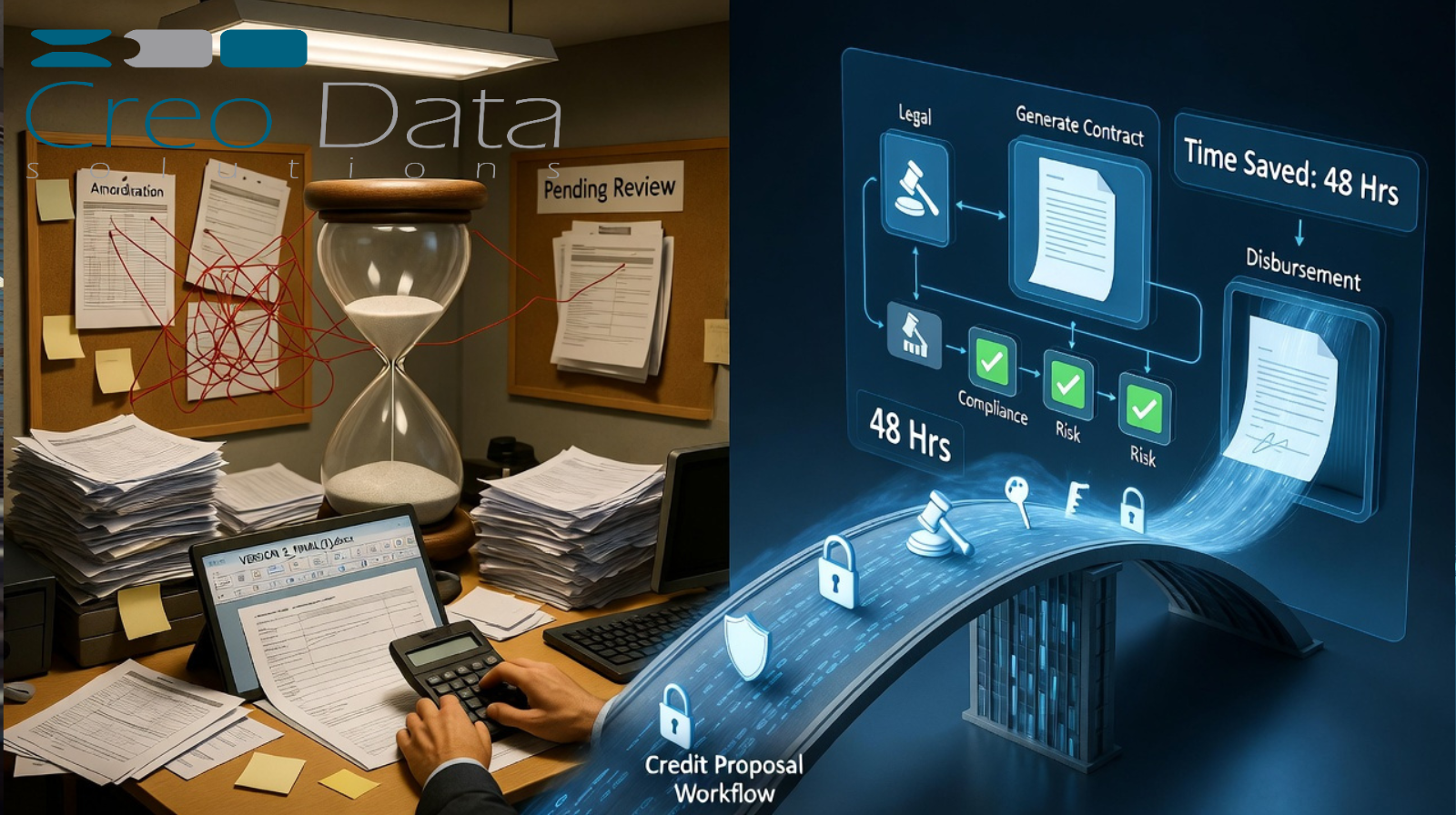
Credit Proposal Workflows for Kenyan Banks and SACCOs: Preparing Proposals for Committee
Transform credit proposal generation with workflow automation, ensuring accuracy, compliance, and speed for small banks, SACCOs, and microfinance institutions.

Delegated Expense Approval: Empowering Managers to Act Faster
Streamline expense approvals by empowering department managers with delegated authority, configurable workflows, and automatic policy flags for faster processing.

Long-Term Email Preservation with High-Performance S3-Compatible Storage (MinIO)
Ensure immutable, scalable, and compliant long-term email preservation with MinIO S3-compatible storage, meeting regulatory requirements and legal discovery needs.

Enterprise-Ready Email Archiving: The Role of Scalable, High-Performance Storage
Scale email archiving to enterprise levels with high-performance storage, ensuring compliance, fast retrieval, and seamless growth for large organizations.
Internal Decision Accuracy via MCC Review in Workflow Automation
Enhance credit decision accuracy with multi-level credit committee (MCC) review workflows, ensuring governance, consistency, and regulatory compliance.

How Multi-Level Routing Speeds Up Corporate Card Expense Approvals
Accelerate corporate card expense approvals with multi-level routing, configurable delegation, and automatic flags for faster processing and stronger compliance.

Adaptive Archiving: Configurable Compression for Optimal Email Storage
Use adaptive compression policies to balance storage savings and retrieval fidelity across your email archive.

How AI OCR Extraction Saves Time and Cuts Costs in Expense Management
Automate receipt capture with AI OCR to eliminate manual entry, cut processing costs, and increase audit-ready accuracy in Creodata's expense platform.
Collaborative Credit Evaluation
Coordinate branch and board credit committees with Creodata workflows that deliver shared dashboards, audit trails, and faster collaborative decisions.
Reducing Compliance Costs Through Gzip/Brotli Compression in Email Archiving
Cut compliance costs by applying Gzip and Brotli compression to email archives without sacrificing audit readiness or searchability.

Executive Oversight in Workflow Automation: Corporate Head Review for High-Value Loan Applications
Embed corporate head review into Creodata loan workflows to protect high-value approvals with executive insight, audit trails, and risk controls.
Efficient Initial Review: Workflow Automation Feature in Loan Management
Automate RM proposal preparation with Creodata loan workflows that prefill data, orchestrate approvals, and speed initial review cycles.
Real-Time Compliance Checks — High-Performance Storage
Capture and search Microsoft 365 email archives instantly for audit-ready, real-time compliance checks on Azure.

Reducing Manual Data Entry Errors in Accounts Payable Using AI OCR
Eliminate manual data entry errors in accounts payable with AI-powered OCR that achieves 95%+ accuracy and accelerates invoice processing by 80%.

Automating Audit Trails and Compliance Reporting with AI OCR
Automate audit trails and compliance reporting with AI OCR to deliver transparent, accurate, and fully traceable expense workflows for auditors and compliance officers.

Fast Email Search and Filtering
Leverage high-performance storage with metadata indexing for lightning-fast email search, filtering, and compliance-ready retrieval.
Handling Growing Email Volumes with High-Performance, Scalable Storage
Scale horizontally to handle explosive email growth without sacrificing capture speed, retrieval performance, or compliance readiness.

Mobile Expense Reporting Made Easy with AI OCR Extraction
Empower remote workers and sales teams with mobile expense reporting powered by AI OCR for instant receipt capture and automated data extraction.

Mobile-Friendly Uploads for Field Operations
Enable field agents to capture and upload loan documents from remote areas with mobile-optimized uploads that work offline and sync when connected.

Role-Based Assignment: Transforming Loan Processing Through Intelligent Automation
Automatically route loan applications to the right relationship managers based on configurable rules for faster processing and balanced workloads.

Secure Original Email Retention
Store original .eml files securely with immutable, high-performance storage for compliance, legal discovery, and audit-ready retention.

Streamlined Application Intake: Revolutionizing Credit Application Management with Workflow Automation
Automate credit application capture and routing to eliminate delays, reduce errors, and accelerate loan processing from submission to approval.
Integrating AI OCR Extraction with ERP Systems for Seamless Workflow
Streamline expense workflows by integrating AI OCR extraction with ERP systems like Dynamics 365 for automated data processing and seamless accounting integration.

The Role of AI-OCR in Ensuring Policy Compliance in Expense Claims
Ensure expense policy compliance with AI-powered OCR that automatically flags violations, detects fraud, and maintains comprehensive audit trails.

Audit-Ready Document Management System
Build a compliant, traceable document management system with audit trails, versioning, and governance for regulated finance.

Bulk Uploads for Group Loan Schemes
Speed up group lending by uploading and validating multiple applicants' documents in one streamlined action.
Drag-and-Drop Uploads for Non-Tech-Savvy Users
A simple drag-and-drop upload experience that improves inclusion and speeds lending workflows in rural/cooperative contexts.

Flexible Compression Strategies
Configure per-message or batch compression strategies to balance processing speed and storage efficiency in email archiving.

Forensic Analysis in Cybersecurity Incident Response
Ensure archived emails remain legally valid and unchanged during breach investigations with tamper-proof email archiving.

Real-Time Financial Insights Powered by AI OCR Expense Extraction
Gain real-time visibility into spending patterns with AI-powered OCR expense extraction that automates data capture and provides instant financial insights.

Boosting Accuracy: Achieving >95% Expense Data Extraction with AI OCR
How African finance teams achieve >95% data extraction accuracy with AI OCR and Creodata's solution.

How AI OCR Extraction Is Revolutionizing Expense Management
AI-powered OCR delivers >95% accuracy, faster processing, and built-in compliance for expense management.

Simplifying Employee Expense Reporting Through AI OCR Technology
Make expense reporting faster and more accurate with AI-powered OCR and automated workflows.

Auto-Validation of Uploaded Documents
Automate file type, size, and format checks at upload to speed reviews and strengthen compliance.
Email Notifications for Missing or Expired Documents in Financial Services
Automated alerts for missing or expiring documents keep lending compliant and on schedule.

Event-Triggered Document Verification Workflows
Kick off KYC and risk checks the moment documents are uploaded with trigger-based workflows.

Protecting HR and Payroll Communications: Encrypted Blob Storage
How encrypted blob storage safeguards sensitive HR and payroll documents at rest and in transit.

Investigating Insider Threats in Multinational Banks
How immutable email logging strengthens insider threat investigations across multinational banking operations.

Securing Investment Advisor Correspondence with AES-256 Encryption at Rest
Protect sensitive investment advisor communications with AES-256 encryption at rest to ensure regulatory compliance and client confidentiality.

Email Archiving for M&A Due Diligence: A Pillar of Audit & Compliance
Why long-term email archiving underpins audit and compliance during M&A due diligence.
Government Email Retention Mandates: Long‑Term Retention for Public Sector Compliance
How public sector organizations meet 7+ year email retention mandates using compliant journaling and immutable storage.

Cross-Department Capture for Shared Costs
Unify receipt intake across departments to speed reimbursements and simplify audits.

Emergency Expense Reporting in Crisis Response
Mobile expense capture for responders: faster reimbursements, better visibility, and audit-ready records.
Seamless Document Collection for Loan Applications
Collect every required document upfront to slash turnaround time and improve borrower experience.

Tamper‑Proof Communications
Tamper‑proof email archiving for audits and investigations using journaling, immutable storage, and verifiable export.

Audit & Compliance: Immutable Logging for Email Activity Audits in Legal Departments
How immutable logging and Creodata Mail Journaling enable defensible email activity audits for legal departments.
Azure AD for Loan Security: Hardening Access Across the Lending Journey
How Azure AD, Conditional Access, and least‑privilege RBAC protect loan origination and servicing systems.

High‑Volume Expense Uploads: Bulk Processing Without Bottlenecks
Process thousands of receipts and invoices via bulk uploads with validation, dedupe, and audit readiness.

Offline Capture & Sync: Expense Reporting That Works Anywhere
Capture receipts without connectivity and sync automatically when back online—perfect for field teams.

AES‑256 Email Security
Protect sensitive emails with AES‑256 encryption at rest, key rotation, and secure key custody using Azure Key Vault.

Encrypted Blob Storage: Protecting Healthcare Emails in Cloud Environments
How encrypted Azure Blob Storage protects PHI in healthcare email archives and supports HIPAA‑aligned compliance.
Faster Loan Approvals with Real-Time Document Uploads
Real-time uploads, OCR, and automated checks cut approval times from days to hours.
How Loan Document Metadata Enables Audit Readiness
Discover how loan document metadata provides complete audit trails, governance, and compliance for lending institutions, enabling transparent and efficient audit-readiness through automated tracking and version control.

Mileage Claims with Photo Uploads: Streamlining Sales Travel Reimbursements via Mobile Apps
Discover how photo-based mileage tracking via mobile apps revolutionizes travel expense management for field sales teams in retail and pharmaceutical industries, ensuring accuracy, compliance, and faster reimbursements.

Corporate Card Receipts via Email Auto-Forwarding: Streamlining Finance Operations in the Banking Sector
Discover how email auto-forwarding for corporate card receipts revolutionizes expense management in banking and finance, automating receipt capture, transaction matching, and compliance.

Azure-Hosted Journaling for Multi-Branch Enterprises: Empowering IT Operations with Scalable and Efficient Deployment
Discover how Azure-hosted email journaling empowers multi-branch enterprises with unified compliance, centralized control, and scalable deployment for IT operations across global locations.
Managing Insider Threats with Secure Email Archives: How Journaling Enhances IT Operations Security & Compliance
Discover how secure email journaling helps IT Operations teams detect and manage insider threats through comprehensive email archiving, advanced search capabilities, and compliance-ready evidence preservation.
From Form to Function: Automated Loan Processing via Azure Cloud Infrastructure
Explore how Microsoft Azure's cloud platform enables financial institutions to automate loan workflows, reduce processing time, and enhance accuracy through AI-powered services and scalable architecture.
How to Capture Accurate Borrower Data for Loan Risk Analysis
Discover best practices for capturing accurate borrower data to enhance loan risk analysis, reduce defaults, and ensure regulatory compliance in East African lending institutions.

Real-Time Email Archiving for Internal Investigations
Discover how real-time email journaling empowers HR and Legal teams to detect and address employee misconduct with immediate access to immutable email records for workplace investigations.

Email-Based Reimbursement for Remote Consultants: Simplifying Expense Reporting
Discover how email-based expense reimbursement simplifies workflows for remote consultants and professional services firms with automated tracking, AI-powered extraction, and seamless approval processes.

How IT Teams Use Journaling to Monitor Mail Flow
Discover how email journaling provides IT teams with real-time visibility, tamper-proof records, and powerful troubleshooting capabilities for monitoring and managing organizational email flow.

Multi-Channel Capture for International Business Travel
Let travelers submit receipts via mobile, email, or web to speed reimbursements and improve compliance.
Supporting Business and Individual Loans Under One Roof
Discover how a unified loan platform enables financial institutions to serve both SMEs and individual retail customers through one intelligent system with dynamic logic branching and product flexibility.
Web Uploads for Back-Office Purchases: Streamlining Financial Oversight
Discover how web-based upload portals transform back-office purchase management with digitized receipt workflows, automated processing, and enhanced financial oversight for finance and admin teams.
Loan Approval Workflows for Kenyan Banks and SACCOs: From Intake to Disbursement
Design flexible, auditable approval workflows across credit, risk, and compliance with SLA tracking.

AI OCR Extraction: Auto Extracting Expense Data with Over 95% Accuracy
Discover how AI-powered OCR technology revolutionizes expense data extraction from receipts and invoices, delivering over 95% accuracy and reducing processing time by 80%.

Digital Co-Applicant and Guarantor Flows — No More Paper Forms
Transforming multi-party loan applications with digital loan origination — eliminating paper forms, reducing errors, and accelerating approvals for co-applicants and guarantors.

Legal Hold vs. Email Deletion: Why Journaling Matters for Legal Litigation Readiness
Understand the critical difference between legal hold and email deletion policies, and how journaling ensures compliance and prevents spoliation in legal disputes.
ISO27001 and Email Security: What You Need to Know
Discover how email journaling supports ISO27001 compliance by addressing key controls around access auditing, data retention, and secure storage for regulatory adherence.

On-The-Go Expense Reporting by Field Teams: A Deep Dive
Transform field team expense reporting with Creodata's mobile-first automation, AI-powered receipt capture, and seamless Dynamics 365 integration.

The Role of Journaling in Regulatory Investigations
How real-time email journaling ensures audit readiness, regulatory compliance, and helps organizations respond efficiently to investigations and legal holds.
Digitizing Loan Intake for Kenyan Banks and SACCOs: The First Step in Loan Origination
Transform traditional paper-based loan applications into a streamlined digital process, reducing processing time by up to 70% and improving borrower satisfaction.
Every product has a content hub.
Each cluster links back to the product it supports — start from a question, end at the platform that answers it.
Schema-valid CTR/STR XML, validation, and FIU submission for reporting entities.
AML compliance software for Kenya and East Africa: screening, transaction monitoring, risk rating and case management.
Tamper-proof email capture, archiving, and retrieval for Microsoft 365 and Exchange.
Loan origination software for banks, SACCOs and MFIs in Kenya: intake, approvals and disbursement.
Check-off loan origination with affordability, AML checks, and maker-checker disbursement.
Productivity and wellbeing analytics from Microsoft 365 metadata — explainable and role-scoped.
Automate receipt capture, policy checks, approvals, and payment disbursement.
Extract, validate, and route contract data with AI-powered document processing.
Guided digital onboarding with embedded KYC/CDD and a back-office review workflow.
Posting-triggered export of Business Central sales invoices to SharePoint — named, filed, and backfilled by rule.
Geocoding, proximity, and catchment analysis on OpenStreetMap data for branch, agent, and field-network planning.