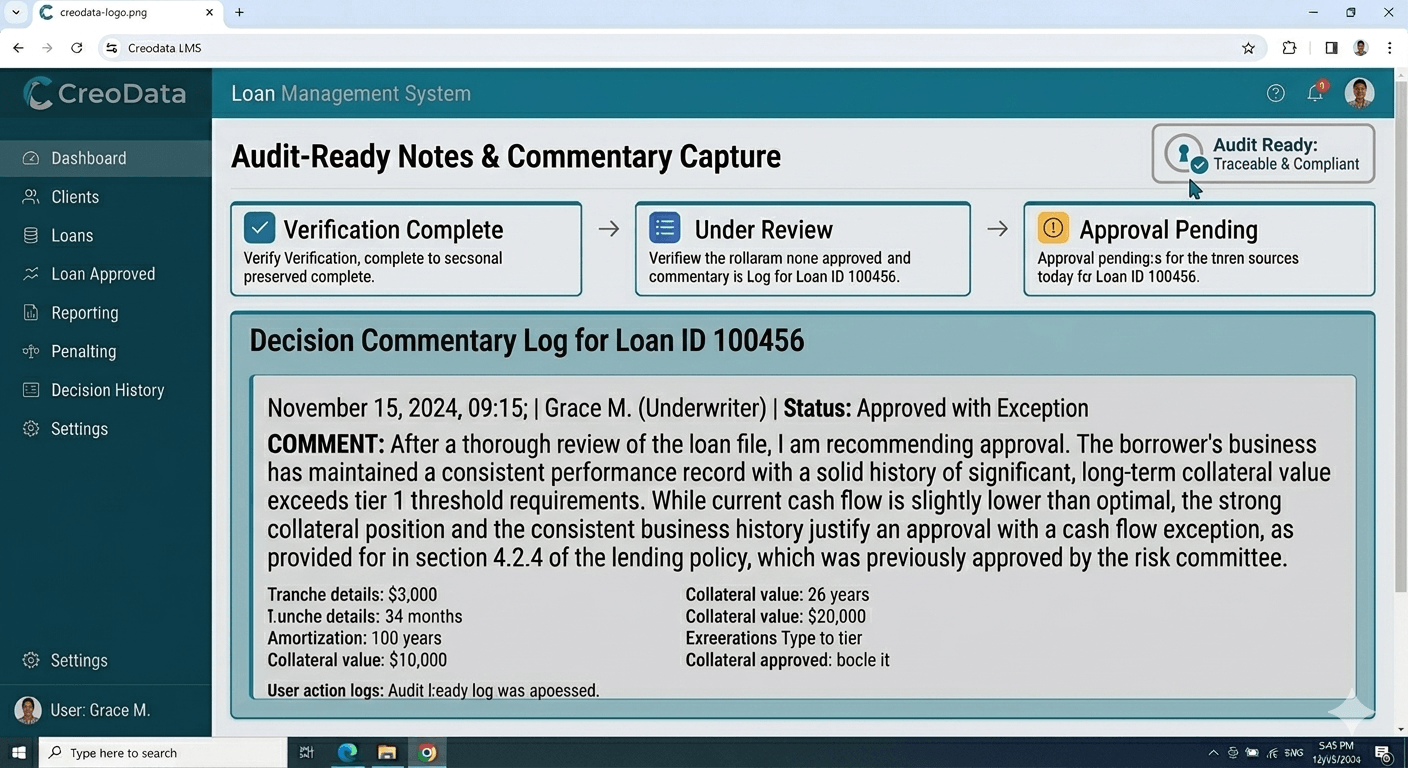

Time-Stamped Application Audits: Strengthening Audit Trail & History with Timestamp Records
Record every loan workflow action with immutable timestamps for a reliable chronological audit trail from application through approval or rejection.
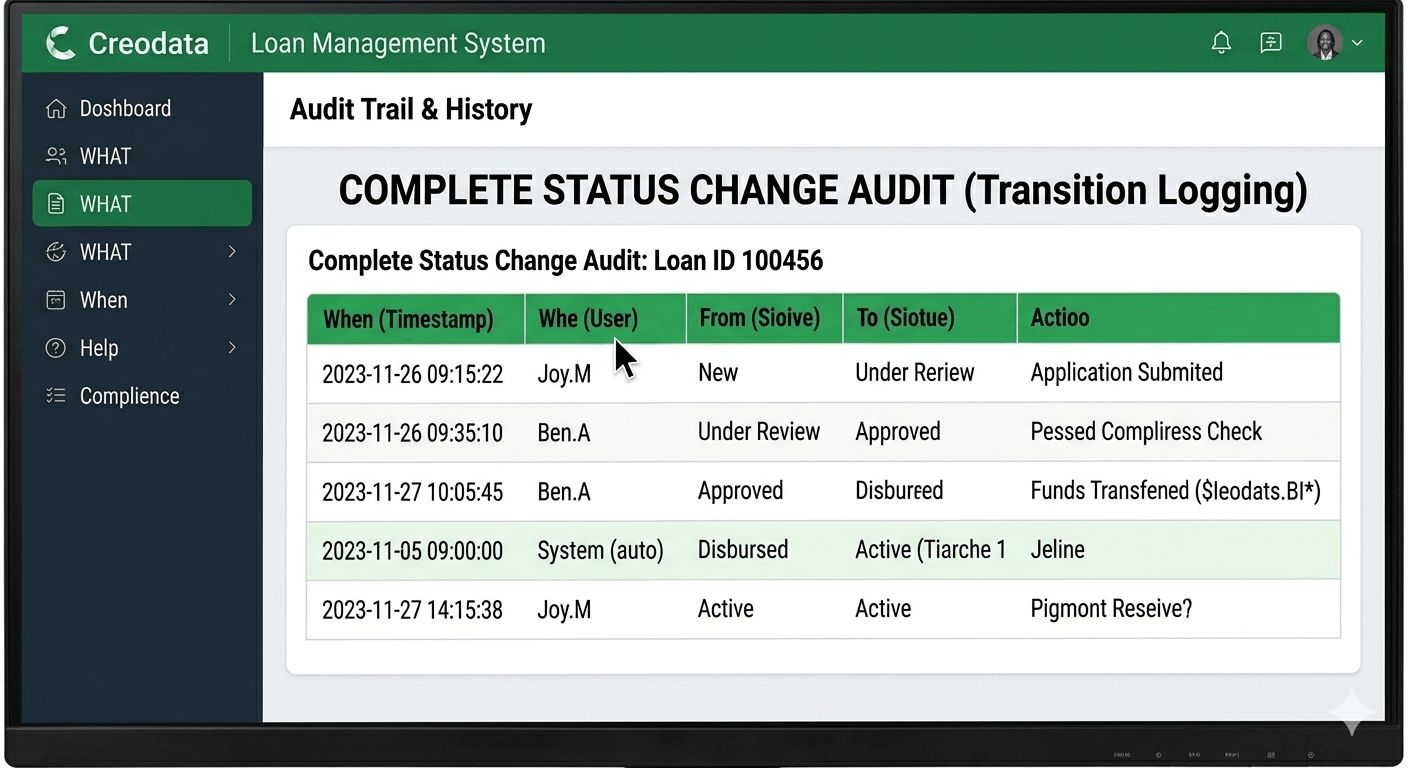
In today's highly regulated financial environment, transparency, traceability, and accountability are no longer optional features in loan management systems—they are essential requirements. Financial institutions must be able to clearly demonstrate who did what, when, and why across the entire loan lifecycle. This is where audit trail and history capabilities, particularly timestamp records, play a critical role.
This article explores the Audit Trail & History category with a focus on the feature Timestamp Records, using the use case titled "Time-Stamped Application Audits." It explains how recording every system action with an immutable timestamp creates a reliable chronological history from loan application submission through approval, disbursement, or rejection.
Understanding Audit Trail & History in Loan Management
An audit trail is a chronological record that documents all activities performed within a system. In loan management, this includes every action taken on a loan application—data entry, document uploads, verifications, approvals, modifications, and final decisions. Audit history ensures that all these actions are preserved in a secure and traceable manner.
Audit trails are especially critical in lending because loan decisions directly impact financial risk, regulatory compliance, and customer trust. Regulators and auditors often require proof that lending decisions followed approved policies and procedures. Without a comprehensive audit trail, institutions may struggle to justify decisions, resolve disputes, or investigate fraud.
Audit trail & history features transform loan systems from simple transaction processors into systems of record that provide transparency, defensibility, and accountability.
What Are Timestamp Records?
Timestamp records are a foundational element of an effective audit trail. They automatically attach a precise date and time to every action performed in the system. Each event—whether it is a data change, status update, or approval—is recorded along with:
- The exact time the action occurred
- The user or system role that performed the action
- The nature of the action (create, update, approve, reject, disburse, etc.)
- The previous and updated values (where applicable)
These time-stamped entries create an immutable timeline of events that cannot be altered without detection. Instead of relying on manual logs or recollections, organizations gain a system-generated, verifiable history of every loan application's journey.
Use Case: Time-Stamped Application Audits
The use case "Time-Stamped Application Audits" focuses on ensuring that every change within the loan management system is time-stamped, creating a complete and auditable lifecycle record.
From the moment a borrower submits an application, the system records:
- Application Submission – Date and time the application was created and submitted.
- Data Updates – Any edits to borrower details, loan amounts, or supporting information.
- Document Uploads – When documents such as ID, income proof, or collateral records were added or replaced.
- Verification Steps – Time-stamped logs of credit checks, income verification, and risk assessments.
- Approval or Rejection – When decisions were made, by whom, and under which authority.
- Disbursement – Exact timestamps of fund release.
- Post-Decision Changes – Adjustments, corrections, or cancellations.
This end-to-end timeline ensures that loan processing is transparent, defensible, and compliant with internal and external requirements.
Why Time-Stamped Audits Are Critical for Governance & Compliance
1. Regulatory Compliance
Financial regulators require institutions to maintain detailed records of lending decisions. Timestamped audit trails provide clear evidence that processes were followed correctly and within required timeframes. This is especially important for consumer protection, anti-money laundering (AML), and fair lending regulations.
2. Accountability and Responsibility
When every action is time-stamped and linked to a user or role, accountability is built into the system. Employees understand that actions are traceable, which promotes adherence to policies and ethical standards.
3. Dispute Resolution
Customer disputes often arise around loan decisions, delays, or rejections. A time-stamped audit trail allows organizations to reconstruct events accurately and resolve disputes with facts rather than assumptions.
4. Fraud Detection and Prevention
Suspicious activity—such as unauthorized data changes or unusual timing of approvals—becomes easier to detect when every action is logged with an exact timestamp. This strengthens internal controls and fraud prevention efforts.
How CreoData Supports Time-Stamped Application Audits
CreoData's Loan Management solution is designed with auditability and transparency at its core. Built on secure, scalable cloud architecture, it ensures that every action across the loan lifecycle is automatically captured and time-stamped.
1. Automated Event Logging
Every system interaction—whether initiated by a user or triggered automatically—is logged in real time. This eliminates reliance on manual logging and ensures consistency and completeness.
2. Immutable Audit Records
Once created, audit records cannot be altered or deleted without authorization and traceability. This immutability ensures trust in the data and meets audit and regulatory expectations.
3. Role-Based Traceability
Audit logs clearly indicate who performed each action, whether it was a loan officer, verifier, approver, or system automation. This role-based traceability strengthens governance and internal controls.
4. Full Lifecycle Visibility
From application intake to final outcome, CreoData provides a single, continuous audit timeline. This holistic view supports internal reviews, audits, and management oversight.
5. Secure Access and Reporting
Authorized users can easily retrieve audit histories for specific loans, users, or time periods. This simplifies audits, compliance reporting, and investigations.
By embedding timestamp records directly into the loan workflow, CreoData ensures that audit trails are not an afterthought but an integral part of daily operations.
Operational Benefits of Time-Stamped Application Audits
Improved Process Transparency
Time-stamped records make loan workflows visible and measurable. Managers can identify bottlenecks, delays, or inefficiencies by analyzing when each step occurred.
Faster Audits and Reviews
Instead of manually reconstructing events, auditors can quickly access a complete, chronological record. This significantly reduces audit preparation time and disruption to operations.
Reduced Operational Risk
Clear timelines reduce ambiguity and miscommunication. Decisions are based on verified records rather than informal explanations.
Stronger Internal Controls
Automated audit trails support segregation of duties and ensure that approvals and overrides follow defined policies.
Advantages of Timestamp Records in CreoData Loan Management
Implementing time-stamped application audits using CreoData delivers several key advantages:
1. End-to-End Traceability
Every action across the loan lifecycle is captured, providing a single source of truth for audits and reviews.
2. Regulatory Readiness
Detailed, immutable records help organizations meet regulatory, legal, and compliance obligations with confidence.
3. Enhanced Trust and Credibility
Transparent audit trails build trust with regulators, auditors, partners, and customers.
4. Reduced Manual Effort
Automated logging eliminates the need for manual record-keeping and reduces human error.
5. Better Risk Management
Historical timelines help identify patterns, risks, and process weaknesses, enabling proactive improvements.
6. Scalable Governance
As loan volumes grow, timestamp records scale effortlessly, ensuring governance remains strong even with increased complexity.
Target Audience
The Time-Stamped Application Audits feature is particularly valuable for the following audiences:
Financial Institutions
Banks, microfinance institutions, SACCOs, and credit unions that must meet strict regulatory and audit requirements.
CFOs and Finance Leaders
Executives responsible for financial governance, risk management, and compliance oversight.
Compliance and Audit Teams
Internal and external auditors who require accurate, reliable, and easily accessible audit records.
Loan Operations Teams
Loan officers and managers who benefit from transparency, accountability, and clear process tracking.
Risk and Fraud Management Teams
Professionals focused on identifying anomalies, preventing fraud, and strengthening internal controls.
IT and System Administrators
Teams responsible for maintaining secure, compliant, and auditable systems.
Conclusion
In an era where financial transparency and accountability are under constant scrutiny, timestamp records are no longer optional—they are essential. The use case "Time-Stamped Application Audits" demonstrates how embedding precise, immutable timestamps into every system action creates a reliable audit trail that spans the entire loan lifecycle.
With CreoData's Loan Management solution, organizations gain more than just compliance support. They gain operational clarity, stronger governance, improved risk control, and enhanced trust across stakeholders. By ensuring that every action is recorded, traceable, and defensible, time-stamped audits transform loan management into a transparent, resilient, and future-ready process.
For more information, visit Creodata.com