
Account Opening Turnaround Time: Setting and Hitting SLAs in Corporate Onboarding
Account opening turnaround time — how banks set, monitor, and hit SLAs across the onboarding workflow, where applications stall, and how SLA monitoring fixes it.

For a business customer, the time between submitting an account-opening application and receiving an account number is the first real test of a bank's competence. A corporate treasurer who waits a fortnight for a transactional account remembers that delay long after the welcome email. Turnaround time is not a back-office statistic; it is a promise, and the institutions that win business banking relationships are usually the ones that set that promise explicitly and keep it.
This article looks at how corporate account opening actually consumes time, where applications stall, and how attaching a service-level agreement (SLA) to each stage of the onboarding workflow — with timers, breach alerts, and dashboards — turns turnaround time from a vague aspiration into something an operations team can measure and manage.
Why turnaround time is the metric customers judge you on
A business does not open a bank account for its own sake. It opens one to pay suppliers, receive customer funds, run payroll, or unlock a facility such as a paybill or till. Every day the account is not live is a day the business cannot transact through it. That is why corporate customers experience onboarding latency far more acutely than retail customers do, and why turnaround time has become a competitive differentiator rather than an operational footnote.
Turnaround time also correlates closely with abandonment. The longer an application sits in limbo, the more likely the applicant is to start a parallel application elsewhere or simply walk away. We explore that dynamic in detail in our guide to reducing account opening abandonment, but the headline is straightforward: speed and completion rates move together. A bank that cannot tell a customer when the account will be ready is a bank that loses customers who could not wait to find out.
The difficulty is that turnaround time is rarely owned by anyone. The branch blames the back office, the back office blames compliance, compliance blames incomplete documents, and the customer hears nothing. Fixing this starts with making the elapsed time visible and assigning it to specific, accountable stages.
Where corporate account opening actually stalls
Before you can set sensible SLAs, you need an honest picture of where time is lost. In our experience across the corporate account opening process — which we map step by step in our corporate account opening process guide — delay clusters around three recurring failure points.
The first is incomplete or incorrect documents. A corporate application depends on a checklist of evidence: Certificate of Incorporation, CR12, KRA PIN certificate, Memorandum and Articles of Association, board resolution, and signatory identification. When any item is missing or illegible, the application cannot progress, and on a paper or PDF process the gap is often not discovered until a reviewer opens the file days later. Our business account opening documents checklist sets out what a complete Kenyan corporate file looks like, and a checklist-driven upload that flags gaps at submission removes much of this delay.
The second is compliance queries. Beneficial ownership ambiguity, a politically exposed person (PEP) match that needs review, or a FATCA declaration that requires follow-up will all pause an application. These pauses are legitimate, but on a manual process they are invisible — nobody outside the compliance desk knows the clock is running.
The third is manual hand-offs between branch and back office. Every time a physical file or an email moves between teams, it can sit unactioned in an inbox or a tray. These hand-off gaps are frequently the single largest contributor to elapsed time, precisely because no individual stage feels responsible for them.
Setting SLAs per stage, not per application
The instinct of many institutions is to set a single end-to-end SLA — "we open accounts in five working days." This is better than nothing, but it is too coarse to manage. When a single application breaches five days, the number alone tells you nothing about why, or which team needs to act. A blanket target also hides the fact that different stages have genuinely different characteristics: document verification is fast when the file is complete, whereas a compliance review involving a PEP match is legitimately slower.
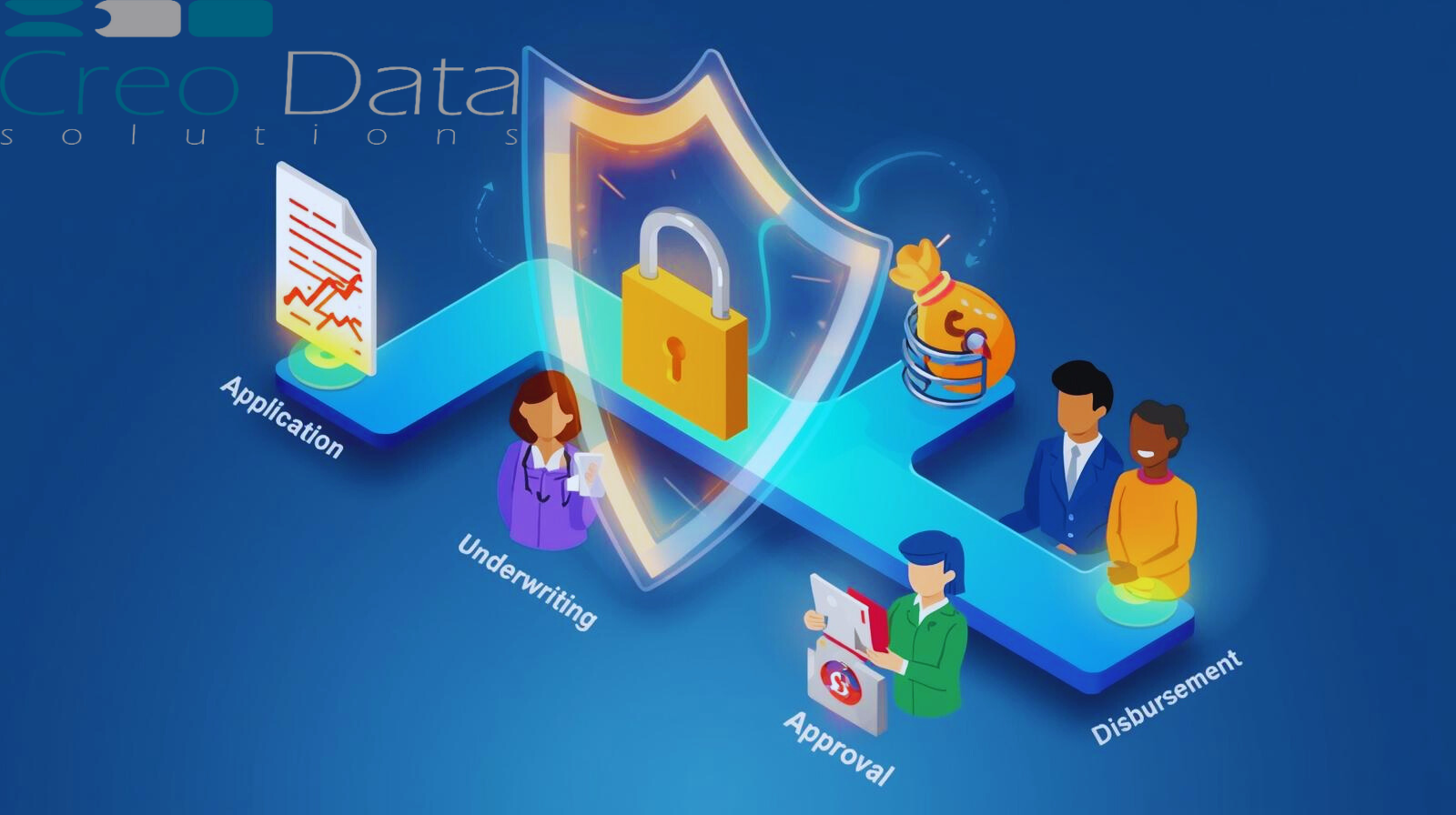
A more useful discipline is to break the journey into discrete workflow stages and attach an SLA to each one. Creodata's Business Account Opening System (BAOS) models corporate onboarding as a six-stage bank workflow, and each stage carries its own SLA timer:
| Workflow stage | What happens | What the SLA governs |
|---|---|---|
| Submission | The applicant completes and submits the digital application | Time to acknowledge and route the application |
| Compliance Check | PEP, FATCA and KYC/AML screening plus compliance review | Time for the compliance desk to clear or query |
| Document Verification | Checklist-driven verification of uploaded documents | Time to confirm the file is complete and valid |
| Internal Review | Staff review against policy and segment rules | Time for the assigned reviewer to act |
| Approval | The decision to proceed | Time for the approver to sign off |
| Account Creation | Handoff for the account to be created in the core system | Time to complete the final handoff |
Setting a target per stage does three things at once. It makes each team accountable for the portion of elapsed time it controls. It allows the institution to set realistic, differentiated targets rather than one arbitrary number. And it produces data granular enough to diagnose where the process is genuinely slow, so that improvement effort is directed at the real bottleneck rather than the most visible team.
Timers, breach alerts, and dashboards that create accountability
An SLA that is written in a policy document but not measured in the system is a target nobody is held to. The point of per-stage SLAs is that they are instrumented. In BAOS, a dedicated SLA Monitoring microservice attaches a timer to each of the six workflow stages and watches for breaches as applications move through the event-driven workflow — coordinated over RabbitMQ on-premises or Azure Service Bus in the cloud.
When a stage approaches or exceeds its SLA, the breach surfaces on an operations dashboard rather than disappearing into a queue. Operations teams get SLA dashboards and breach lists that show, at a glance, which applications are at risk and which stage is responsible. Because BAOS enforces role-based access control with branch scoping, a branch manager sees the applications and breaches for their own branch and segment, not the whole institution — accountability lands where the work actually sits. Email notifications to applicants and staff at each stage keep everyone informed as the application advances, so the customer is never left guessing and the next reviewer knows an item is waiting.
This instrumentation changes the management conversation. Instead of asking "why are accounts slow?" an operations lead can ask "why does the Compliance Check stage breach so often on corporate applications, and is it the same query each time?" That is a question you can act on. Several of the most common breach causes — beneficial ownership ambiguity and PEP matches — are compliance matters; institutions that want to tighten the compliance stage itself can look at how a structured screening approach works in PEP and sanctions screening at account opening and, for ongoing monitoring once the account is live, in our AML Compliance Platform and the companion guide to sanctions and PEP screening explained.
Designing out delay at the source
Monitoring tells you where time is lost; good design stops the time being lost in the first place. Two structural choices in BAOS attack the root causes described above.
The first is a guided, validating front end. The nine-step application wizard walks the applicant through business information, account selection, facilities, compliance declarations, signatories, signing mandate, an optional Lipa Na M-PESA short-code request, the board resolution, and a final documents-and-review step. Because the wizard auto-saves to draft between steps and supports save-and-resume, an applicant who lacks a document can pause and return rather than submitting an incomplete file that will stall in review. The checklist-driven document step means files arrive more complete, which directly shortens the Document Verification stage. The discipline of capturing signatories and operating instructions correctly up front — covered in our guide to authorized signatories and signing mandates — removes a frequent source of back-and-forth.
The second is the elimination of manual hand-offs. Because the entire journey is digital and event-driven, the movement between Submission, Compliance Check, Document Verification, Internal Review, Approval, and Account Creation is automatic. There is no physical file to be left in a tray, and no email that sits unread. The clean handoff at the Account Creation stage is where the application hands off to the core banking system; we discuss that boundary as an architectural pattern in core-banking integration and the account creation handoff. Removing the gaps between stages is often where the largest turnaround gains come from, because those gaps were never anyone's measured responsibility before.
Turning SLA data into an audit-ready record
Per-stage timing data is valuable beyond operations. Every action in BAOS is captured in an append-only audit log, so the record of when an application entered and left each stage — and who acted on it — is preserved. This means turnaround performance is not only a live dashboard but a defensible history. When a regulator, an internal auditor, or a corporate customer asks how a particular application was handled and how long each step took, the answer is a complete, tamper-evident trail rather than a reconstruction from memory.
This connects turnaround management to wider supervisory expectations. The Central Bank of Kenya's prudential guidelines expect institutions to onboard customers with proper due diligence and clear, accountable processes, and an SLA-instrumented workflow demonstrates exactly that discipline. We set out how to build that evidentiary record in audit-ready onboarding, and the same append-only principle underpins our AML cluster's treatment of an audit-ready, four-eyes AML trail. Speed and control, in other words, are not a trade-off when the workflow is designed to deliver both.
For the full picture of how digital business onboarding fits together — from the application wizard to compliance screening to account creation — see our complete guide to business account opening.
Frequently asked questions
What is a realistic account opening turnaround time for a corporate customer?
There is no universal figure, because turnaround depends on the completeness of the file and the complexity of the compliance review. The more useful approach is to set differentiated SLAs for each workflow stage rather than a single end-to-end number. A complete application with no compliance queries should move quickly; one involving a PEP match or beneficial-ownership ambiguity legitimately takes longer. BAOS lets an institution configure its own per-stage targets and then measures actual performance against them, so the bank can set realistic expectations and improve from a real baseline rather than a guess.
How does SLA monitoring actually surface a bottleneck rather than just flag a late application?
Because BAOS attaches a separate timer to each of the six workflow stages, a breach is always tied to a specific stage and, through branch-scoped role-based access control, to a specific team. The SLA dashboards and breach lists show not just that an application is late but which stage caused the delay. Over many applications, this produces a pattern — for example, repeated breaches at the Compliance Check stage — that points operations and compliance leads at the genuine bottleneck instead of the most visible team.
Can SLA timing data be used as evidence in an audit?
Yes. Every stage transition and staff action is captured in an append-only audit log, so the record of when each application entered and left each stage, and who acted on it, is preserved as a tamper-evident history. That record supports both internal performance review and external scrutiny, and aligns with the accountable-process expectations set out in the Central Bank of Kenya's prudential guidelines on account opening and KYC.
Creodata's Business Account Opening System attaches an SLA timer to every stage of the onboarding workflow, surfaces breaches on operations dashboards, and preserves the timing as an audit-ready record — so your teams can see where applications stall and act before customers walk away. To see per-stage SLA monitoring and the six-stage workflow in action, book a demo.