
Business Account Opening for Banks: The Complete Guide to Digital Corporate Onboarding (2026)
The complete guide to digital business account opening for banks — the corporate onboarding lifecycle end to end, from KYB, CDD, beneficial ownership, and signatories to documents, SLAs, audit, and account creation.

Opening a business or corporate account is one of the most consequential moments in the relationship between a bank and its customer, and for most institutions in East Africa it is still one of the most painful. A company arrives with a folder of certificates, a partly completed paper form, and several signatories who are rarely in the same room. The bank, in turn, must satisfy a stack of regulatory obligations before a single shilling moves. This guide walks the entire corporate onboarding lifecycle in the order a bank actually experiences it, and for each stage points to a focused article that goes deeper. It is the hub for everything we publish on business account opening, and it is grounded in how the Creodata Business Account Opening System (BAOS) is built and deployed.
What digital business account opening is, and why banks move off paper
Digital business account opening replaces the paper or PDF corporate application form with a guided, structured, fully tracked online journey. Instead of a static document that a relationship manager re-keys, the applicant completes a wizard that validates as it goes, saves progress between steps, and feeds a defined back-office workflow. The case for moving off paper is not aesthetic. Paper forms arrive incomplete, lose pages, carry no audit trail, and force compliance checks to happen late and manually. They also make it almost impossible to answer the question a chief operating officer cares about most: where is each application right now, and who is holding it up?
A digital journey changes the economics of onboarding. It captures clean, validated data once; it routes each application through a consistent sequence of checks; and it produces an evidentiary record of every action. For a fuller treatment of the business case, see our overview of digital business account opening for banks, which sets out what changes when an institution retires the paper form. BAOS delivers this as a multi-tenant, white-label platform built on .NET 9 microservices with a Next.js 14 backend-for-frontend, deployable on Microsoft Azure as a managed application or on-premises on Kubernetes with feature parity.
The application journey and the bank workflow
The applicant-facing side of BAOS is a nine-step wizard that maps directly onto a bank's corporate account-opening form and auto-saves to a draft between each step. The sequence runs: Business Information (entity details, KRA PIN, registration type, industry, turnover and purpose of account); Account Selection (product, currency, customer segment); Account Facilities (debit card, cheque book, mobile and internet banking, e-statements, alerts); Compliance (PEP and FATCA declarations and significant stakeholders); Authorized Signatories (up to four, with identification and passport photo); Signing Mandate (operating instructions and terms acceptance); a conditional Lipa Na M-PESA short-code application; Board Resolution (resolution items, authorised officials, daily limits); and finally Documents and Review. Our article on the corporate account opening process step by step walks the full sequence as a bank experiences it.
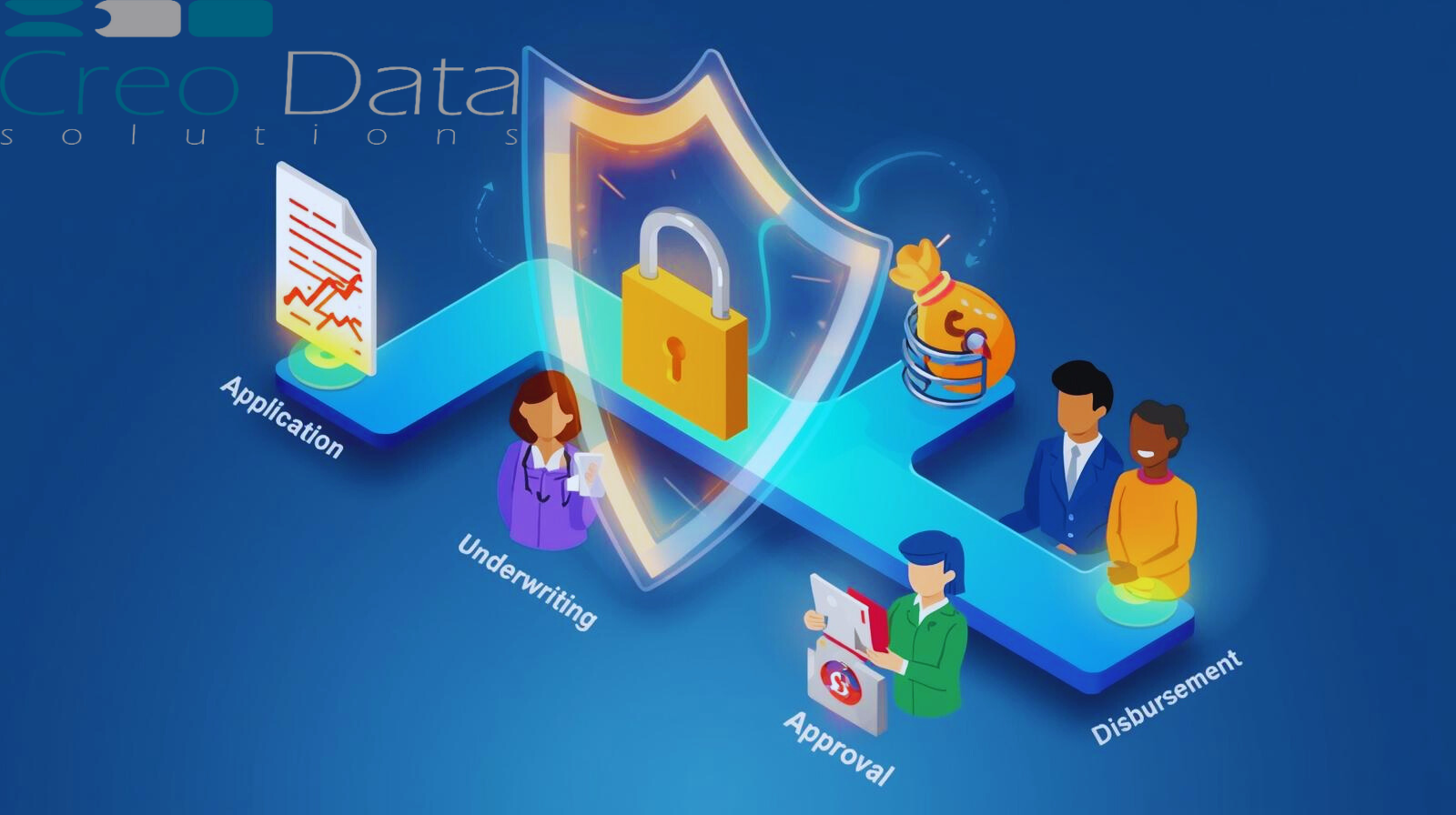
Several of these steps carry enough nuance to warrant their own treatment. The document burden is real, so we maintain a Kenya business account opening documents checklist covering the Certificate of Incorporation, CR12, KRA PIN certificate, Memorandum and Articles of Association, and the rest. How an account is operated turns on the mandate, which we cover in authorized signatories and signing mandates — singly, jointly, either-or-survivor, or special. And because a company cannot open an account without proper authority, the board resolution for a company bank account deserves its own explanation. Behind the wizard sits a six-stage bank workflow — Submission, Compliance Check, Document Verification, Internal Review, Approval, and Account Creation — each stage carrying an SLA timer and breach monitoring, and each driven by events over RabbitMQ on-premises or Azure Service Bus in the cloud.
The compliance spine: KYB, CDD, beneficial ownership, screening, and tax status
Everything in corporate onboarding ultimately serves a regulatory purpose. Under the Central Bank of Kenya's prudential guidelines and the obligations enforced through the Financial Reporting Centre, a bank must understand who it is dealing with before it opens an account. That discipline begins with Know Your Business — verifying that the entity exists, is properly registered, and is doing what it claims. Our guide to KYB (Know Your Business) explained sets out the entity-verification side, while customer due diligence for business accounts covers the CDD and enhanced due diligence layer that sits on top of it.
A company is not a single person, so the bank must look through the legal entity to the humans who own or control it. The Compliance step of the wizard captures significant stakeholders — directors, shareholders, partners, or the sole proprietor — and our article on beneficial ownership and significant stakeholders at onboarding explains how to do this well. Those individuals, and the entity itself, must then be screened. We cover this in PEP and sanctions screening at account opening, and because tax transparency is now part of onboarding, in FATCA and CRS for business accounts. BAOS includes a compliance screening service that performs PEP, FATCA, and KYC/AML checks and drives a staff compliance-review workflow.
Onboarding is only the first chapter of the customer relationship; the obligation to monitor continues for as long as the account is open. Rather than duplicate that depth here, we hand it to the AML cluster. The complete AML platform guide and the risk-based approach to AML explain ongoing monitoring, the customer risk assessment (CRA) model shows how risk is scored, sanctions and PEP screening explained and enhanced due diligence (EDD) deepen the screening picture, and beneficial ownership and entity resolution tackles the harder ownership-graph problem. For institutions whose obligations extend to filing with the FRC, the complete goAML reporting guide covers reporting downstream. The Creodata AML Compliance Platform handles monitoring after onboarding, the goAML Reporting Platform handles regulatory filing, and our financial crime compliance advisory supports the programme around both.
Operations: turnaround, SLAs, and reducing abandonment
A compliant journey that takes three weeks still loses customers. Two operational metrics decide whether digital onboarding pays for itself: how long an application takes to clear, and how many applicants give up before they finish. On turnaround, BAOS attaches an SLA timer to each of the six workflow stages and monitors for breaches, surfacing the position to operations teams through dashboards and breach lists so that a stalled application is visible rather than buried. Our article on account opening turnaround time and SLAs explains how to set, measure, and defend those service levels.
Abandonment is the quieter loss. Long forms, unclear document requirements, and the need to gather several signatories cause applicants to walk away mid-process. The save-and-resume design of BAOS — an applicant can leave an incomplete application and continue later — and the customer self-service portal, where applicants register, sign in, and track status via a non-enumerable reference token, are direct responses to this. Our guide to reducing account opening abandonment covers the patterns that keep applicants moving through to submission.
| Operational concern | What the bank needs to see | How BAOS supports it |
|---|---|---|
| Turnaround | Time in each stage against target | Per-stage SLA timers, breach monitoring, dashboards |
| Abandonment | Where applicants drop off | Save-and-resume drafts, self-service portal, status tracking |
| Accountability | Who acted, and when | Append-only audit logging across services |
The platform: white-label tenancy, audit-ready trail, and core-banking handoff
The final layer is the platform itself, and it matters most to digital-transformation teams and to groups serving more than one brand. BAOS is multi-tenant and white-label: per-tenant branding, configurable form fields, document checklists, account products, segments, and branches are all set per tenant without code changes, with data isolated schema-per-tenant in PostgreSQL. Our article on multi-tenant white-label onboarding explains why that architecture suits banking groups, SACCO networks, and platform providers.
Auditability is not an afterthought but a structural property. BAOS keeps an append-only audit log of actions, enforces role-based access control with branch-level row scoping so staff see only their own branch and segment, and protects sessions with CSRF defences, encrypted sessions, and JWT validation across services. We cover this in audit-ready onboarding trail, and the AML cluster's audit-ready AML and four-eyes piece extends the same thinking into monitoring. We describe the platform as having an audit-ready architecture designed for SOC 2 and GDPR-aligned controls rather than claiming certification. Finally, onboarding ends where the core banking system begins. BAOS treats Account Creation as a clean handoff stage; our article on core-banking integration and the account creation handoff discusses this as an architectural pattern rather than a delivered connector to any specific core platform.
Frequently asked questions
What is the difference between business account opening and ongoing AML monitoring?
Business account opening is the onboarding event — collecting and verifying the entity's details, beneficial owners, signatories, and documents, running the initial compliance checks, and creating the account. Ongoing AML monitoring is everything that follows for the life of the relationship: transaction monitoring, periodic risk re-assessment, and regulatory reporting. BAOS handles the onboarding journey and hands a clean record forward, while the Creodata AML Compliance Platform and goAML Reporting Platform address the continuing obligations after the account is live.
Can a bank deploy the system on its own infrastructure rather than in the cloud?
Yes. BAOS deploys on Microsoft Azure as a managed application using Static Web Apps, Function Apps, PostgreSQL Flexible Server, Service Bus, and Blob Storage, or entirely on-premises on Kubernetes using RabbitMQ, MinIO, and Keycloak, with feature parity between the two. Banks that must keep data within their own environment for regulatory or policy reasons can run the on-premises deployment, and tenant data is isolated schema-per-tenant in PostgreSQL in both cases.
Digital corporate onboarding is no longer a single feature but a lifecycle, and this guide is the map of it. To see how the nine-step wizard, the six-stage workflow, and the audit-ready architecture fit together for your institution, explore the Creodata Business Account Opening System and book a demo, or get in touch to discuss a deployment that fits your environment.