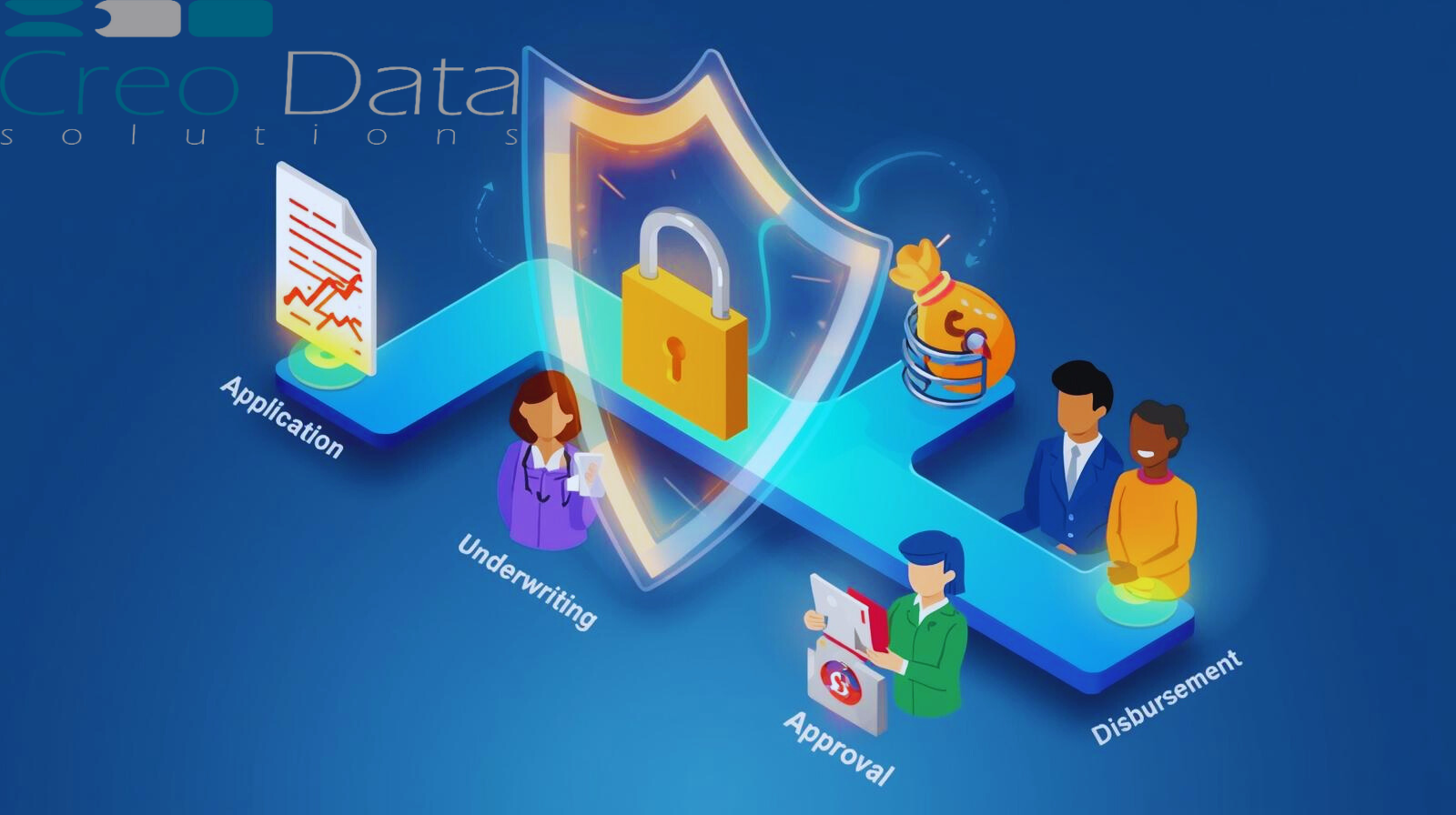

From Approved Application to Open Account: Integrating Onboarding with Core Banking
From approved application to open account — how digital onboarding integrates with core banking, the account-creation handoff, and patterns for straight-through processing.

A digital onboarding journey can be flawless and still fail at the last metre. An application can be captured, screened, verified and approved, yet the customer has no live account until a record lands in the core banking system. That final handoff — from an approved application to an open account — is where many onboarding programmes quietly lose the time and accuracy they gained upstream, and it deserves to be designed as carefully as the wizard itself.
Why the final mile is its own problem
The bulk of an account opening process is about gathering and validating data: business information, the chosen account product, facilities, compliance declarations, signatories, the signing mandate and the supporting documents. By the time an application reaches approval, the institution holds a complete, reviewed dataset. The core banking system, however, is a system of record for live customers and ledgers, not a place to collect and correct half-formed data. It expects a clean, validated, fully attributed customer and account record that it can accept with confidence.
The mistake is to treat core integration as a single button at the end of onboarding. In practice, the last mile carries its own risks: a record may be created twice, a partial write may leave the customer in an ambiguous state, or a field the core insists on may be missing because nobody validated for it at capture time. The discipline, then, is to make the onboarding platform produce a record the core can consume without negotiation, and to make the handoff itself observable, repeatable and reversible.
Account Creation as a distinct workflow stage
Creodata's Business Account Opening System models the bank workflow as six stages, each with its own SLA timer and breach monitoring: Submission, Compliance Check, Document Verification, Internal Review, Approval and Account Creation. Account Creation is deliberately the final stage and a stage in its own right, not an afterthought bolted onto Approval. Separating it means the moment of handoff to the core is an explicit, tracked event with its own timing, its own owner and its own audit record, rather than an invisible side effect of someone clicking "approve".
That separation matters for accountability. When Account Creation is its own stage, an operations team can see exactly how long the handoff takes, where it stalls, and which applications are approved but not yet live in the core. It turns the final mile into something measurable — which is the first step to managing it. For more on how stage timers shape onboarding performance, see our guide to account opening turnaround time and SLAs.
An event-driven design built for the handoff
BAOS is structured as eight .NET microservices — Account Application, Tenant Config, Compliance, Document, SLA Monitoring, Authorization, Auditing and Email Notification — communicating over an event bus: RabbitMQ on-premises or Azure Service Bus in the cloud. This event-driven design is what makes a clean core handoff practical rather than aspirational.
When an application reaches the Account Creation stage, the platform has a single, well-defined point at which to emit an event carrying an approved, immutable application record. An integration component can subscribe to that event and translate it into whatever the institution's core expects, without the onboarding services needing to know anything about the core's internals. The onboarding platform's job ends at producing a validated, approved record and a clean event; the integration's job is to deliver it. That boundary keeps the onboarding domain stable even as cores, versions and connectors change underneath it.
| Onboarding platform owns | The integration layer owns |
|---|---|
| Capturing and validating the application | Mapping fields to the core's data model |
| Compliance, verification and approval | Calling the core's API or messaging interface |
| Emitting an approved Account Creation event | Idempotency, retries and reconciliation |
| Recording the outcome in the audit trail | Returning success or failure to the workflow |
Integration patterns for a reliable handoff
Whichever core a bank runs, a few patterns make the difference between a handoff you can trust and one you have to babysit.
Idempotency. Networks fail and messages get redelivered. The integration must be able to receive the same Account Creation event twice and create exactly one account. A stable application reference — BAOS already issues a non-enumerable reference token for each application — gives the integration a natural idempotency key, so a retried event reconciles to the existing account rather than creating a duplicate.
Validation before handoff. Straight-through processing only works if the record is genuinely complete by the time it is handed over. Because the nine-step wizard validates business details, the chosen account product and currency, signatories, the signing mandate and the document checklist as the application is built, the record reaching Account Creation is already shaped to be accepted, not patched.
Reconciliation. A handoff is not finished when the event is sent; it is finished when the institution can prove the account exists in the core and matches the approved application. The integration should confirm the core's acknowledgement, capture the new account identifier, and surface any mismatch back into the workflow so an operator — not the customer — resolves it.
A clean failure path. When the core rejects a record or is unavailable, the application should remain in a recoverable Account Creation state with the reason logged, not silently disappear. The SLA timer on the stage makes a stalled handoff visible, and breach lists give operations a queue to work, so nothing sits unresolved.
What we claim — and what is an integration project
It is worth being precise here, because core-banking integration is an area where vendors over-promise. Creodata BAOS does not ship an out-of-the-box, certified connector to any specific core banking system such as Temenos T24, Finacle or Flexcube. What it provides is the architecture for a clean handoff: a discrete Account Creation stage, an event carrying a validated and approved application record, a stable reference for idempotency, and an audit trail of the outcome.
Connecting that to a particular bank's core is an integration project, scoped to that institution's core, its version and its data model. The value of the design is that this project starts from a well-formed, approved record and a clearly defined event boundary, rather than from a tangle of half-validated form data. That is a far smaller, safer piece of work than building the handoff and the onboarding logic together. The same boundary discipline lets the platform serve several institutions from one deployment; see multi-tenant white-label onboarding for how per-tenant configuration coexists with a shared architecture.
Carrying the audit trail across the boundary
Account creation is a regulated act, so the handoff cannot be a blind spot. BAOS keeps append-only audit logging of actions throughout the workflow, and the Account Creation stage is part of that record: who approved, when the handoff event was emitted, and the outcome returned by the integration. The result is an end-to-end, defensible trail from first capture to live account — which examiners and internal audit will expect to see. For the broader picture of what a defensible onboarding trail contains, read our article on the audit-ready onboarding trail, and for how the onboarding record feeds ongoing AML obligations after the account is live, the Creodata AML Compliance Platform takes over monitoring from there.
Approached this way, the last mile stops being a risk and becomes the natural conclusion of a well-built journey. The fuller context for everything upstream of it lives in our complete guide to business account opening.
Frequently asked questions
Does Creodata BAOS include a ready-made connector to my core banking system?
No. BAOS provides the architecture for a clean handoff — a dedicated Account Creation workflow stage, an event-driven boundary that emits a validated and approved application record, a stable reference token for idempotency, and a full audit trail — but it does not ship a pre-built, certified connector to any specific core such as Temenos T24, Finacle or Flexcube. Connecting to a particular core is an integration project scoped to that institution, and it benefits from starting with a well-formed, approved record rather than raw form data.
How does an event-driven design enable straight-through processing?
Straight-through processing depends on a record being complete and correct before it is handed over, and on the handoff being reliable. Because the nine-step wizard validates the application as it is built, the record reaching the Account Creation stage is already shaped to be accepted by the core. The platform then emits a single, well-defined event over RabbitMQ or Azure Service Bus, which an integration component can consume with idempotency, reconciliation and a clean failure path — so an approved application can become a live account with minimal manual intervention and no duplicates.
Creodata BAOS is built to end the onboarding journey with a record your core can trust. See the Business Account Opening System product page for the full architecture, talk to us through our contact page about your core, or book a demo to walk the workflow from submission to account creation.