
Why AML Detection Fails Without Data Quality: Ingestion, Mapping, and DQ Rules
No monitoring rule can catch what bad data hides. How disciplined ingestion, field mapping, source certification and data-quality rules give your AML platform the clean, complete data it needs to detect and report accurately.

Every conversation about anti-money-laundering technology eventually turns to detection logic — the cleverness of the monitoring rules, the sophistication of the screening engine, the accuracy of the risk model. Almost none of those conversations start where the problem actually starts: the data. Yet the reason AML detection fails is rarely that the rules were badly written. It is that the rules were fed incomplete, mislabelled, duplicated, or stale data, and no rule, however well designed, can catch a pattern that the data never recorded.
Why AML detection fails without data quality is the question compliance teams ask too late — usually during an examination, when a regulator asks why a structuring pattern that was plainly visible in the core banking system never raised an alert. The answer, almost always, is that the relevant field arrived empty, arrived in a format the monitoring engine could not read, or did not arrive at all. This article works through the unglamorous but decisive layer beneath every AML control: how transaction and customer data is ingested, mapped, certified, and quality-checked before any detection logic ever runs. It is one chapter of the wider story told in the complete AML platform guide.
Garbage in, garbage out: why data is the real control
The phrase is old enough to be a cliché, but in AML it is closer to a law of physics. A transaction-monitoring rule that looks for cash deposits just below a reporting threshold can only fire if the deposit amount, the cash indicator, and the customer reference are all present, accurate, and correctly typed. Drop any one of them and the rule goes silent — not with an error, but with a clean, confident result that says nothing suspicious happened. That silence is the most dangerous failure mode in the whole programme, because it looks exactly like success.
Consider what bad data does to each control in turn:
- Customer risk assessment scores country, industry, product, channel, behaviour, and PEP exposure. If the industry code is missing or the country field holds a free-text typo, the model silently down-weights a factor it should have flagged, and a high-risk customer is banded as low-risk.
- Screening matches names against sanctions, PEP, and adverse-media lists. If a name arrives truncated, transliterated inconsistently, or split across the wrong fields, fuzzy matching either misses the hit or buries it among false positives.
- Transaction monitoring evaluates behaviour over time. If transactions are duplicated by a faulty feed, velocity rules over-fire; if a batch is dropped, structuring across the gap becomes invisible.
- Regulatory reporting assembles a suspicious-transaction or cash-transaction report from the underlying records. If those records are incomplete, the report is rejected or, worse, filed with errors that surface later as a compliance finding.
None of these failures announces itself. They degrade detection quietly, which is precisely why data quality has to be engineered as a control in its own right rather than assumed. The Creodata AML Platform treats it that way: ingestion and data requirements are first-class services, not plumbing bolted on beneath the "real" features. Data readiness is, in effect, a program control — the same discipline a risk-based approach demands of risk scoring and resource allocation, applied to the inputs those decisions depend on.
Ingestion: getting data in without losing or corrupting it
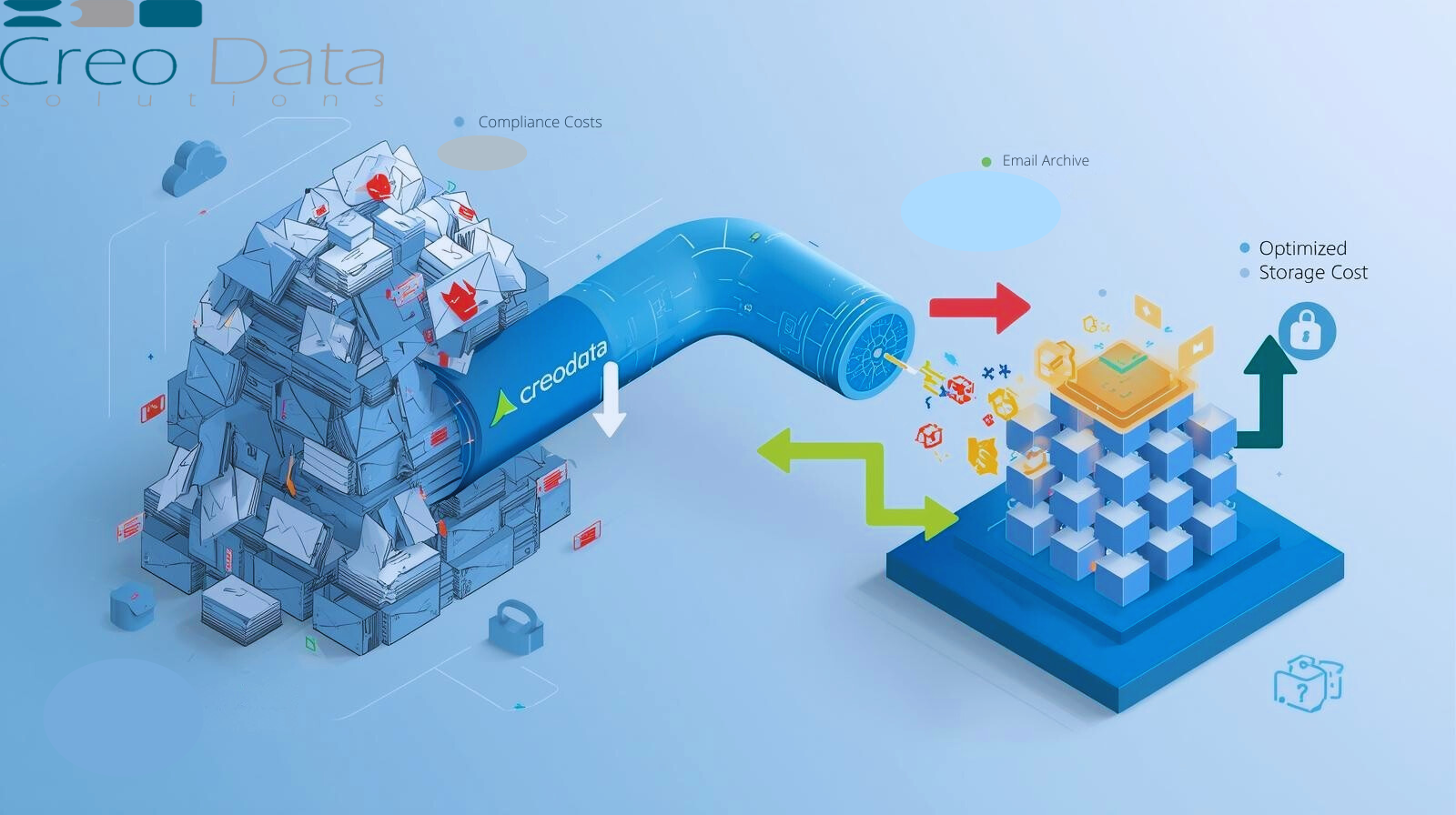
Most institutions do not have one source of truth. They have a core banking system, one or more payment switches, a card processor, a mobile-money platform, a customer master, and a sanctions-list provider — each speaking a different protocol on a different schedule. The Ingestion service exists to bring all of that into the platform reliably, in whatever shape each source emits.
Connectors for every realistic source
The platform ships connectors for the protocols institutions actually run on:
- REST for modern systems and microservices that expose APIs.
- SFTP for the batch files that core banking and card systems still produce overnight.
- Kafka for high-volume event streams where transactions arrive continuously.
- CDC (change data capture) to read inserts and updates straight from a source database without waiting for a nightly extract.
- ISO 20022 for the structured financial-messaging standard that payment rails are converging on, where rich, well-typed message formats carry far more detail than legacy fixed-width files ever did.
The point of supporting all five is not breadth for its own sake. It is that you should never have to degrade a source to fit the tool — if the core banking system can only export a nightly SFTP file but the switch can stream over Kafka, you ingest each at its native fidelity rather than forcing both through the lowest common denominator.
Idempotency, replay, and the dead-letter queue
Getting data in once is easy. Getting it in exactly once, every time, under real-world failure conditions is the hard part, and it is where naive integrations quietly corrupt the data they were meant to deliver.
- Idempotency ensures that if the same record is delivered twice — because a feed retried, a job restarted, or a file was reprocessed — it is recognised and not counted twice. Without it, duplicate transactions inflate volumes and velocity counts, and monitoring fires on phantom activity.
- Replay lets you re-run a source from a known point after an outage or a mapping fix, so a window of activity is recovered in full rather than left as a permanent gap in the record.
- The dead-letter queue (DLQ) captures records that cannot be processed — malformed, unparseable, or failing validation — instead of silently discarding them. Nothing vanishes. Every rejected record is visible, countable, and recoverable once the cause is fixed.
Together these three mean a feed failure becomes an operational event you can see and remediate, not an invisible hole in the data that surfaces months later as a missed alert. Idempotency, replay, and the DLQ are the difference between a feed you can certify to an examiner and one you can only hope was complete.
Mapping and certification: making the data mean the same thing everywhere
Once data is flowing in reliably, it still has to mean the same thing across every source. The amount field in the core banking extract, the value tag in an ISO 20022 message, and the txn_amt column in the switch file may all describe a transaction amount, but until the platform knows they are the same concept, no rule can compare them.
The field-mapping UI
The Ingestion service provides a field-mapping UI that lets a compliance or data analyst connect each source field to the platform's canonical model without writing code. A source feed is profiled, its fields are presented, and the analyst maps them — transaction amount here, customer identifier there, debit/credit indicator over there — with transformations applied where formats differ. This matters because the people who understand what a field means are the compliance and operations staff, not necessarily the integration engineers, and the mapping UI puts that judgement where the knowledge lives.
Source certification
Mapping a source is not the same as trusting it. Source certification is the formal step where a newly mapped feed is validated and signed off before its data is allowed to drive live detection. A source moves from "connected" to "certified" only once its fields are mapped, its quality is verified, and someone has accepted responsibility for it. This gives you a defensible answer to the examiner's question "how do you know this feed is complete and correct?" — because certification is recorded, not assumed. When the feed in question is your core banking system supplying data for downstream reporting, the same discipline carries through to the reporting layer; the mechanics of integrating core banking data for goAML reporting build directly on a certified ingestion path.
Data-quality rules and readiness scoring
Ingestion and mapping get clean, well-labelled data into the platform. Data-quality rules keep it that way, and readiness scoring tells you — before you ever switch on a detection rule — whether the data can actually support it. These belong to the Data Requirements service (DRS), and they are what turn "we think the data is fine" into "we can show that the data is fine".
The rule-to-attribute matrix
A monitoring rule does not need all your data; it needs specific attributes. A structuring rule needs the transaction amount, the cash indicator, the timestamp, and the customer reference. A sanctions-screening control needs complete, well-formed name and country fields. The rule-to-attribute matrix makes this dependency explicit: it maps every detection rule and module to the exact data attributes it consumes.
The value of the matrix is that it converts a vague worry — "is our data good enough?" — into a precise, answerable question: which attributes does this rule depend on, and is each of them present, populated, and correct? You stop arguing about data quality in the abstract and start measuring it against the rules that actually use it.
Data-quality rules and module readiness scoring
Against that matrix, data-quality rules continuously test the attributes that matter — checking completeness, format, validity, and freshness. A DQ rule might assert that the transaction-amount field is never null, that the country field holds a valid ISO code, or that the customer-identifier format is consistent across sources. Failures are surfaced and counted rather than hidden.
Readiness scoring rolls those checks up to the level of a module or a rule: it scores how ready your data is to support a given control. The effect is a traffic-light view of detection capability. If you cannot reliably run a structuring rule because the cash indicator is populated on only a fraction of records, the platform tells you that up front — so you fix the feed rather than deploy a rule that will quietly under-detect and give you false assurance. This is the honest answer to the most uncomfortable question in AML: not "does our monitoring run?" but "can it run on the data we actually have?"
Evidence-pack export
The final piece is evidence. When an examiner, an internal auditor, or your board asks you to demonstrate that your data is fit for purpose, evidence-pack export assembles the proof — which sources are certified, which rules each one supports, how the data-quality rules are performing, and what the readiness scores are. The data layer becomes auditable on the same terms as the rest of the programme. That auditability is the same evidence-first discipline that runs through evidence packs and audit readiness across every consequential decision the platform records.
How data gaps silently break detection and reporting
It is worth stating plainly how the failure actually propagates, because the chain is short and the silence at the end of it is what makes it dangerous.
A field arrives empty or mistyped at ingestion. Because there is no DQ rule watching it — or because someone deployed the detection rule without checking readiness — the gap is never flagged. The monitoring engine runs the rule across the data it has, and the rule, doing exactly what it was told, finds nothing because the evidence it needed was missing. No alert is raised. No case is opened. Months later, the same activity appears in a regulator's own analysis, and the institution is left explaining why a pattern it had the data to see was never seen.
The fix is not a better rule. It is the discipline described above: certified sources, an explicit rule-to-attribute matrix, continuous data-quality checks, and readiness scoring that refuses to let you switch on detection the data cannot support. This is why disciplined ingestion is not a precondition for good transaction monitoring — it is part of it. The monitoring is only ever as good as the feed beneath it, and the same is true of screening, risk assessment, and every report you file.
Frequently asked questions
What is the single most common cause of AML detection failure?
Missing or malformed data on the specific attributes a control depends on. A monitoring rule that needs a cash indicator or a transaction amount produces a clean "nothing found" result when that field is empty, which is indistinguishable from a genuine all-clear. The rule logic is usually fine; the input was not.
Why does ISO 20022 matter for data quality?
ISO 20022 is a structured, richly typed financial-messaging standard, so it carries far more well-labelled detail than the legacy fixed-width files it replaces. Ingesting at that fidelity means more attributes arrive populated and correctly typed, which directly improves the readiness of the rules that consume them. The platform ingests ISO 20022 natively rather than flattening it.
What does "source certification" actually prove?
That a feed has been mapped to the canonical model, validated for quality, and formally signed off before its data drives live detection. It turns "we assume this feed is complete" into a recorded, defensible statement you can show an examiner — the difference between hoping a source is correct and being able to demonstrate it.
How is data readiness different from just running the rules?
Running a rule tells you it executed. Readiness scoring tells you whether the data underneath it can support a trustworthy result. By mapping each rule to the attributes it needs and scoring how complete and valid those attributes are, the platform warns you when a rule will under-detect before you deploy it, rather than after an examiner finds the gap.
Data quality is not the unglamorous prerequisite to AML detection — it is the foundation the detection stands on, and the first place a programme fails when it fails quietly. If you want to see how certified ingestion, the rule-to-attribute matrix, and readiness scoring work together against your own sources, book a demo and we will walk through it with your data feeds in view. For institutions that want help establishing the discipline before the technology, our financial-crime compliance advisory and the goAML Reporting Platform round out the picture from data readiness through to filing.