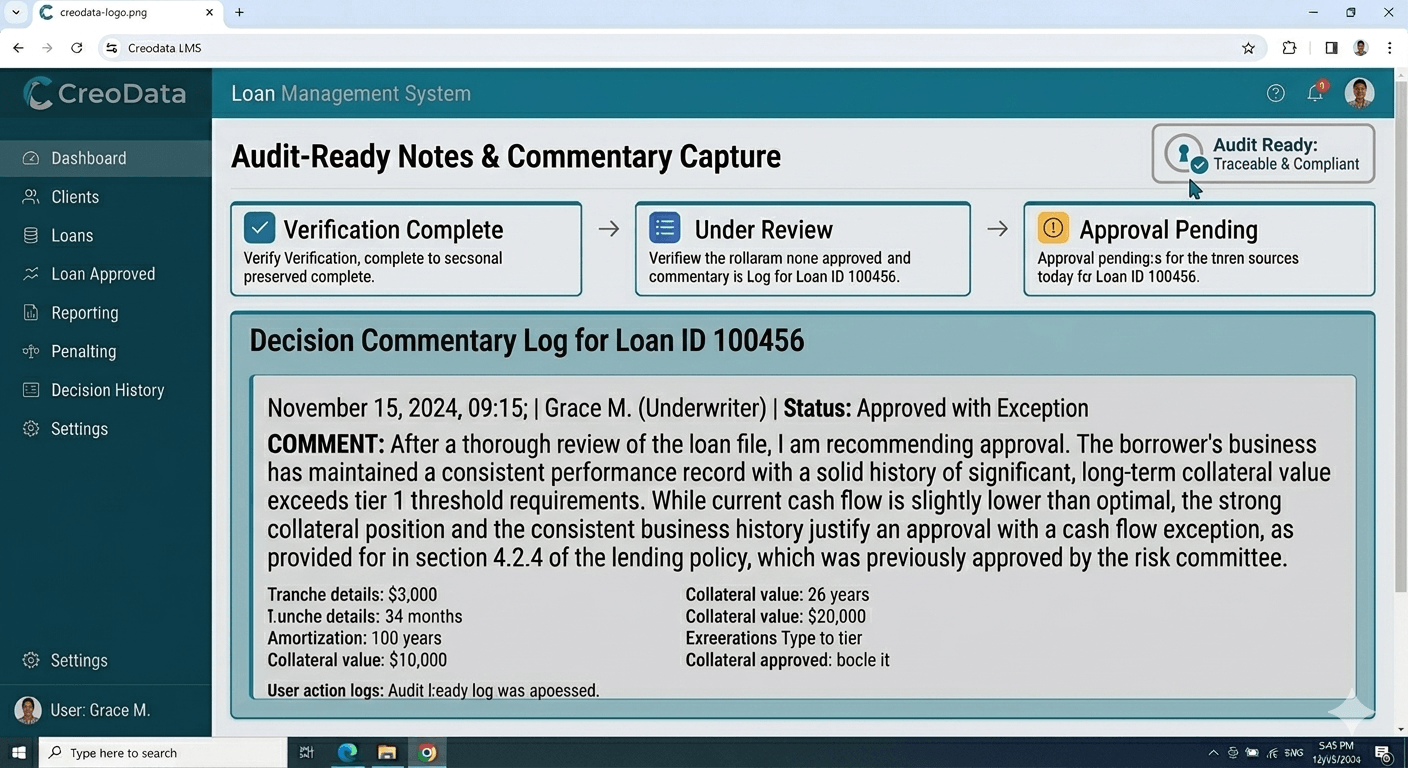

Disbursement Trigger Microservice
Decouple disbursement from monolithic loan systems with a microservice that reliably triggers fund transfers once loans are approved.

Introduction
In modern financial services — whether small banks, SACCOs, or microfinance institutions — efficient, reliable loan processing is critical. A key step in that process is disbursement — the actual transferring of funds to a borrower once their loan is approved. Traditionally, disbursement logic may be embedded in a monolithic loan-management system: approval, accounting, disbursement, notifications, bookkeeping — all handled in one large codebase.
However, as institutions scale, and as regulatory, compliance, and integration needs grow more complex (e.g., linking to payment gateways, core banking systems, notification channels), it becomes advantageous to refactor disbursement logic into a self-contained microservice.
Here we explore the use case "Disbursement Trigger Microservice", implemented as TriggerDisbursementFn — a dedicated service / function that handles post-approval disbursement events: transferring funds, sending notifications, logging events, and updating relevant records — decoupled from the rest of the loan management system.
What is Creodata Loan Management System (and why modularity makes sense)
The Creodata Loan Management System is a cloud-based, end-to-end lending platform built on Microsoft Azure, tailored for small banks, SACCOs, and microfinance institutions. It supports the full loan lifecycle: customer onboarding & KYC, loan origination, configurable loan products, approvals, repayment tracking, delinquencies, reporting, analytics, and integrates with payment gateways / core banking systems.
Key built-in strengths:
- Configurable workflows and approval hierarchies.
- API and integration support (payment gateways, core banking, external systems).
- Enterprise-grade security, compliance, role-based access control, audit logging.
- Real-time reporting and analytics to manage loan portfolio health and risk.
Given these capabilities, Creodata already provides a robust foundation. But as institutions grow, embedding many responsibilities into a monolithic or tightly-coupled core increases complexity and risk. This is where modularity and microservices offer clear benefits.
By introducing a dedicated microservice such as TriggerDisbursementFn, the system's disbursement logic — a critical, sensitive, and potentially high-risk operation — becomes modular, isolated, and easier to manage, test, and evolve.
The Use Case: "Disbursement Trigger Microservice" — What TriggerDisbursementFn Does
High-Level Flow: From Approval to Disbursement
1. Loan Approval Event
- Within Creodata Loan Management, after a loan application passes all checks and receives final approval (via configured workflows / approval hierarchies), an event is emitted: "LoanApproved".
- That event includes necessary data: loan ID, customer info, disbursement amount, repayment schedule, account details or payout channel, metadata (branch, currency, user, timestamp), and conditions (e.g., disbursement date, tranche info).
2. TriggerDisbursementFn Microservice Receives the Event
- The microservice listens/subscribes to loan-approval events (via event bus, message queue, or pub/sub system).
- Upon receiving the event, it validates payload, performs pre-disbursement checks (e.g., compliance/AML thresholds, account verification, fraud detection, limit checks).
3. Initiate Fund Transfer
- TriggerDisbursementFn interacts with the configured payment gateway or core banking API to initiate the disbursement.
- It handles communication, credentials, retries, error handling, idempotency (so duplicates are avoided), and ensures transactional integrity.
4. Post-Success Actions
- If the transfer succeeds: update loan record to reflect disbursement status, date, amount, tranche; update borrower account; schedule repayment schedule; mark loan as "active".
- If the transfer fails: log error, possibly retry or mark as "pending disbursement", trigger alerts to operations team, send notification to borrower / internal staff.
5. Notifications & Audit Logging
- Send notifications to borrower (e.g., SMS, email) confirming disbursement; optionally alert internal staff (branch, accounting, compliance).
- Log full audit trail: who triggered the disbursement, when, amounts, destination account, status, response from payment gateway.
6. Post-Processing and Integration
- Update accounting / general ledger system (if integrated) to reflect the disbursement.
- Trigger other downstream workflows: e.g., update customer dashboard, schedule first repayment reminders, risk monitoring, compliance reporting, archival of documents.
All this logic is encapsulated within TriggerDisbursementFn — self-contained, stateless (or minimally stateful), but robust.
Why Microservices & Modularity — Benefits of TriggerDisbursementFn Approach
Using a microservice like TriggerDisbursementFn yields several architectural and operational advantages. These are especially relevant in the context of financial software and lending platforms.
✅ Fault Isolation & Fault Tolerance
If disbursement logic fails (payment gateway down, network error, unexpected edge-case), only TriggerDisbursementFn is impacted — the rest of the loan system (origination, approval, accounting, reporting) remains unaffected. This isolation reduces risk of systemic failures.
✅ Independent Development, Deployment & Tech Stack Flexibility
Teams can develop, test, and deploy the disbursement microservice separately from the core loan management system. This enables faster iteration, continuous delivery (CI/CD), and easier debugging. Also, since microservices allow technology-agnostic choices per service, TriggerDisbursementFn could use a tech stack optimized for payment-processing (e.g., a language/framework with strong concurrency, reliability, or integration libraries) without forcing the entire platform to use it.
✅ Scalability & Performance
In a high-volume lending institution — with many loans disbursed daily, possibly concurrent disbursements — the disbursement service can be scaled independently (horizontal scaling, containerization, stateless design), without affecting database or UI performance of other parts of the system.
✅ Security, Compliance & Auditability
Disbursement is a high-risk operation. With a dedicated microservice, security controls (authentication to payment gateways, encryption, secure credential storage), compliance checks (AML, fund-limits, risk thresholds), logging and audit trails can be tightly controlled within the service, reducing attack surface. Also, audit logs and transaction history are isolated and easier to review. Modular design also helps to apply principle of least privilege per service.
✅ Maintainability & Evolvability
Being isolated, TriggerDisbursementFn can be refactored, enhanced, replaced, or versioned without risking side-effects on unrelated parts of the loan system. This encourages maintainable, clean code and reduces technical debt. Also, new features (e.g., multiple disbursement channels, currency support, batch disbursement) can be added with minimal disruption.
✅ Clear Separation of Concerns & Architectural Clarity
Separating disbursement logic from approval, origination, repayment, and accounting helps conceptual clarity. Each bounded context is handled by a dedicated module. This aligns with good design principles: each microservice owns a specific business capability (in this case, "disbursement"). It supports domain-driven design.
✅ Better Compliance with Evolving Regulatory and Integration Demands
As regulatory requirements or payment integrations evolve (new gateway, new compliance rules, KYC/AML extensions), only TriggerDisbursementFn needs updates. The rest of the loan management system remains untouched, reducing risk and effort.
Advantages (When Combining Creodata Loan Management + TriggerDisbursementFn)
When you integrate TriggerDisbursementFn with Creodata's existing Loan Management System, you get combined advantages:
-
You retain all the features of Creodata Loan Management (customer onboarding, loan origination, approval workflows, repayment tracking, reporting, compliance-ready audit logging).
-
You add a modular, scalable and robust disbursement layer — ensuring that disbursement events are handled properly, reliably, and safely.
-
You benefit from cloud-native deployment (Azure), containerization/ serverless benefits, independent scaling, role-based access, and separation of duties.
-
You make it easier to integrate with external payment gateways, core banking systems, notification systems — all via API/ integration interfaces. This is especially important as institutions grow or expand regionally or across payment options.
-
You improve system resilience: errors in disbursement don't wreck the loan approval or repayment tracking logic; vice versa, other parts of the system stay healthy if disbursement fails or has to retry.
Who Benefits — Target Audience
The Disbursement Trigger Microservice (TriggerDisbursementFn) — when paired with Creodata Loan Management — is especially valuable for:
-
Small and Mid-Size Banks, SACCOs, Microfinance Institutions — institutions that already use or plan to use Creodata Loan Management to manage loan origination & approvals, but want reliable, scalable, and safe disbursement workflows.
-
Fintech Lenders, Digital Credit Platforms, Consumer-lending Firms — where disbursement may involve various payment gateways, instant transfers, or alternative payout channels (mobile money, bank transfers, wallets).
-
Growing Institutions with High Volume of Disbursements — as loan portfolio and customer base scales, splitting disbursement into a microservice ensures performance and maintainability.
-
Institutions Subject to Regulatory, Compliance, or Internal Risk Controls — banks or lenders operating in regulated markets (AML, audit, KYC), where disbursement must follow strict rules, logging, approvals, possibly manual overrides, and traceability.
-
Organizations That Require Modular, Flexible Architecture — e.g., those planning to evolve, integrate with new payment systems, support multiple currencies, or scale across branches/regions.
-
IT and DevOps Teams Managing the System — because modular microservices simplify deployment, testing, rollbacks, monitoring, and maintenance; reduce risk; and improve team autonomy.
Conclusion & Outlook
As the lending landscape evolves — with digital lenders, fintech disruptors, mobile money, regulatory scrutiny, and increasing operational scale — having a flexible, maintainable, and secure loan-management system is crucial.
The Creodata Loan Management System already offers a strong foundation: full loan lifecycle management, workflow customization, integration capabilities, compliance, auditability, and cloud-native infrastructure. By layering on a modular microservice such as TriggerDisbursementFn, institutions can decouple disbursement from core loan logic, isolate risk, and scale with confidence.
Such a microservice offers a clean, maintainable, and auditable way to handle fund transfers post-approval. As institutions grow or adjust — be it by integrating new payment gateways, supporting mobile money, enabling multi-currency disbursement, or adding business logic (e.g., tranche-based disbursement, conditional payouts) — TriggerDisbursementFn can evolve independently, without disturbing the core loan system.
In a world where agility, compliance, reliability, and scalability matter more than ever — especially for small and mid-sized financial institutions — this microservice and modular-microservices approach can be a strategic enabler, helping institutions deliver better service, handle growth, and meet regulatory demands.
For more information, visit Creodata.com