

Petty Cash Management in Kenya: Controls, M-Pesa and Audit (2026)
How to run petty cash in Kenya with proper controls: float and imprest basics, limits, receipts, segregation of duties, M-Pesa B2C reimbursements, reconciliation and what petty cash management software should do.
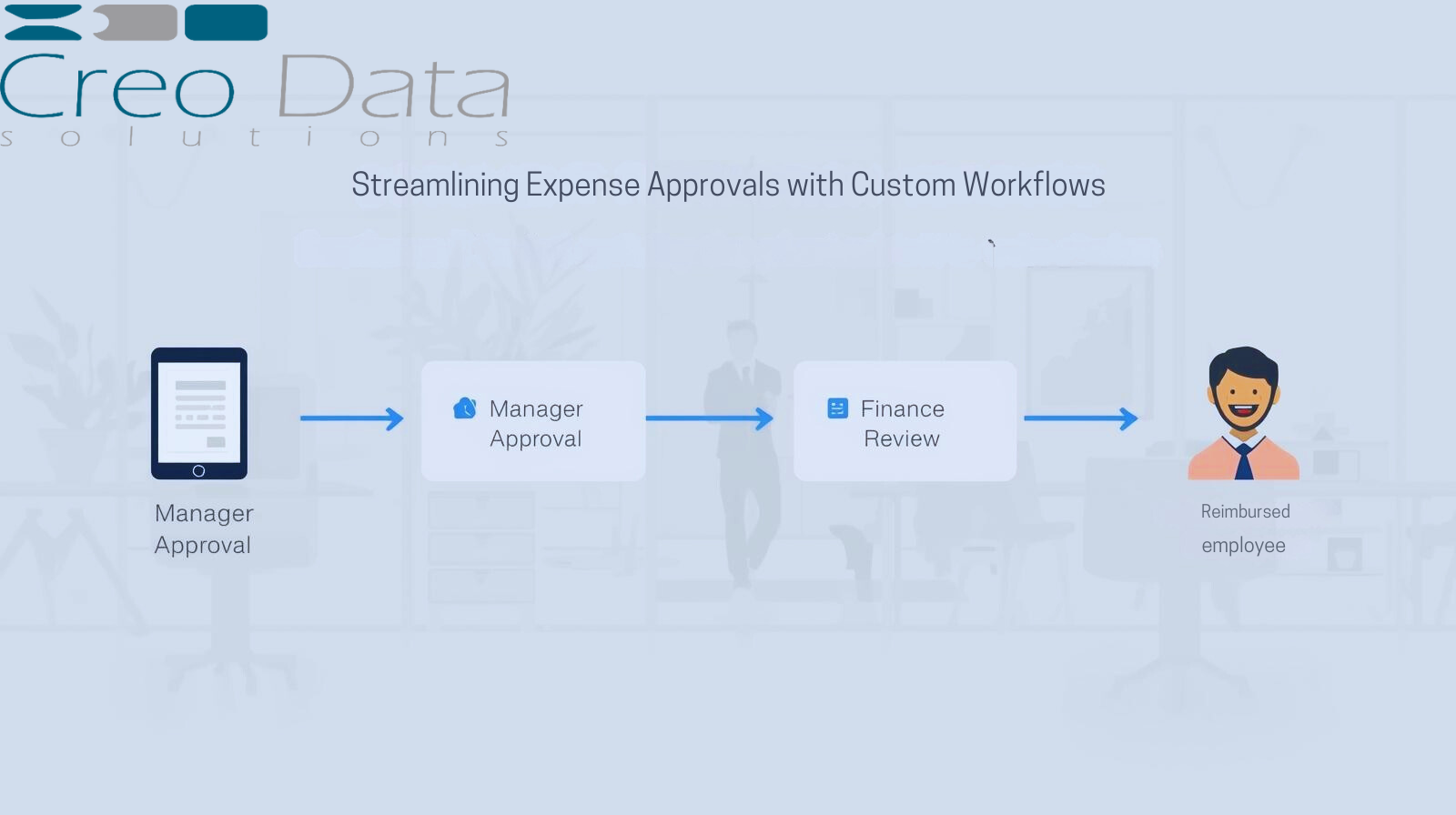
Short answer: Good petty cash management in Kenya comes down to five things: a fixed float with a clear owner, spending limits per request, a receipt for every payment, different people asking, approving and paying, and a replenishment that is reconciled before the float is topped up. Moving petty cash onto M-Pesa and into a digital petty cash system removes most of the cash box, but only helps if approval, payment and posting stay linked to one record.
This guide is for finance managers, office administrators and internal auditors at Kenyan organisations that still run petty cash from a lockbox, a spreadsheet or a shared M-Pesa line. It covers the basics, the controls auditors look for, how M-Pesa changes the picture, and what petty cash management software should do. Creodata sells petty cash management software for Kenyan organisations, so we say where we fit near the end. This is practical guidance, not tax or legal advice; confirm requirements with your auditors and tax adviser.
What is petty cash, and how does a petty cash float work?
Petty cash is money set aside for small, frequent payments not worth a supplier invoice: a courier, toner, boda boda fares, a small repair.
Most organisations run it on the imprest method: the float is set at a fixed amount, say KES 50,000. As money is spent, receipts replace cash. At any moment, cash (or M-Pesa balance) plus receipts should equal the float. When the float runs low, the custodian claims the total of the receipts and the float is topped back up to the fixed amount.
A note on words: in many Kenyan organisations, especially the public sector, "imprest" also means a cash advance to a staff member for travel or an activity, surrendered later with receipts. That is a different process with its own rules (in the public sector, for example, no second imprest until the first is surrendered). This article is about the petty cash float.
Petty cash controls every Kenyan organisation should have
Auditors test the same handful of controls. If you can show each one working, petty cash rarely produces a finding.
| Control | What it looks like in practice | What goes wrong without it |
|---|---|---|
| Fixed float and named custodian | One person accountable for each float, a documented float amount | Money moves between floats and nobody owns the shortfall |
| Per-request limit | A ceiling per payment (for example KES 10,000); above it, the request becomes a supplier or cashbook payment | Large purchases split into small ones to avoid scrutiny |
| Receipt for every payment | Receipt or invoice attached before the payment is accepted | Expenses that cannot be supported at audit or claimed for tax |
| Segregation of duties | The person who asks is not the person who approves or pays | Self-approval and fictitious claims |
| Approval before payment | A named approver signs off each request | Cash paid on a verbal "go ahead" |
| Replenishment with reconciliation | Top-up only after receipts are reviewed and the float balances | Shortfalls rolled forward month after month |
| Surprise counts | Occasional unannounced counts by someone other than the custodian | Teeming and lading goes unnoticed |
| Posting to the ledger | Each spend posted to the right cost centre and account | Petty cash sits in one suspense line until year-end |
Two Kenyan specifics sit on top of these. First, since 1 January 2024 KRA has required business expenses to be supported by eTIMS electronic tax invoices to be tax-deductible, and it now checks expenses in returns against eTIMS records. Many small vendors paid from petty cash do not issue them, so ask your tax adviser how to treat those payments. Second, petty cash records contain staff names and phone numbers, which the Data Protection Act, 2019 covers.
How M-Pesa changes petty cash in Kenya
Many organisations have already moved away from a physical cash box. Staff pay out of pocket and are reimbursed, or the office pays vendors directly by M-Pesa. That solves the counting problem and creates new ones:
- A shared line or a personal phone. If petty cash is sent from one person's M-Pesa, the organisation has no independent record and no segregation.
- Payments before approval. It is quick to send money, so approval often follows the payment, if it happens at all.
- Statements that do not match the ledger. The M-Pesa statement shows a phone number, an amount and a transaction ID. The ledger needs a cost centre, an account and a receipt. Someone matches them by hand at month-end.
The better pattern is M-Pesa B2C (business to customer) disbursement from the organisation's own business account, triggered by an approved request. Safaricom offers B2C through its Daraja API and business products, usually reached through a payment gateway. On approval, the system sends the payment, receives the result back from M-Pesa, and writes the transaction reference onto the request. The payment and the approval now sit on the same record, and reconciliation becomes a check rather than a search. We cover the mechanics in M-Pesa disbursements to Business Central.
How to reconcile petty cash
Whether the float is cash or M-Pesa, the reconciliation follows the same steps:
- List the requests paid in the period, with amounts and payment references.
- Match each to its receipt. Anything without a receipt is an exception to chase, not a line to write off.
- Match each M-Pesa payment to a request. Every M-Pesa transaction ID on the statement should appear on exactly one approved request. Unmatched debits are the ones to investigate.
- Check failed and reversed payments. A B2C payment can fail (wrong number, recipient limit, network timeout) or be reversed. Make sure the request shows the real outcome, and that nobody paid it again by hand.
- Balance the float: opening float, less payments, plus top-ups, equals the balance.
- Post and replenish. Post the spend to the ledger by account and cost centre, then top the float back up.
If steps 2 and 3 take days, the problem is upstream: the receipt, approval and payment were never linked to one record.
What petty cash management software should do
A digital petty cash system should enforce the controls above instead of relying on people to remember them. When you compare products, look for:
- Request capture with attachments, so a receipt is part of the request from the start.
- Approval routing by department and amount, with a limit that moves larger requests to a different chain.
- Escalation when an approver sits on a request, with the escalation recorded.
- M-Pesa payment on final approval, not as a separate step in a portal, with the M-Pesa result written back to the request.
- Posting to your ledger with the receipts linked, so nobody re-keys petty cash vouchers.
- An audit trail of who asked, who approved, when it was paid and the payment reference.
- Reports and exports finance and internal audit can use without asking IT.
Ask each vendor what happens when an M-Pesa payment fails and whether finance can change limits without a change request. Our buyer's guide to expense management software in Kenya has a full demo script.
Where Creodata fits
Creodata is a Nairobi software company, and our expense management system treats petty cash as one of three request types, alongside supplier invoices and cashbook payments. The petty cash module works like this:
- Staff sign in with their Microsoft Entra ID account and submit a petty cash request with receipts attached.
- The request follows a multi-stage approval chain, for example Head of Department, then Finance Reviewer, then CFO, resolved per department and request type. An amount threshold (KES 10,000 on the reference configuration) decides which chain a request follows. Chains and thresholds are configurable.
- Approvals that pass their deadline escalate automatically to the next approver, and the escalation is written to the audit trail.
- On final approval, the payment goes out over M-Pesa B2C through the KentaPay / Eclectics Swivel gateway. Callback and status reconciliation update the request, and the payment reference is written back to it.
- Approved items post to Microsoft Dynamics 365 Business Central over OData, with the SharePoint document links attached, so nobody re-keys them.
- Every receipt is stored in SharePoint Online and linked to its request. Submitters, approvers, finance reviewers and the CFO each have a dashboard, with CSV exports for audit.
What we do not do: we do not have a staff imprest or per-diem module, we do not validate invoices against KRA eTIMS, we do not issue corporate cards, we do not have a mobile app, and we post only to Business Central. If you need any of those, weigh that before shortlisting us. The system runs in the cloud on Microsoft Azure.
For how this looks in a donor-funded organisation, see expense management for NGOs in Kenya. To see petty cash run end to end on your own approval rules, book a demo.
Frequently asked questions
What is the best petty cash system in Kenya?
The best system is the one that enforces your controls and fits your payment rail and ledger. A small business may be well served by an M-Pesa petty cash app. A bank, NGO or large enterprise usually needs approval chains, an audit trail and posting to the ERP. Run the same scripted demo with each vendor on your own limits and approvers.
Can petty cash be paid through M-Pesa?
Yes. Many Kenyan organisations reimburse staff and pay small vendors through M-Pesa B2C from a business account. The control that matters is that payment happens only after approval, from the organisation's account rather than a personal phone, and that the transaction reference is recorded against the request.
How much should a petty cash float be?
Size the float to cover a typical replenishment cycle, often two to four weeks of small payments, and no more. Too large invites misuse; too small means constant top-ups.
How often should petty cash be reconciled?
At every replenishment, and at least monthly for month-end close. Add occasional surprise counts by someone other than the custodian. With a digital petty cash system and M-Pesa payment, reconciliation can happen continuously because every payment is already matched to a request.
Do petty cash payments need eTIMS receipts?
Since 1 January 2024, KRA has required business expenses to be supported by eTIMS electronic tax invoices to be deductible, and that applies to small purchases too. Many small vendors do not issue them. Agree with your tax adviser how to treat these payments and keep the receipt you do get with each request.
What is the difference between petty cash and imprest?
Under the imprest method, a petty cash float is kept at a fixed amount and topped up by the value of receipts spent. In many Kenyan organisations "imprest" also means a staff advance for travel or an activity that must be surrendered with receipts. The controls overlap, but the processes and approval rules usually differ.