Automated Document Verification Microservice
Verify loan documents at scale with a dedicated microservice for KYC, AML, and compliance checks—reducing manual review and accelerating approvals.
Introduction: The Need for Scalable Document Verification
In modern loan processing systems, verifying submitted documents — identity proofs, income statements, ID cards, legal documents — is critical for compliance, including KYC (Know Your Customer), anti–money-laundering (AML) checks, risk assessment, and regulatory requirements.
Large financial platforms receive hundreds or thousands of such submissions daily. Handling this manually or with monolithic systems becomes inefficient, error-prone, and difficult to scale.
A modular approach, using a dedicated document verification service, allows organizations to automate and streamline validation processes while maintaining flexibility and compliance.
How VerifyDocumentsFn Works
The VerifyDocumentsFn microservice is designed to:
- Automate document verification for loan applications and onboarding.
- Ensure submitted documents meet compliance requirements (KYC, AML).
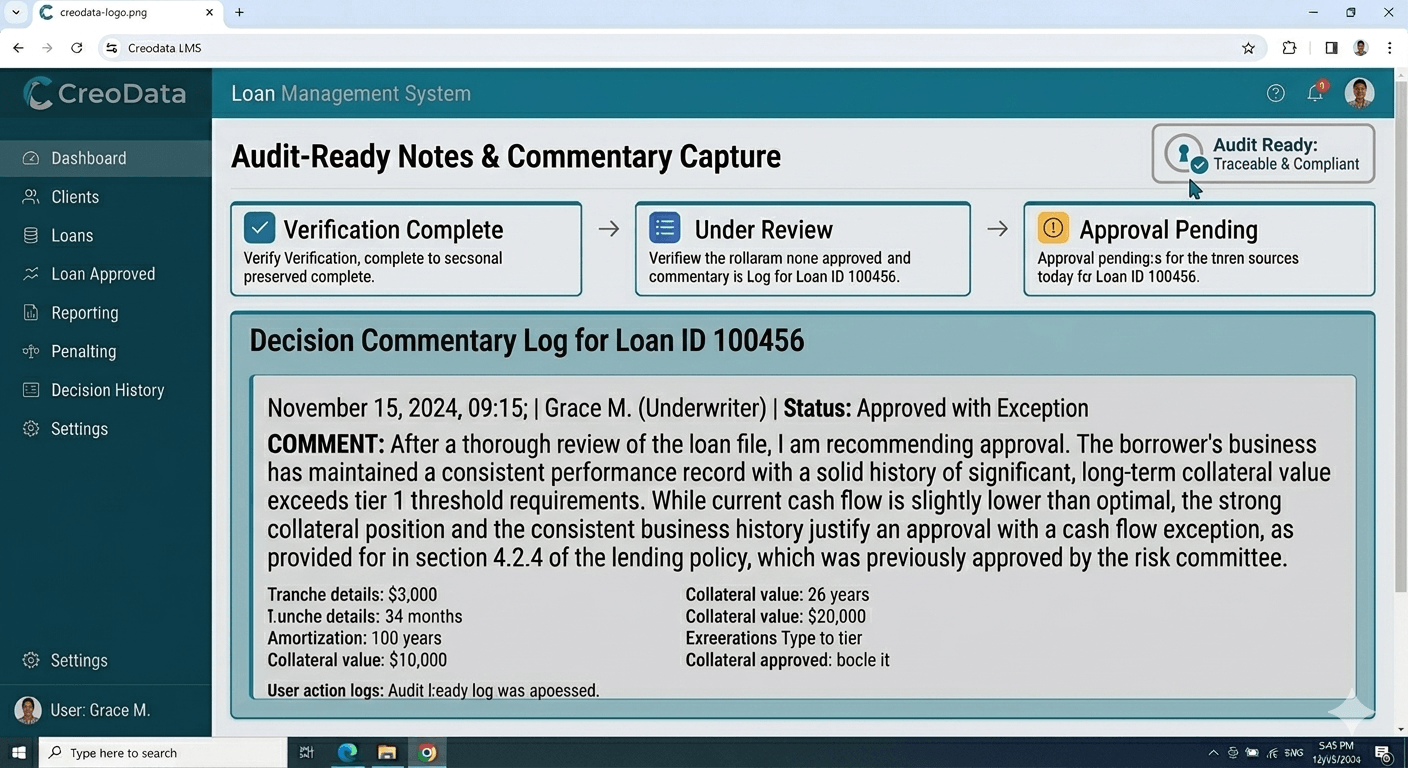
- Maintain audit trails and document integrity for regulatory purposes.
- Provide a scalable and reusable service that integrates with existing loan management systems.
By isolating document verification, organizations can reuse the service across multiple processes, such as loan origination, account onboarding, periodic KYC checks, and collateral verification.
How This Fits within Creodata's Loan Management Platform
Creodata's Loan Management System (LMS) covers the full loan lifecycle — from application, onboarding, document upload, approval workflows, disbursement, repayment, to delinquency management.
Key capabilities relevant to document verification include:
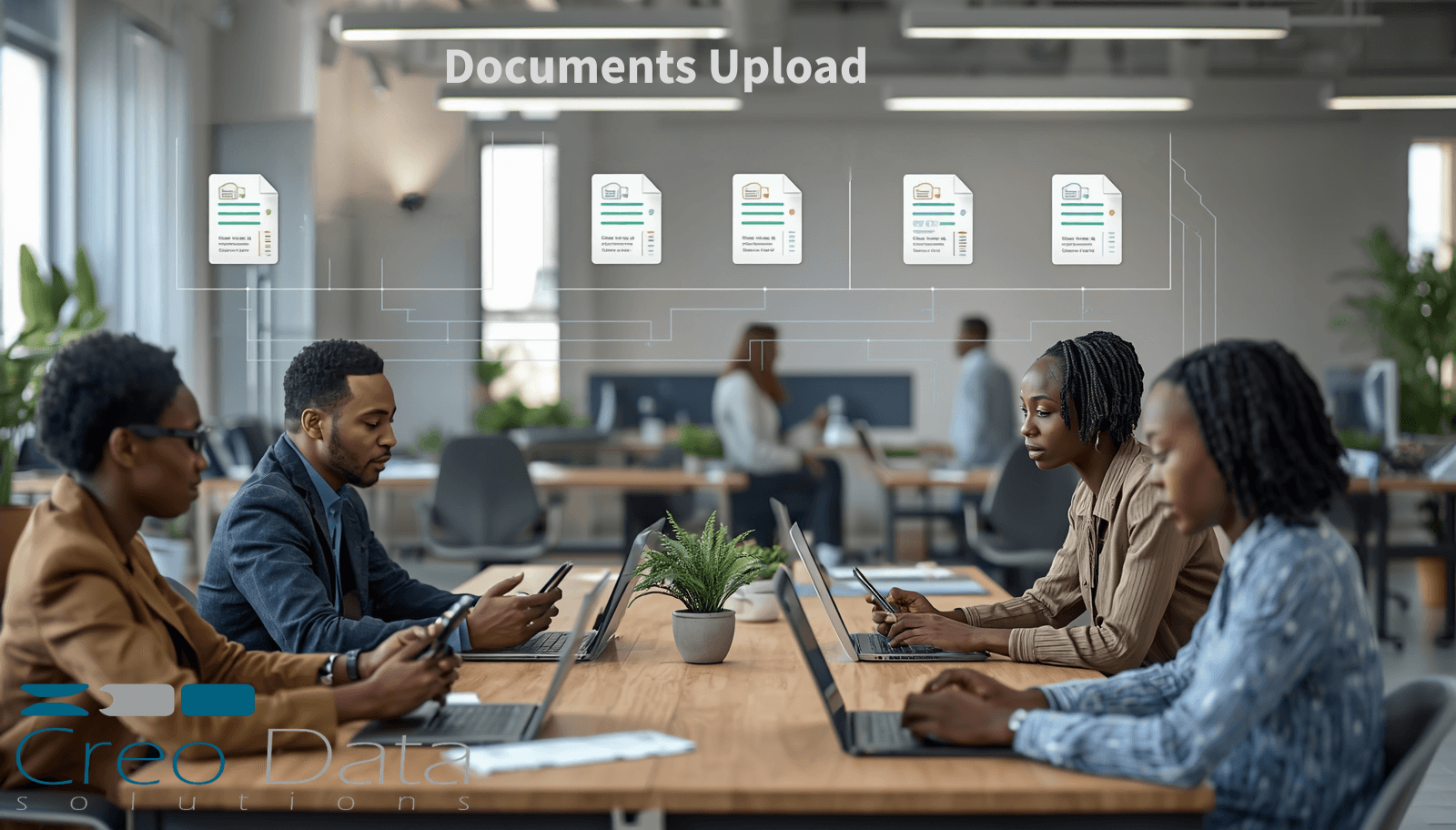
- Customer onboarding & KYC management, including secure digital document uploads.
- Secure document storage, ensuring documents are encrypted, access-controlled, and audit-ready.
- Support for multi-party applications, allowing co-applicants or guarantors to upload documents and digitally sign agreements under a single application ID.
Integrating a modular VerifyDocumentsFn enhances these capabilities by performing automated validation before loan processing proceeds, improving efficiency, security, and compliance.
Advantages of a Modular Document Verification Service
1. Modularity & Reuse
- Can be used across different parts of the platform (onboarding, loan applications, periodic reviews).
- Supports multiple client interfaces (web, mobile, branch systems) while maintaining consistent verification rules.
2. Maintainability & Separation of Concerns
- Verification is decoupled from other processes, making updates easier and less risky.
- Changes to verification rules only affect this service, reducing disruption.
3. Scalability
- Can handle high volumes of document submissions independently of other systems.
- Supports organizations with growing borrower bases or remote lending operations.
4. Reliability & Accuracy
- Automation reduces human error, ensuring documents are verified consistently and accurately.
- Provides audit trails and compliance documentation.
5. Flexibility & Speed
- Can be updated to support new document types, rules, or regulatory requirements.
- Enables faster onboarding and approval processes, improving borrower experience.
6. Security & Compliance
- Ensures that sensitive documents are handled securely, with access control and audit logging.
- Reduces operational and regulatory risk associated with manual verification.
Target Audience
The following stakeholders benefit most from adopting a modular document verification service like VerifyDocumentsFn:
- Banks, SACCOs, Microfinance Institutions — automating KYC and document management for loans.
- Digital Lenders & Fintechs — needing to process high volumes of applications quickly and securely.
- Organizations with Compliance Needs — ensuring adherence to KYC, AML, and data protection regulations.
- Business Operations & Risk Teams — requiring reliable verification workflows and audit-ready documentation.
Any organization handling loans or customer onboarding at scale, especially in regulated environments, benefits from automated document verification.
Strategic and Operational Value
- Accelerated Onboarding: Verification becomes near-instant, reducing turnaround times and improving borrower experience.
- Improved Compliance: Uniform enforcement of verification rules ensures audit-readiness.
- Reduced Risk: Minimizes errors, misfiling, and fraud associated with manual document handling.
- Future-Proofing: Flexible service can adapt to new document types or changing regulations.
- Efficiency: Enables teams to focus on high-value tasks instead of manual verification.
- System Stability: Isolating verification ensures core systems remain responsive and reliable.
Conclusion
In an era of digital lending and strict regulatory compliance, manual or monolithic document verification is no longer sufficient. A modular, automated verification service like VerifyDocumentsFn provides scalability, reliability, and efficiency while ensuring compliance and audit readiness.
For platforms like Creodata's Loan Management System, integrating such a service improves onboarding speed, reduces operational risk, enhances compliance, and enables institutions to scale efficiently.
For financial institutions and fintechs, automated document verification is not only a technical improvement — it's a strategic enabler of growth, trust, and operational efficiency.
For more information, visit Creodata.com