
Building Custom Roles for Organizational Needs
Explore how to design custom RBAC roles that align with organizational structure, segregation-of-duties requirements, and evolving security and compliance needs.
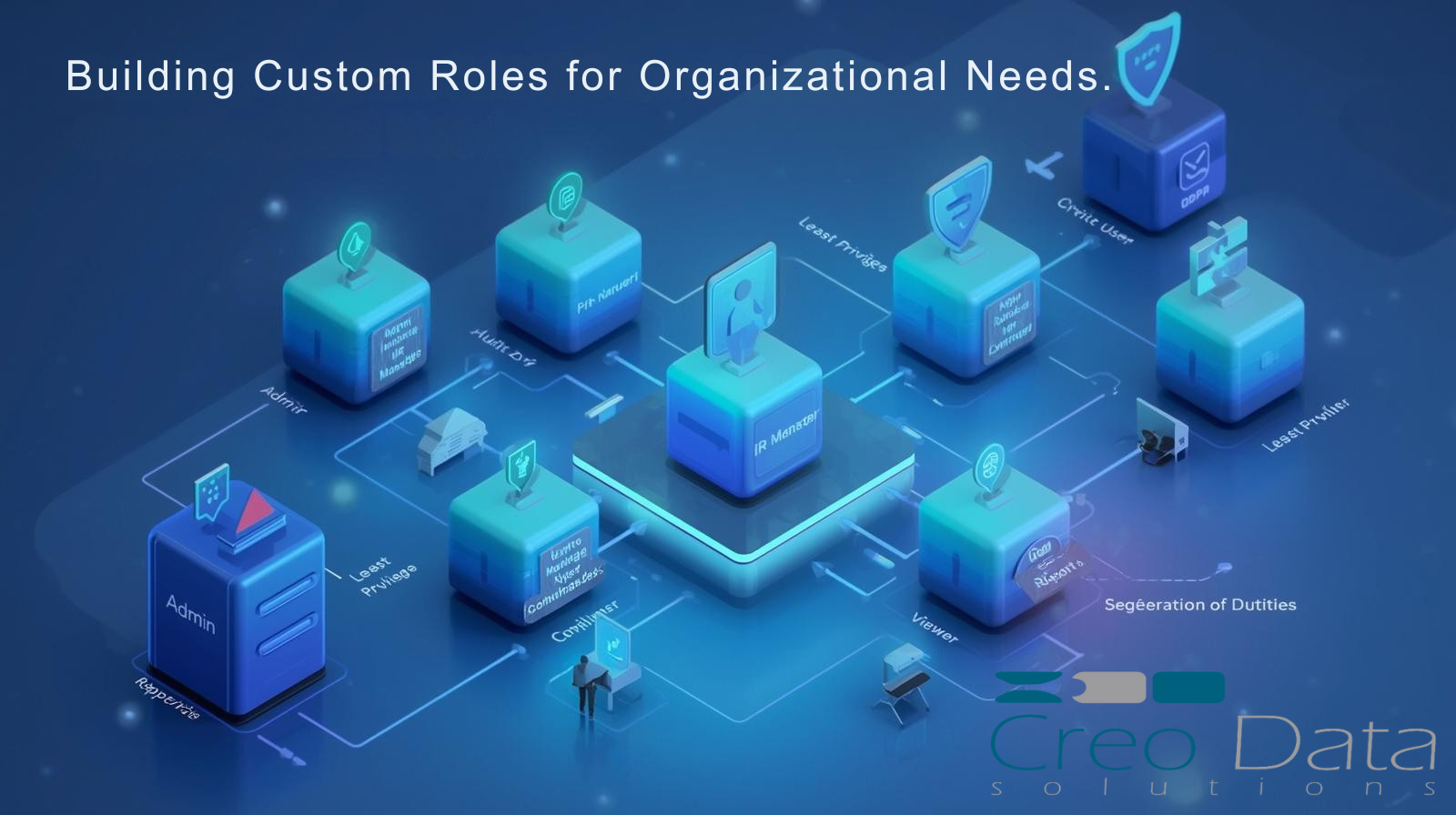
Overview
This document explores how administrators can move beyond default roles in a Role-Based Access Control (RBAC) framework to create precisely tailored permissions aligned with internal compliance mandates, departmental segregation policies, and evolving security demands.
Table of Contents
- What is RBAC?
- Why Custom Roles?
- Limitations of Default Roles
- Key Advantages
- Target Audience
- Recommendations
What is RBAC?
Role-Based Access Control (RBAC) is a model where users are assigned roles, and those roles carry permissions — rather than assigning permissions directly to individual users. This abstraction simplifies management and enforces the principle of least privilege.
Why Custom Roles?
Default roles (e.g., Admin, Editor, Viewer) are often too coarse for real-world needs. Custom roles provide:
- Granularity — Define exactly which actions, resources, and data scopes a role can access
- Segregation of Duties (SoD) — Separate sensitive operations across different roles
- Organizational alignment — Mirror internal structure (Finance, HR, Legal, IT, etc.)
- Risk reduction — Limit over-provisioning and shrink the attack surface
- Auditability — Simplify compliance reporting and access reviews
Limitations of Default Roles
| Issue | Impact |
|---|---|
| Too broad access | Increased security risk |
| Blind to organizational context | Poor alignment with business units or regulations |
| Weak SoD support | Difficulty enforcing internal controls |
| Hard to evolve | Doesn't adapt to mergers, restructuring, or new departments |
| Weak audit trails | Complicates compliance reporting |
Key Advantages
- Precision and least-privilege enforcement
- Better alignment with business structure
- Improved segregation of duties
- Scalability as the business evolves
- Enhanced auditability for regulators and auditors
- Reduced administrative overhead
- Support for hybrid and cloud environments
- Improved user experience through properly scoped access
Target Audience
- CIO / CTO / IT Security Leads — Secure architecture and scalable access management
- Compliance, Audit & Risk Officers — Role definition and SoD enforcement
- Department / Business Unit Managers — Operational alignment and data protection
- HR & Identity Management Teams — Streamlined onboarding and offboarding
- System Administrators — Efficient role management tooling
- Managed Service Providers — Custom frameworks for client governance needs
Recommendations
- Map business processes to define roles aligned with departmental needs
- Catalogue permissions, enforce least privilege, and implement SoD
- Partner with compliance-focused vendors experienced in enterprise-grade architecture
- Implement lifecycle management for roles, with regular access reviews
- Automate provisioning and integrate with IAM systems
- Maintain documentation and audit trails for internal and regulatory requirements
Further Reading
For more information on enterprise compliance and cloud governance solutions, visit Creodata.com.