
Audit Access: Access & Action Logs in Audit Trails
Learn how access & action logs strengthen email governance by tracking who viewed or exported archived emails—supporting compliance, investigations, and audit readiness.
Introduction
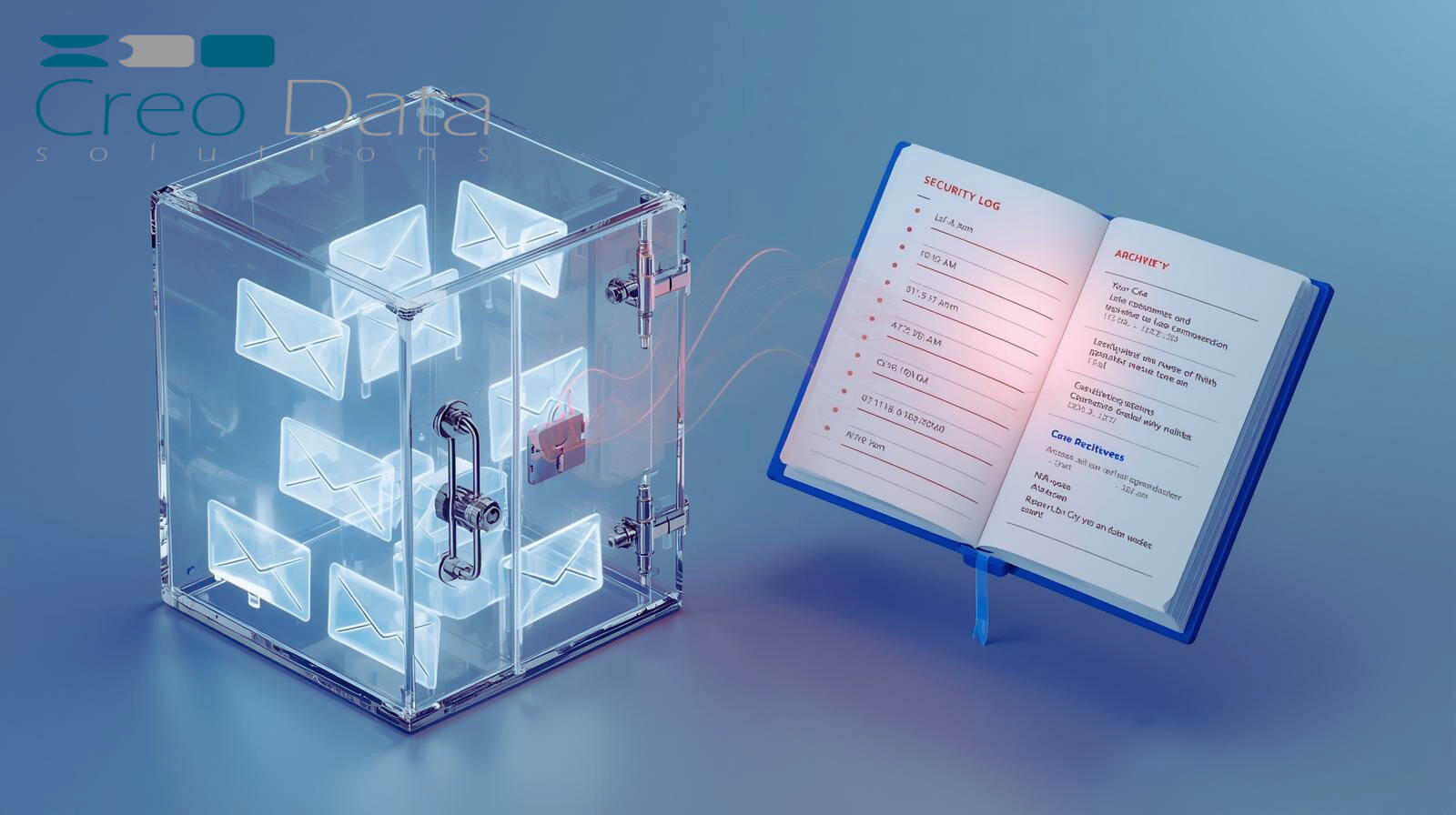
In today's highly regulated and security-conscious world, it is no longer sufficient simply to archive emails or to journal messages. Organizations need full transparency into not only what happened (which message was sent or received) but who accessed it, when, how, and what they did with it (viewed, exported, forwarded). This is where access & action logs within the broader category of Audit Trails become indispensable.
For organizations handling sensitive email communication — such as financial institutions, insurance companies, legal practices, or highly-regulated professionals — the capability to audit access to email records addresses multiple dimensions: compliance, governance, insider risk, investigation readiness, and data security.
Why Does Audit Access Matter?
There are multiple drivers for implementing audit access for emails:
1. Regulatory & Compliance Requirements
Many sectors (finance, insurance, healthcare, legal) require not just retention of communications but also strict controls over access. Regulations may stipulate who can see communications, how they're handled, that access is logged and non-repudiable. Journaling alone captures what was sent/received. Access logs capture who looked at it. This is essential for demonstrating forensic readiness, auditability and chain-of-custody.
2. Insider Risk and Data Governance
An insider (an employee or contractor) with access to archived emails might browse/search data that doesn't pertain to their role, or export emails for unauthorised use. Access logs act as a deterrent and a detection mechanism: you can identify anomalous patterns (user exports large volumes, views messages outside usual business scope).
3. Investigation & eDiscovery
When an internal investigation or external audit happens, being able to trace exactly which user accessed certain communications at what time is crucial. Access logs provide the timeline and chain of events — not just the communication, but the human interactions with that data.
4. Audit Trail Integrity & Non-Repudiation
Audit trails — especially if well-designed — create a tamper-resistant log of events. The mere fact that "User X attempted to export this message" is logged discourages malicious behavior, and helps show in court or regulatory proceedings that the organisation had oversight in place.
5. Data Security & Risk Management
Even if emails are archived in a secure manner, if access is uncontrolled, sensitive information can leak. With access logs you can detect and respond to suspicious activity, enforce least privilege, and demonstrate that your data-access governance is working.
How It Works in the Context of Creodata's Mail Journaling Solution
The Creodata Mail Journaling product is positioned as a secure email archiving and compliance solution for Microsoft 365. Among its listed "Core Features" are: real-time email capture, advanced search & retrieval, retention policies, integrations, compliance, and importantly Audit Trails.
In this context, the access & action logs (Audit Access) functionality works roughly as follows:
- Emails (incoming and outgoing) are journaled in real-time from the mail system.
- The system offers an archive UI where authorized users (compliance, records etc) can search and retrieve archived emails.
- Whenever a user views or exports an email (or batch of emails), the system captures that action in the audit log: user ID, timestamp, IP/device, email ID(s), action type (view/export).
- The audit logs are stored securely (likely in the Azure-based backend used by Creodata) and are available for filtering, reporting, eDiscovery.
- The system may provide dashboards of audit log activity (e.g., "Export actions this month", "Top users by search activity", "Users with failed access attempts").
- Compliance and risk teams can review logs, set alerts (e.g., bulk export), integrate with SIEM for threat detection.
- When regulatory or legal requests arise, the organization can present logs showing not only the archived emails but the full trail of access and export activity, fulfilling oversight requirements.
Because Creodata emphasizes compliance-audited solutions, built on Azure, for regulated organizations (banks, SACCOs, micro-finance) — this means their product is designed to support access-logging, retention, user activity tracking and archive-governance out of the box. Hence organizations adopting this product will be able to implement the "Track who viewed or exported emails" use case effectively.
Target Audience
For the use-case of Audit Access via Access & Action Logs, the target audiences within an organization include:
- Compliance & Legal Teams: They need to ensure regulatory requirements (e.g., retention, access logging, audit readiness) are met, and may need to produce logs during investigations or audits.
- Risk & Security Teams (Information Security, Cyber-Governance): They monitor insider-risk, anomalous behavior, data-leakage risk — access logs provide the data for these tasks.
- Records & Governance Officers: They need proof of who accessed records, when, for oversight and data-governance purposes.
- IT Administrators & Archiving Admins: They are responsible for the email journal/archive system, ensuring available logs, managing access control, ensuring system integrity.
- Executives / Audit Committee: They benefit from high-level reports showing compliance, data-access risks, audit-log trends (bulk exports, unusual access).
- eDiscovery / Forensic Investigators: When an incident occurs (e.g., data breach, regulatory inquiry) they need detailed logs of access to archived emails as part of their investigation.
In the context of Creodata's product offering (targeting organizations such as banks, SACCOs, micro-finance institutions, legal firms) — each of these roles is highly relevant: e.g., compliance officer of a bank will want to know who accessed archived loan-related emails; the audit committee will wish to see trend data; the IT/legal teams need the logs for investigation.
Advantages of Audit Access via Access & Action Logs
Implementing access & action logs as part of audit trails offers multiple advantages. Below are key benefits, many of which tie to features advertised in Creodata's email journaling product.
1. Enhanced Visibility & Accountability
By tracking who accessed or exported emails, organizations know not just that emails are stored, but who interacted with them. This transparency supports accountability — users know their actions are trace-able, which can deter misuse. Creodata lists "Audit Trails" as a feature, meaning this visibility is built-in.
2. Strengthened Regulatory Compliance
Many regulations (financial, healthcare, data-protection) demand not only archiving of communications but oversight of data access. Access logs fulfill this requirement — showing that access was logged, reviewed and controlled. Systems like Creodata's emphasize compliance, security, auditability.
3. Early Detection of Risk / Insider Threats
Bulk exports, unusual search patterns, repeated access of sensitive folders by atypical users — these can signal potential data-leakage or insider threat scenarios. Access logs feed detection mechanisms (alerts, dashboards) enabling proactive risk management rather than reactive.
4. Investigation Readiness & Forensic Support
Should a regulatory inquiry, litigation hold, security incident or internal investigation occur, having granular logs of who accessed what and when is invaluable. It supports chain-of-custody, allows reconstruction of events, and makes the organization audit-ready.
5. Data Governance & Policy Enforcement
Access logs help enforce policies: e.g., no single user should export more than X messages; only authorized roles may view certain archive segments. The logs allow verifying policy compliance and updating governance frameworks accordingly.
6. Operational Efficiency & Reporting
Rather than ad-hoc manual investigations into who accessed what, organizations have structured logs and dashboards. Over time, trend data can be analyzed (e.g., number of exports by month, most common search queries) helping inform policy, training, user behavior. Since Creodata's messaging emphasizes real-time capabilities and advanced search & retrieval, combining that with audit logs gives an efficient investigatory platform.
7. Business Confidence & Stakeholder Trust
For stakeholders (board, regulators, customers), being able to demonstrate that communications are not only archived but also that access is controlled and fully auditable builds trust. It sends the message: "We know who is looking at our communications, and we can trace it".
8. Reduced Legal and Compliance Costs
When access logs are available, investigations can be quicker and cheaper (less manual piecing together of who accessed what). The audit trail acts as a single source of truth, reducing time and resources spent in manual evidence gathering.
Summary
The use-case Audit Access — tracking who viewed or exported emails — is a critical component of modern email archival, oversight, and data governance strategies. In the category of Audit Trails, the feature of Access & Action Logs provides the link between stored communications and the human interactions with them.
For organizations handling sensitive communications — especially regulated industries — the ability to not just archive emails, but to log who accessed them, when, how and with what outcome, is no longer optional — it's essential. If your organization is already using or considering a solution like Creodata's Mail Journaling, ensuring the access & action logs are properly configured and leveraged gives you a considerable strategic advantage in oversight, compliance and operational integrity.
For more information, visit Creodata.com